Dawn
Latest crypto news and market updates from Dawn.
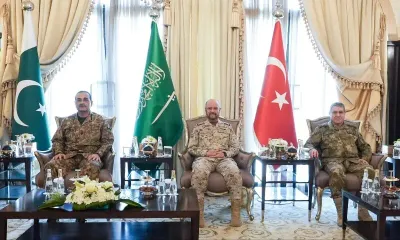 What comes after Riyadh meeting between the Pakistani, Saudi and Turkish military chiefs?The hurried meeting of the military chiefs of Pakistan, Saudi Arabia and Turkiye in Riyadh on Friday, followed by a separate meeting between Chief of Defence Forces and Chief of Army Staff Field Marshal Asim Munir and Saudi Defence Minister Prince Khalid bin Salman points to how quickly the Makkah Joint Defence Agreement is transitioning to an operational phase. The statements issued after the two meetings do not contain anything that would suggest that joint strikes or ground operations against Yemen’s Ansar Allah — commonly referred to as Houthis — are in the offing. However, the two communiques do show that the agreement signed on August 7 in Makkah is shifting gears from political assurances to putting in place the military arrangements required to give practical effect to its collective defence commitment. That is one notable change since the signing of the agreement. For instance, Islamabad’s position, articulated by the Foreign Office only two weeks ago, was that the Makkah agreement was still being institutionalised and there was no discussion of Pakistani participation in strikes against Houthi targets in Yemen. The FO had further characterised the pact as a defensive alliance aimed at protecting regional security through deterrence. The language contained in the communiques that came out of Riyadh in the early hours of Saturday goes much further. The statement issued after the meeting of the three military chiefs says they discussed ways of strengthening “intelligence cooperation, military coordination, and capability integration” and expressed their “shared determination to immediately begin translating the commitments contained in the Makkah Agreement for Joint Defence into effective military cooperation”. The reference to beginning “immediately” and to “effective military cooperation” implies that the three militaries are now looking at how their capabilities can work together, rather than merely reaffirming the principle that an attack on one member would be treated as an attack on all. This fast-tracking of the implementation of the agreements is taking place against the backdrop of repeated missile and drone attacks on Saudi Arabia from Yemen, including attacks threatening civilian and economic infrastructure and, most significantly for Riyadh, one that is claimed to be directed towards the vicinity of Makkah city. While the trilateral statement strongly condemned those attacks and praised the Saudi armed forces for their “vigilance and professionalism” in protecting the kingdom, it is noteworthy for lacking any reference to retaliation, offensive operations or strikes against Ansar Allah positions. Neither Ansar Allah, Houthis, nor Yemen was referenced directly. Instead, emphasis has been placed on intelligence, coordination and integration of capabilities, which would be the first practical steps towards improving Saudi Arabia’s ability to detect, intercept and deter further attacks. In practical terms, this announcement would translate into closer intelligence sharing and early warning arrangements, as well as technical personnel, air defence specialists, sensors, electronic warfare capabilities and other assets that could be incorporated into Saudi Arabia’s existing defensive architecture. On the coordination front, the three countries could, as a follow-up to the meeting of the military chiefs, appoint liaison officers and set up a joint planning cell, which can then work for coordinated responses. The reference to “capability integration” in the statement is particularly significant. Pakistan, Turkiye and Saudi Arabia can cooperate while maintaining separate military systems and operations, but integrating capabilities would require a much closer degree of liaison, planning and command and control arrangements. Despite their longstanding defence cooperation and deep military ties, Pakistan and Turkiye have different military capabilities and equipment inventories from those possessed by Saudi Arabia, and the challenge will be to determine what each can contribute and how those capabilities can be incorporated into the kingdom’s existing defence system. Turkiye has already indicated its readiness to meet Saudi military requirements, particularly on technical matters. Pakistan, meanwhile, has historical military ties with Saudi Arabia and personnel already serving in the kingdom, providing Islamabad with an established channel through which additional support could potentially be arranged. The separate meeting between Field Marshal Munir and Prince Khalid bin Salman, the only publicly known meeting the Saudi defence minister had bilaterally with the participants of the Makkah alliance meeting, adds another dimension to the developing military engagement. Chief of Defence Forces and Chief of Army Staff Field Marshal Asim Munir meets Saudi Defence Minister Prince Khalid bin Salman in Riyadh, Saudi Arabia, in this photo from September 25, 2026. X/@kbsalsaud According to the Saudi statement, the two sides welcomed the outcome of the trilateral chiefs of staff meeting and discussed attacks targeted towards the vicinity of Makkah and towards civilian and economic facilities, while stressing the need to continue “joint efforts to confront these attacks in accordance with the Makkah Agreement for Joint Defence”. The bilateral statement, on the face of it, looks more urgent than the trilateral one with assertions “discussed how to respond” and “continuing joint efforts to confront”. One reason for such categorical assertions is that Pakistan and Saudi Arabia already have a bilateral security relationship, and there is also the 2025 Pakistan-Saudi Strategic Mutual Defence Agreement , under which aggression against one is to be regarded as aggression against both, which provides a more mature bilateral channel through which practical measures could be implemented even as the trilateral mechanism is being built. The composition of the Saudi and Pakistani delegations at the bilateral meeting was also notable. Alongside the Saudi defence minister and chief of general staff were the national security adviser and the adviser to the defence minister for intelligence affairs, while CDF Munir was accompanied by the director general of military operations and his secretary. This may not reveal what was discussed behind closed doors, but it definitely suggests that the bilateral engagement covered a broader security agenda than a routine follow-up to the chiefs of staff meeting, including the sharing of operational capabilities. It may be premature to read the Riyadh meetings as preparation for Pakistani or Turkish participation in offensive operations in Yemen, because no such decision has been announced and the phrasing used in the statement instead remained focused on defending Saudi Arabia, its sovereignty and the integrity of its territory. There are, however, obvious signs of the machinery required for any potential future military response being assembled. The trilateral statement noted that the participants “strongly reaffirmed their commitment to collective defence” and their determination to defend “the security of the kingdom of Saudi Arabia, its sovereignty, and the integrity of its territories”. This formulation gives Turkiye and Pakistan room to strengthen Saudi Arabia’s defences without committing themselves immediately to a wider war in Yemen. As political and diplomatic support, the foreign ministers had already affirmed Saudi Arabia’s right to take measures it considered appropriate to defend its security under Article 51 of the UN Charter. The military architecture now being discussed could nevertheless have implications beyond defensive measures. While intelligence sharing, military coordination and capability integration are necessary for intercepting missiles and drones, they are also the building blocks of a more active military response. If the three militaries establish a common threat picture, stronger intelligence links and mechanisms for coordinating their forces, they would have much of the infrastructure needed if a political decision were later taken to respond to attacks at their source. But for now, that remains a possibility rather than an announced course of action. Therefore, the immediate path appears more likely to run through intelligence and threat assessment, followed by an identification of Saudi requirements and the integration of additional capabilities, with the possible deployment of personnel or equipment at a later stage. Where things go from there would depend on the scale and persistence of the attacks and, importantly, on what Riyadh asks its partners to do.Dawn
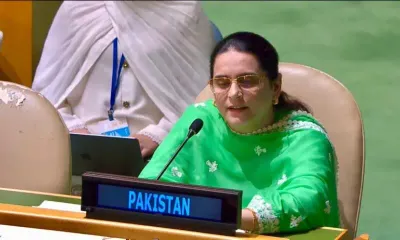 'Largest hypocrisy in the world': Pakistan tells UNGA India’s 'terrorist exports' have gone globalPakistan on Saturday accused India of having “elevated propaganda into statecraft”, embraced disinformation as diplomacy and “exported terrorism as an instrument of policy”, as Islamabad hit back at remarks made by the Indian representative at the UN General Assembly. In a reply to the Indian representative’s statement during the general debate of the 81st session of the UN General Assembly, Counsellor Saima Saleem termed India a state “that has elevated propaganda into statecraft, embraced disinformation as diplomacy, exports terrorism as an instrument of policy, pursues hegemony as a regional strategy, mainstreamed Islamophobia and institutionalised Hindutva ideology”. “The extraordinary balance sheet of today’s incredibly intolerant India. It exports terrorism and violence while trying to import victimhood and sympathy,” she said. “Pakistan knows the cost of Indian-sponsored terrorism all too well,” she said, adding that since the turn of the century, Pakistan had lost nearly 100,000 lives to terrorism, generations had been scarred and billions of dollars had been drained from the country’s economy. She said Pakistan’s counter-terrorism efforts and sacrifices had been well recognised internationally. “We have also presented to the international community extensive evidence of India’s financing, aiding and abetting of terrorist groups targeting Pakistanis, including the TTP, BLA and Majeed Brigade,” she said. “Yet, despite its endless lectures to others on terrorism, we are still waiting to hear India unequivocally condemn the terrorist attacks that kill innocent Pakistani civilians. But how can we expect India to condemn its proxies?” she stated. She said India’s “terrorist exports have gone from regional to global”, citing former Indian naval commander Kulbhushan Jadhav, convicted in Pakistan on terrorism and espionage charges, and Nikhil Gupta, who pleaded guilty in the United States for plotting the murder of a Sikh leader at the direction of the Indian government. She also referred to “others implicated in assassinations carried out in Canada”. Kashmir dispute Turning to the Kashmir dispute, the counsellor said: “Jammu and Kashmir never was, neither is, nor will ever be an integral part of India. It is an internationally recognised disputed territory, a huge part of which is under India’s forcible and illegal occupation for nearly eight decades against the wishes of the Kashmiri people, and in gross violation of international law and numerous resolutions of the Security Council.” “The contrast between AJK and Indian-occupied Jammu and Kashmir could not be more stark,” she said. “In AJK, Kashmiris enjoy rights, participate in political life and have the freedom to express their opinions, while the people of Indian-occupied Kashmir endure decades of occupation, repression and denial of their fundamental rights and freedoms, including the inalienable right to self-determination. Rights exercised cannot be equated with rights denied,” she said. ‘Largest hypocrisy in the world’ Saima said the ruling RSS-BJP dispensation in India had “institutionalised Hindutva ideology in state policy and practice, and unleashed a reign of terror against minorities”. “Muslims are demonised; Christians persecuted; Dalits dehumanised; and Sikhs disenfranchised in the largest hypocrisy in the world,” she said. She said massacres of Muslims in Gujarat and Delhi under state patronage, calls for the genocide of Muslims, Islamophobic rhetoric by politicians and discriminatory citizenship laws were part of the “Hindutva project”. Indus Waters Treaty On the Indus Waters Treaty, Saima said that by the “so-called holding in abeyance of the Indus Waters Treaty and blatantly disregarding its international legal obligations, including the sanctity of treaties”, India had “stooped to a new low of weaponising water, a lifeline for the 240 million people of Pakistan”. She said India’s “false narratives and disinformation could not hide the crushing defeat it suffered at Pakistan’s hands during Marka-i-Haq in May 2025 ”. “It is well recognised by the international community that India lost more than a military conflict; it lost its credibility. Today, India can no longer import sympathy as it stands exposed in front of the world,” she said. “As stated by my prime minister, Pakistan remains steadfast in its pursuit of peace, mutual respect, dialogue and the peaceful settlement of disputes in our region and beyond — a commitment reflected in our consistent role as a peacemaker, mediator and bridge-builder,” she stated. “We will defend ourselves whenever aggression is imposed upon us, but we will never abandon the path to peace; for lasting strength lies not in the wars a nation can fight, but in the peace it has the courage to build and defend.” Prime Minister Shehbaz Sharif on Friday said any attempt by India to stop, impede or divert Pakistan’s share of water would be treated as an “act of war”. Addressing the 81st session of the UN General Assembly in New York, he said India’s decision to hold the Indus Waters Treaty in abeyance had no legal basis, adding that the country’s position had been rejected by UN experts and the Permanent Court of Arbitration.Dawn
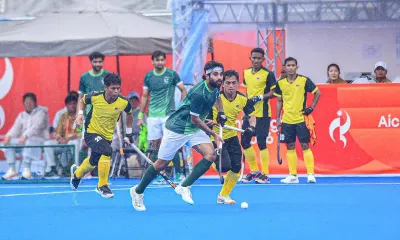 Asian Games: Noor and Ashab settle for bronze, Pakistan suffer first defeat in hockeyPakistan’s squash semi-final hopes ended in bronze on Saturday, the hockey team’s unbeaten run crumbled against Malaysia, and both boxers were ousted — a bruising day at the Asian Games that left the country counting its losses. Noor Zaman and Mohammad Ashab Irfan both fell in straight games at the Nagoya Kinjo Futo Arena, leaving Pakistan with two bronze medals from the squash court. Noor, Pakistan’s top-ranked player, went toe-to-toe with top seed Eain Yow Ng in a gripping opening game. The pair traded points to 5-5 before Noor edged ahead 7-5, but the Malaysian halted his momentum and launched a comeback to take the first game 11-7 in 14 minutes. The 28-year-old Ng was relentless thereafter. Noor took the opening point of the second game, but Ng immediately drew level and then rattled off 10 consecutive points before Noor could respond, wrapping up the game 11-2 in just four minutes. The Malaysian raced to a six-point lead in the third before Noor got on the board, and although the 22-year-old clawed two points back and denied Ng on his first match point, the top seed sealed victory 11-4 on his second attempt to end Pakistan’s run in the event. Mohammad Ashab Irfan was never allowed to settle in his semi-final against second seed Abhay Singh of India. The 22-year-old lost the first game 11-3, showed improvement in the second but still went down 12-10, before the experienced 28-year-old closed out the win 11-6 in the third to wrap up the match in 35 minutes. Winning streak broken The hockey team’s perfect record also came to a stunning end on Saturday as Malaysia edged Pakistan 5-4 at the Gifu Prefectural Green Stadium. Sufyan Khan, Pakistan’s top scorer at the Games, netted all four goals from penalty corners — taking his tournament tally to nine in four matches — but could not prevent the defeat. Pakistan opened the scoring in the third minute, only for Shello Silverius to immediately draw Malaysia level. Faizal Saari put Malaysia ahead from a penalty corner in the 23rd minute, before Sufyan struck in the 39th and 43rd minutes to regain the lead for Pakistan. Saari Fitri pulled Malaysia level again on the stroke of the third quarter to make it 3-3. Pakistan started the fourth quarter brightly as Sufyan scored again in the 46th minute, while Mohammed Ammad had a shot saved before Malaysian goalkeeper Zaimi Deris Mat denied both Sufyan a fifth goal and Ghazanfar Ali. Malaysia made Pakistan pay for the missed opportunities, with Silverius levelling once more before Azrai Abu Kamal stunned the four-time World Cup winners in the 57th minute. Pakistan poured forward as Malaysia’s Faris Harizan was shown a green card and two penalty corners followed, but Malaysia held on. The Green Shirts will play their final pool match against Oman on Monday. Shuttler Mahoor crashes out Pakistan’s star shuttler Mahoor Shahzad crashed out of the women’s singles, losing 21-5, 21-11 to Indonesia’s Putri Kusuma Wardani in a one-sided first-round match at the Ichinomiya City Municipal Gymnasium. The national champion never found her rhythm against the 24-year-old Indonesian, who dictated every rally. Wardani raced to a 4-0 lead before the 29-year-old Mahoor got on the scoreboard, then pulled away to take the opening game 21-5 in just 10 minutes. Mahoor failed to win a single point on her own serve in the game. She briefly led early in the second, but Wardani drew level and reeled off five straight points to move 12-6 ahead, closing out the match 21-11 on her second match point. Mahoor managed only four points on her serve in the second game and never strung together more than three consecutive points. Shajar sprints to semis On the track, Shajar Abbas qualified from his 200-metre heat, finishing third in 21.23 seconds behind Japan’s Akira Hayashi (21.19) and Bahrain’s Abbas Ali (21.13) at the Nagoya City Mizuho Park Athletic Stadium. Shajar was competing for the first time this season after recovering from an injury. The semi-finals were to be held later on Saturday, with the final scheduled for Sunday. Disappointment in the ring The day got even worse for Pakistan’s athletes as both boxers were ousted at the Nishio Gymnasium. Commonwealth Games bronze medallist Fatima Zehra lost comprehensively against Mijgona Samadova of Tajikistan in their women’s 60kg bout. The 28-year-old Samadova never let Fatima settle, taking the first round 10-8 on four judges’ scorecards. Fatima could not recover from that opening-round beating as the Tajik kept the pressure on in the second, knocking her down once. The 22-year-old lost the second 10-8 on four cards, and while she showed great heart to take the fight the distance, the third also went against her 10-8 on three judges’ scorecards. Earlier, Irfan Khan had a forgettable debut in the men’s 90kg category, knocked down twice in the first round by South Korea’s Gichae Kim before the referee stopped the contest in the second. The judges had scored the opening round in Kim’s favour, with four giving the South Korean a 10-9 advantage and one scoring it 10-8. Kim added another knockdown in the second before the stoppage.Dawn
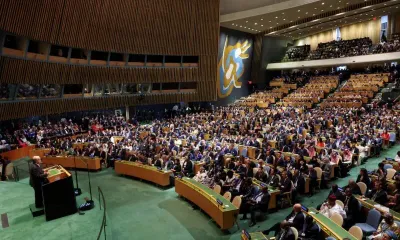 Six big takeaways from a turbulent week of UN diplomacyLimousines whisked world leaders away from the United Nations on Friday after a week of speeches, meetings and hallway diplomacy. While they reached no breakthroughs on the world’s most intractable conflicts, talks on the Iran and Ukraine wars inched forward and global powers used the venue to debate AI risks with industry leaders. Here are the big takeaways from scores of panels, hundreds of meetings, hours spent in lines and listening to speeches and countless cups of coffee: Reboot of Iran diplomacy The UN was probably most useful for facilitating the first shuttle talks between American and Iranian officials since the collapse of a ceasefire in July. Iran’s Foreign Minister Abbas Araqchi and US envoys Steve Witkoff and Jared Kushner communicated through mediators. The efforts must continue, a senior Iranian official told Reuters, even as Iranian and American leaders exchanged sharp words at the General Assembly hall, with the US threatening to “annihilate” Iran and Iran accusing the US of a “bullying mentality.” The senior Iranian official said Tehran was reviewing Washington’s response to its proposals, which include lifting a US naval blockade on Iranian ports and reopening the Strait of Hormuz. But no agreement appeared imminent. US Secretary of State Marco Rubio cautioned that a deal would involve hard work over time. Ukraine gain and energy Rubio also held talks with Russian Foreign Minister Sergey Lavrov, after which he said Ukraine and Russia had both voiced an interest in a limited ceasefire involving grain and energy-related targets. Ukraine and its allies are racing to secure limited agreements on energy infrastructure and Black Sea shipping before winter, fearing renewed Russian strikes on power and heating facilities. But hours after Rubio spoke on Wednesday, Lavrov addressed the Security Council meeting on Ukraine, showing no indication Russia was prepared to engage on any subject. “Europe, whatever it thinks, just wants to get a pause, and it wants to use it to pump the Kyiv regime with weapons,” Lavrov said. AI steals climate’s spotlight Climate change, a focus of UN discussions in recent years, was largely pushed aside by debate over artificial intelligence. The festival of diplomacy coincided with an unprecedented outpouring of concern around AI after several safety breaches, and as top researchers warned it could destroy humanity. The UN convened a Security Council meeting featuring OpenAI CEO Sam Altman, who made an appearance in person, as well as Anthropic CEO Dario Amodei. The industry leaders appealed for governments to work together to manage AI. Underscoring the concerns, just as they spoke, Australian Prime Minister Anthony Albanese said that an AI agent developed by OpenAI infiltrated an Australian government website in June, accessing public and non-public files. President Donald Trump, who has dismissed AI risks as a “hoax” and “sick conspiracy,” told the UN he “rejects any attempt to construct a globalist scheme to control” AI, describing it as amazing while promising the US would be careful. Surprise arrival The biggest surprise arrival at the UN was Venezuela’s interim President Delcy Rodriguez, who used her trip to hold first in-person talks with Trump since coming to power after the arrest of then-President Nicolas Maduro by US forces in a dramatic nighttime raid. The Venezuelan delegation’s focus was on restructuring its billions of dollars in sovereign debt as it met US officials, multilateral lenders and companies. Trump used his speech to the body dedicated to global peace to declare that in Venezuela: “to the victor belong the spoils,” and called an oil deal the US signed with Caracas last month “perhaps the biggest deal ever made.” As Rodriguez and Trump met in New York, Venezuelan opposition leader Maria Corina Machado made three unsuccessful bids to return to her country. Surprise absence The biggest surprise absence was the Sudanese army chief Abdel Fattah al-Burhan. The US withheld his visa in a move that Sudanese and other sources said was linked to a US-backed ceasefire proposal that Khartoum has resisted. The dispute, first reported by Reuters , threatened to deepen tensions between Washington and Sudan’s army at a critical moment in the civil war, which the UN calls the world’s largest humanitarian crisis. Burhan had represented Sudan at the General Assembly since the coup. Another notable absentee was Palestinian President Mahmoud Abbas, who addressed delegates by video and condemned US curbs on the Palestinian mission’s access to the UN. Uncertain future The cash-strapped UN may no longer be in “freefall,” but it remains stuck in an “open-ended crisis,” International Crisis Group analyst Richard Gowan said. The organisation is grappling with shrinking budgets, waning influence and mounting geopolitical conflicts. Wars in Ukraine and Iran rage on, while Trump has denounced the 193-member body as bloated and globalist, slashed US funding and withdrawn from dozens of UN agencies. As UN Secretary-General Antonio Guterres received a standing ovation after his final General Assembly speech, a small group of politicians and former UN officials lobbied publicly and behind closed doors to succeed him. His second five-year term ends on December 31, leaving little time for the world’s major powers to agree on a replacement. The race, conducted according to an arcane multi-step process involving “straw polls,” has no clear frontrunner, but former Costa Rican Vice President Rebeca Grynspan and Guyana’s UN Ambassador Carolyn Rodrigues Birkett are leading the pack. Whoever gets the world’s most difficult job will inherit an organisation buffeted by crises, low morale and declining political relevancy. That person, too, will welcome the leaders to New York for next year’s summit.Dawn
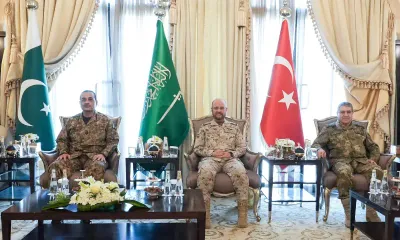 Pakistani, Saudi, Turkish military chiefs meet to discuss ways to assist Riyadh under Makkah defence pactSaudi Arabia, Turkey and Pakistan held military chiefs of staff talks on Friday with the objective to explore ways to assist Riyadh under the Makkah Defence Alliance. The Turkish defence ministry published photographs of the three military officials in uniform, stating that the meeting had taken place, without disclosing where. However, Turkiye’s Defence Ministry earlier said its Chief of General Staff General Selcuk Bayraktaroglu would travel to Saudi Arabia for the meeting. The meeting took place against the backdrop of the kingdom being dragged into fresh fighting between the Houthis and the Yemeni government, with the former declaring a maritime blockade on Saudi Arabia and targeting its ships in the Red Sea. In recent weeks, Houthis have also carried out attacks in Saudi Arabia. Earlier, the Foreign Office (FO) in Islamabad had shared that the three countries were mulling a military chiefs’ meeting to consider ways to assist Riyadh under the Makkah pact. The FO statement came after Deputy Prime Minister and Foreign Minister Ishaq Dar held a discussion on the defence pact with Saudi Foreign Minister Faisal bin Farhan bin Abdullah and Turkish Foreign Minister Hakan Fidan, on the sidelines of the 81st session of the United Nations General Assembly in New York. In the statement, the FO noted that the tripartite agreement, signed on Aug 7, stipulated that an attack against any one of its parties should be considered an attack against all parties. In their New York meeting, the foreign ministers of the three countries condemned in the “strongest terms the heinous attacks targeting the holy city of Makkah and civilian and economic facilities in the Kingdom of Saudi Arabia”, the FO statement said. At the same time, it added, the ministers “commended the vigilance of the Saudi armed forces and their ability to defend the kingdom’s security”. “They reaffirmed the kingdom’s right to take such measures as it deems appropriate to defend its security, in accordance with Article 51 of the UN Charter.” They further discussed the current situation in the region, underscoring the importance of upholding the principles of international law, good neighbourliness, mutual respect for the sovereignty of states, and non-interference in their internal affairs, as well as ensuring the security and freedom of navigation, the statement said. Moreover, they reiterated their determination to work together towards achieving sustainable peace and stability in the region, support efforts towards de-escalation and encourage peaceful resolution to crises. During the meeting, the ministers also reviewed progress made towards establishing the general secretariat and committees and working groups under the Makkah agreement, as well as preparations for the commencement of their work, the FO statement said. Earlier in the day, Dar also posted on X: “Under the framework of the Makkah Joint Defence Agreement (MJDA), we reviewed progress towards establishing the institutional structures under the agreement and exchanged views on regional and international security issues.” The Makkah Defence Alliance’s inaugural meeting was held on Aug 31, where officials from all member states met in Istanbul to establish the institutional structure of the alliance, and Pakistan was picked to head its secretariat in Riyadh. Retired Lieutenant General Nauman Mahmood has been appointed as the first secretary general. Pakistan expresses solidarity with Saudi Arabia A day earlier, Saudi Arabia intercepted six ballistic missiles fired by the Houthis after issuing warnings for several regions, including Makkah. This was the second time that a warning was issued for the holy city in the last two weeks. As Yemen’s Houthi rebels continue to attack Saudi Arabia, Inter-Services Public Relations (ISPR) Director General Lieutenant General Ahmed Sharif Chaudhry on Sept 18 said that Pakistan would go to “any extent” to defend Saudi Arabia, adding that Islamabad’s commitment to the kingdom’s security was “unconditional”. On Wednesday, Prime Minister Shehbaz Sharif had also vowed to stand “shoulder to shoulder” with Saudi Arabia in safeguarding its sovereignty and security. Meanwhile, Saudi Arabia’s King Salman this week denounced the Houthis as a “terrorist militia” in a rare statement. He condemned the Houthi attempt “to target Makkah”, calling it “a provocation to Muslims around the world”, according to the official Saudi news agency. Additional input from Reuters.Dawn
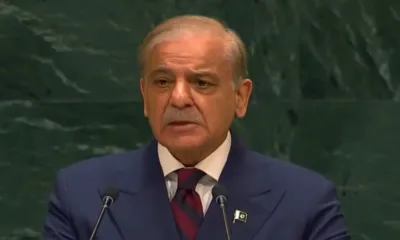 'Arteries of global economy': At UNGA, PM Shehbaz says Hormuz, Bab al-Mandab must remain openPrime Minister Shehbaz Sharif reiterated before the United Nation’s General Assembly on Friday that any attempt by India to divert Pakistan’s share of water would be treated as an “act of war”. “Water must never be weaponised. Rivers should nourish nations, not divide them. Therefore, any attempt to stop, impede or divert Pakistan’s share of the waters will be treated as an act of war. India must make no mistake about it,” he said. The premier was addressing the 81st session of the United Nations General Assembly (UNGA) in New York. “The pursuit of peace is among the noblest of human endeavours,” the premier began his speech by saying, adding that Quaid-i-Azam Muhammad Ali Jinnah’s declaration of support for the UN Charter had shaped Pakistan’s national ethos and “guided our conduct at home and abroad”. He addressed the conflict in the Gulf region and wider Middle East, highlighting the loss of lives, economic suffering and pressure faced by critical maritime routes, particularly the Strait of Hormuz. “At this critical moment, Pakistan chose to act swiftly. Through concerted efforts, Pakistan brought Washington and Tehran under one roof in Islamabad,” PM Shehbaz said, referring to the Islamabad Talks that resulted in the signing of the Islamabad Memorandum of Understanding by the United States and Iran in June. In this regard, he appreciated Chief of Defence Forces and Chief of the Army Staff Field Marshal Asim Munir, whose “relentless efforts helped create space for diplomacy under exceptionally difficult and challenging circumstances”. He also extended his appreciation to Deputy Prime Minister and Foreign Minister Ishaq Dar for his role in the process. “Amid the roar of missiles, drones and guns, the voice for diplomacy must echo even louder and stronger,” the premier stated. “The Strait of Hormuz and Bab al-Mandab are arteries of the global economy. They must remain open, connecting nations, not becoming choke points of confrontation.” He also condemned, “in the strongest possible terms”, the recent attacks by the Houthis against the Kingdom of Saudi Arabia, calling them “deplorable”. He expressed Pakistan’s complete solidarity with Saudi Arabia. He also highlighted the Makkah Joint Defence Agreement signed by Pakistan, Turkiye and Saudi Arabia as a reflection of Pakistan’s commitment to peace. “This alliance is not directed against any country; it is a collective commitment for defence, stability and peace in the region, and nothing more,” he stressed. PM Shehbaz also addressed last year’s conflict with India, which was driven by a terror attack in Pahalgam that New Delhi blamed on Islamabad, which denied the allegations. “Our brave and valiant armed forces, under the courageous leadership of Field Marshal Asim Munir, responded with precision and professionalism,” he said. He once again praised US President Donald Trump’s “resolute and visionary leadership” in brokering a ceasefire between the two countries in May 2025, stressing that it saved “hundreds of millions of lives”. “Who knows the extent of devastation that could have taken place had President Trump not stepped in at this critical moment with clarity of thought and action?” he said. “We must therefore ensure that South Asia never reaches this precipice ever again.” This, however, the premier added, required a fair resolution of the Kashmir dispute. “For eight decades, the Kashmiri people have waited for the United Nations to fulfill its solemn commitment of a free and impartial plebiscite,” he pointed out, adding that they had endured “illegal occupation, arbitrary detention, extrajudicial killings, enforced disappearances, sexual violence and collective punishment” for generations. He declared that Pakistan would continue to extend its full diplomatic, political and moral support to Kashmiris until they were granted their right to self-determination, terming Kashmir “Pakistan’s jugular vein”. More to followDawn
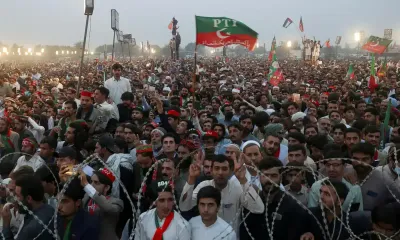 PTI defers Islamabad long march to Oct 4ISLAMABAD: Khyber Pakhtunkhwa Chief Minister Sohail Afridi said on Friday that the PTI’s long march towards Islamabad, which was originally scheduled for Sept 27, would now commence from Peshawar on Oct 4. The party has been preparing for a nationwide protest and march towards Islamabad to press for the release of its founder, Imran Khan, who is currently incarcerated in Rawalpindi’s Adiala jail. Earlier, a senior PTI leader, who requested anonymity, also told Dawn that the march would now leave from Peshawar on Oct 4. He added that Khyber Pakhtunkhwa Chief Minister Sohail Afridi would formally announce the postponement soon. “There was a proposal to exhaust the federal government and law enforcement agencies, as they have already closed down the federal capital and a number of routes,” he said. The leader claimed that the PTI had already achieved what it wanted to do via the march. “They have closed down roads and are spending hundreds of millions on law enforcement,” he noted. Asked if the PTI intended to march alongside the Jamaat-i-Islami (JI), which had postponed its own protest march against the petroleum levy on the request of the premier, the leader said that the decision had nothing to do with them. “We are capable of arranging the march on our own,” he said. The development comes a day after a PTI leader had hinted at the possibility of postponing its protest march if the federal government agreed to hold elections within six to eight months, release Imran and other political prisoners, and investigate the May 9 and November 26 crackdowns on the opposition party. Advocate Naeem Haider Panjutha told Dawn that the protest could be postponed if these three assurances were given by the government. Party spokesperson Sheikh Waqas Akram, however, had denied any such proposal was being discussed at any party forum, saying only Imran could take a decision even if such a proposal was on the table. Preparations in the Rawalpindi Division and the federal capital territory to maintain security and deal with any emergency situation have been in full swing in light of the potential long march and other protests in Islamabad. Punjab has already imposed a ban on gatherings across the province for 13 days and prohibited inciting people to “unlawful assembly”. A similar ban under Section 144 has been enforced in Islamabad for two months. The Punjab government has also sent a letter to the interior ministry requesting mobile and internet services at specific locations in Rawalpindi and Attock to be downgraded or jammed on Sept 27. Meanwhile, the federal government on Thursday approved the deployment of Rangers in Islamabad and several districts of Punjab from Sept 20 to Oct 5. “The deployed troops may respond appropriately in self-defence to any threats or violent activities encountered in the course of their duties as per rules/regulations in vogue,” the notification stated. HRCP urges govt to de-escalate political tensions All three of Imran’s sisters — Uzma Khan, Noreen Khan and Aleema Khan — have been detained and there have also been reports of the arrests of PTI members and workers. The Human Right Commission of Pakistan (HRCP) said in a statement on Friday that it “deplores the mounting arrests and preventive detention of PTI workers, lawmakers and leaders ahead of the party’s planned protest march”. Reports indicated that scores of workers, including women, had been arbitrarily detained, with some families claiming that they had no information as to the whereabouts of their relatives, the HRCP said. It added that it was “incumbent on the state to uphold the right to peaceful assembly for all citizens”. “Pre-emptive mass detention and restrictions on freedom of movement cannot be justified as proportionate or necessary. Moreover, repeated blanket restrictions, including the imposition of Section 144, are an affront to democratic principles. “We urge the government to de-escalate political tensions by resuming a purposeful dialogue with the opposition and to immediately release those who have been arbitrarily detained,” the HRCP said. Tarar takes aim at KP govt for ‘facilitating terrorism’ Addressing a press conference on Friday, Information Minister Attaullah Tarar slammed the KP government, accusing it of avoiding taking steps to maintain law and order in the province. He alleged that they also gave “full facilitation” to terrorists and called their policy on law and order “evasive”. “In one way or another, terrorists have attacked all political parties in KP,” the minister said. “But the PTI is held in high regard by terrorists. And not only do they avoid condemning terrorists, but they also fully avoid taking any sort of action against them. Facilitating terrorists is part of their policy.” He called KP’s PTI government the Tehreek-i-Taliban Pakistan’s (TTP) “B-team”, and Tehreek-i-Taliban Afghanistan’s (TTA) “C-team”, claiming that it was facilitating the TTP while also “representing” the TTA. He also took aim at KP CM Afridi specifically, saying he “looks less like a chief minister and more like a TTP commander, in both his words and actions”. “When drones are fired at Kohat from Afghanistan, and the Pakistan Army and Air Force very skilfully take them down, you will not see any sort of condemnation or statement from KP government,” Tarar claimed. “When there is firing from Afghanistan in Kurram … you will never see them go to Kurram and say ‘We have come here, we stand with our forces, and we will not tolerate such firing under any circumstances’.” He termed this a sign of cowardice from CM Afridi, his cabinet and his entire KP government, adding that this was also the reason they were “running away” from protests. “They are not even prepared. I’ve just come from KP. They don’t have any sort of preparations,” the minister said. “Come and protest, if you have the courage,” he said. He stressed that the provincial government was in charge of controlling law and order, highlighting that 2,456 terror attacks had taken place in KP in 2026 — around 10 a day on average. He added that 472 police, army, rangers, and FC personnel were martyred and over 1,500 people injured this year. The information minister asserted that the reason the KP government did not want to fix the law and order situation was to maintain a “political terror-crime nexus” and illegal trade and mining activities in the province, through which they “funded terrorists”. “A provincial government which doesn’t want to stop terrorism and fix law and order, and countless citizens lose their lives — this cannot be justified in any part of the world,” he said.Dawn
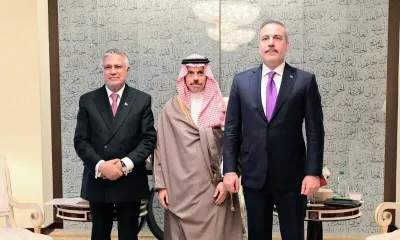 Pakistan, Saudi Arabia, Turkiye mull meeting of military chiefs to assist Riyadh under Makkah defence pact: FOThe foreign ministers of Pakistan, Turkiye and Saudi Arabia discussed plans on Friday to convene a meeting of the three countries’ chiefs of staff to explore ways to assist Riyadh under the Makkah Defence Alliance, according to the Foreign Office (FO). The FO statement noted that the tripartite agreement, signed on Aug 7, stipulated that an attack against any one of its parties should be considered an attack against all parties. Deputy Prime Minister and Foreign Minister Ishaq Dar from Pakistan, Saudi Foreign Minister Faisal bin Farhan bin Abdullah and Turkish Foreign Minister Hakan Fidan held a discussion on the defence pact on the sidelines of the 81st session of the United Nations General Assembly in New York. Earlier, Saudi Foreign Ministry also posted on X that the three member states condemned the recent Houthi attacks against Saudi Arabia and discussed arrangements to convene an “urgent meeting of the chiefs of staff of the three countries” to support the Gulf state within the pact. Later, Turkiye’s Defence Ministry said its Chief of General Staff General Selcuk Bayraktaroglu will travel to Saudi Arabia to meet his Saudi and Pakistani counterparts as part of the Makkah Joint Defence Agreement. In their New York meeting, the foreign ministers condemned in the “strongest terms the heinous attacks targeting the holy city of Makkah and civilian and economic facilities in the Kingdom of Saudi Arabia”, the FO statement said. At the same time, it added, the ministers “commended the vigilance of the Saudi armed forces and their ability to defend the kingdom’s security”. “They reaffirmed the kingdom’s right to take such measures as it deems appropriate to defend its security, in accordance with Article 51 of the UN Charter.” They further discussed the current situation in the region, underscoring the importance of upholding the principles of international law, good neighbourliness, mutual respect for the sovereignty of states, and non-interference in their internal affairs, as well as ensuring the security and freedom of navigation, the statement said. Moreover, they reiterated their determination to work together towards achieving sustainable peace and stability in the region, support efforts towards de-escalation and encourage peaceful resolution to crises. During the meeting, the ministers also reviewed progress made towards establishing the general secretariat and committees and working groups under the Makkah agreement, as well as preparations for the commencement of their work, the FO statement said. Earlier in the day, Dar also posted on X: “Under the framework of the Makkah Joint Defence Agreement (MJDA), we reviewed progress towards establishing the institutional structures under the agreement and exchanged views on regional and international security issues.” The Makkah Defence Alliance’s inaugural meeting was held on Aug 31, where officials from all member states met in Istanbul to establish the institutional structure of the alliance, and Pakistan was picked to head its secretariat in Riyadh. Retired Lieutenant General Nauman Mahmood has been appointed as the first secretary general. The latest meeting in New York in relevance to the defence pact took place against the backdrop of Riyadh being dragged into fresh fighting between the Houthis and the Yemeni government, with the former declaring a maritime blockade on the kingdom and targeting its ships in the Red Sea. In recent weeks, Houthis have also carried out attacks in Saudi Arabia. A day earlier, Saudi Arabia intercepted six ballistic missiles fired by the Houthis after issuing warnings for several regions, including Makkah. This was the second time that a warning was issued for the holy city in the last two weeks. As Yemen’s Houthi rebels continue to attack Saudi Arabia, Inter-Services Public Relations (ISPR) Director General Lieutenant General Ahmed Sharif Chaudhry on Sept 18 said that Pakistan would go to “any extent” to defend Saudi Arabia, adding that Islamabad’s commitment to the kingdom’s security was “unconditional”. On Wednesday, Prime Minister Shehbaz Sharif had also vowed to stand “shoulder to shoulder” with Saudi Arabia in safeguarding its sovereignty and security. Meanwhile, Saudi Arabia’s King Salman this week denounced the Houthis as a “terrorist militia” in a rare statement. He condemned the Houthi attempt “to target Makkah”, calling it “a provocation to Muslims around the world”, according to the official Saudi news agency. Additional input from Reuters.Dawn
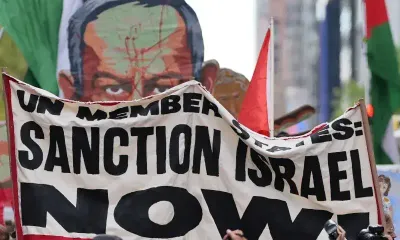 Palestine in focusISRAEL’S barbaric violence in Gaza, as well as rampages by extremist Jewish settlers in the West Bank, have earned the Zionist state the opprobrium of several states during the ongoing UN General Assembly. While the impassioned speeches will not be enough to stop the violence against the Palestinian people, they do indicate that even some of Israel’s allies in the West are having a difficult time justifying its monstrous behaviour. French President Emmanuel Macron said the “spectacle” in Gaza should “shame us all”. He also highlighted the grim situation in the West Bank. Similarly, Turkish President Recep Erdogan termed Gaza an “inhumane … concentration camp”. At a separate meeting on the two-state solution, Deputy Prime Minister Ishaq Dar slammed the Israeli “machinery of occupation”. At the same event, UN Secretary-General António Guterres said “time is running out” for the two-state solution. Perhaps the outgoing UN head was being overly optimistic — Israel has done all possible to ensure a viable Palestinian state does not emerge. Not too far from these meetings the Board of Peace was also holding a session, pledging $2.45bn for Gaza’s ‘recovery’. While the promise of these funds should be welcomed, the reality in the occupied Strip tempers any hopes for Gaza’s betterment. After all, since last year’s ceasefire Israel has murdered some 1,400 people in Gaza, mostly civilians, while Tel Aviv has refused to end its occupation of the Strip, even though Hamas agreed to give up its arms. Meanwhile, illegal settlements have exploded in the West Bank, with Jewish settlers growing more vicious in their attacks by the day. Therefore, throwing money at Gaza will do little if the Palestinians remain under siege, and the theft of their land continues. If conscientious members of the international community are serious about their concern for Palestine, they must back their talk with action. Israel must be held to account for its genocidal violence in Gaza, while settlers in the West Bank should be punished for their occupation of Palestinian land, and frequent physical attacks on Arabs. All illegal settlements need to be uprooted. Sadly, while calls for a two-state solution continue, the current Israeli regime — and whatever dispensation emerges after the coming elections in the Zionist state — will remain hell-bent on preventing a sovereign Palestinian state from emerging. Meanwhile, Israel’s most powerful foreign patron — the US — seems utterly uninterested in making Tel Aviv commit itself to the peace process. PR stunts under the Board of Peace are one thing; genuine pressure on Israel to end the occupation is another. Can the Palestinian people expect relief when such powerful actors remain committed to prolonging their suffering? Published in Dawn, September 25th, 2026Dawn
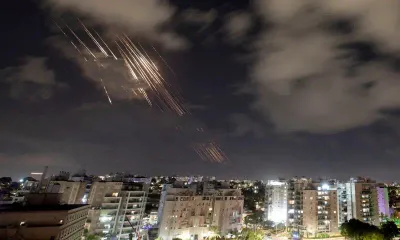 Saudi air defences intercept 6 Houthi ‘ballistic missiles’• Rebels target Yanbu, Taif, military sites in Jazan; push to seize key Taiz-Aden supply route • Riyadh lifts warnings issued for Makkah, Jeddah, Tabuk, other regions • UN rights chief ‘appalled’ as civilian toll climbs in Yemen RIYADH: Saudi Arabia intercepted six ballistic missiles fired by Yemen’s Houthis on Thursday after issuing warnings for several regions, including the holy city of Makkah. The Saudi-led coalition supporting Yemen’s internationally recognised government said the missiles were intercepted before reaching targets in Taif and Yanbu, a key Red Sea area important for Saudi oil exports. It was not immediately clear whether the attacks caused any damage or casualties. Saudi Civil Defence had earlier issued emergency alerts for several areas, including Makkah, Yanbu, Taif, Jeddah and Tabuk. The warnings were lifted minutes later. In recent weeks, similar alerts have often preceded Houthi attacks. Coalition spokesman Turki al-Maliki said in posts on X that “escalations and violations by the terrorist Houthi militia will be dealt with firmly”. The Houthis later claimed responsibility for attacks targeting Saudi military sites in Jazan province near the Yemeni border. Houthi military spokesman Yahya Saree said the group launched a barrage involving ballistic missiles and drones aimed at what he described as operations rooms, command centers, weapons depots, missile launch sites and military camps. The latest attacks come as fighting has intensified inside Yemen between the Houthis and Saudi-backed government forces. At least 150 fighters from both sides were killed in the past 24 hours, according to an AFP tally based on sources from both factions. At least 98 government forces and soldiers were killed, while the Houthis said at least 52 of their fighters were killed in clashes. Many on both sides were also killed in clashes in the Kahboub Mountains and in areas between the Lahj and Taiz regions, as the Houthis seek to dominate the highlands overlooking Bab al-Mandab to protect newly seized territory. The Riyadh-backed government’s forces had earlier repelled overnight attacks by the Houthis on a key supply route to Yemen’s third biggest city Taiz from the southern port city of Aden where the internationally recognised administration is based, sources said. The Houthis have kept up pressure on government forces seeking to consolidate their power through a steep winding mountain pass. Known as Hejat al-Abd, the road is a lifeline for forces fighting on behalf of Yemen’s government, which has been hemmed in by the Houthis. The road is also critical for goods entering Taiz and its southern and western rural areas. It is the only route for residents seeking to travel abroad, with no commercial flights operating . Seizing parts of the Taiz-Aden road could allow the Houthis to tighten their grip around Taiz and deal another blow to the government. Meanwhile, the United Nations human rights chief expressed alarm Thursday over the growing civilian toll as the conflict worsens. UN High Commissioner for Human Rights Volker Turk said he was “appalled” by the situation, warning that civilians were suffering the consequences of the renewed fighting. “As if the people of Yemen haven’t already endured enough misery, civilians are now bearing the brunt of this latest upsurge in fighting,” Turk said, adding that “civilians must never be targeted, and their protection must be the overriding priority”. Turk’s office said at least 125 civilians had been killed or injured in Houthi attacks since the beginning of August. Published in Dawn, September 25th, 2026Dawn
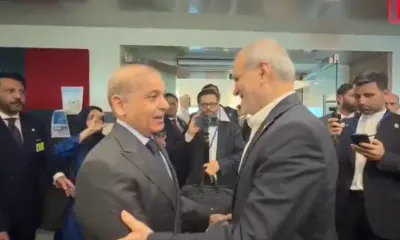 PM Shehbaz stresses Islamabad MoU implementation in meeting with PezeshkianPrime Minister Shehbaz Sharif met Iranian President Masoud Pezeshkian on Thursday and stressed the importance of implementing the Islamabad Memorandum of Understanding — a 14-point interim agreement signed between the US and Iran in June that gave a framework for ending the ongoing conflict. Pakistan signed the agreement as a mediator. The conflict has since continued with sporadic strikes and a US naval blockade of Iranian ports, while Iran has maintained control over traffic through the strategic waterway. In his meeting with Pezeshkian, PM Shehbaz expressed “deep concern over the prolonged conflict and emphasised the need for restraint, de-escalation, and sustained diplomatic engagement to achieve lasting peace and stability in the region”, a statement by the Prime Minister’s Office (PMO) said. “He also underscored the importance of implementing the Islamabad Memorandum of Understanding and reaffirmed Pakistan’s readiness to continue playing sincere and constructive role in support of regional peace and stability,” the statement added. The two leaders discussed the evolving regional situation, with Pezeshkian appreciating Pakistan’s “principled diplomacy and concerted efforts for regional peace and security”, according to the statement. “Underlining the importance of maintaining regular consultations and close coordination to address the prevailing challenges and seize the opportunities, the two sides agreed to work for regional peace, security, and prosperity,” it said. Regarding bilateral ties, the two leaders reaffirmed the close and longstanding ties between Pakistan and Iran and underscored the need to further strengthen bilateral cooperation across all areas of mutual interest, it added. “The Iranian President also underscored the enduring strength of Pakistan-Iran relations, rooted in shared history, culture, and faith, and reaffirmed Tehran’s strong desire to further deepen multifaceted cooperation,” it said. The meeting took place on the sidelines of the 81st session of the United Nations General Assembly (UNGA) in New York. Deputy Prime Minister and Foreign Minister Ishaq Dar, Defence Minister Khawaja Asif, and Special Assistant to the Prime Minister Tariq Fatemi were also present at the meeting, as well as Iranian Foreign Minister Abbas Araghchi. PM Shehbaz and Pezeshkian had previously held a meeting in Kyrgyzstan, on the sidelines of the Shanghai Cooperation Organisation (SCO) Council of Heads of State meeting in August, during which they reaffirmed the close and longstanding ties between both countries. At the same time, PM Shehbaz had also stressed the importance of restraint and sustained diplomatic engagement to achieve lasting peace and stability in the region amid the US-Iran conflict. Thursday’s meeting with the Iranian president comes as Islamabad continues efforts to bring the United States and Iran back to the negotiating table regarding the war in the Middle East. Pezeshkian on Wednesday struck a defiant tone speaking at the UN for the first time since Washington and Israel launched an all-out war on his country, vowing Tehran would never “bend at the knee”. He made no reference to the talks to resolve the stalled war in his steely speech. However, the Iranian side earlier this week indicated its willingness to return to dialogue with the US to de-escalate tensions. The flexibility on the issue was indicated by the Iranian side in a meeting between Pezeshkian and Interior Minister Mohsin Naqvi during the latter’s visit to Tehran. Pakistan, meanwhile, has remained engaged in efforts to keep the diplomatic channel open. Chief of Defence Forces and Chief of the Army Staff Field Marshal Asim Munir has used his contacts with the US administration, while Pakistani officials have made repeated visits to Tehran. Diplomatic sources say Qatar is handling the immediate shuttle diplomacy between the US and Iran in New York, while Pakistan is working through a parallel channel with Tehran as regional efforts intensify to keep the latest diplomatic contacts from collapsing. The distinction has emerged from reporting by US and international media on the renewed US-Iran contacts around the United Nations General Assembly, with Qatar and Pakistan both involved in efforts to keep communication open between Washington and Tehran. PM Shehbaz is expected to address the UNGA on Friday.Dawn
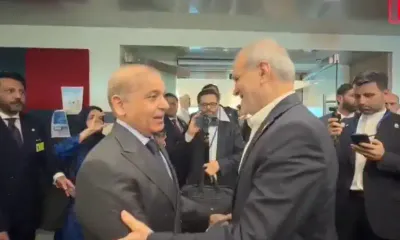 PM Shehbaz calls for implementing Islamabad MoU in meeting with PezeshkianPrime Minister Shehbaz Sharif met Iranian President Masoud Pezeshkian on Thursday and stressed the importance of implementing the Islamabad Memorandum of Understanding — a 14-point interim agreement signed between the US and Iran in June that gave a framework for ending the ongoing conflict. Pakistan signed the agreement as a mediator. The conflict has since continued with sporadic strikes and a US naval blockade of Iranian ports, while Iran has maintained control over traffic through the strategic waterway. In his meeting with Pezeshkian, PM Shehbaz expressed “deep concern over the prolonged conflict and emphasised the need for restraint, de-escalation, and sustained diplomatic engagement to achieve lasting peace and stability in the region”, a statement by the Prime Minister’s Office (PMO) said. “He also underscored the importance of implementing the Islamabad Memorandum of Understanding and reaffirmed Pakistan’s readiness to continue playing sincere and constructive role in support of regional peace and stability,” the statement added. The two leaders discussed the evolving regional situation, with Pezeshkian appreciating Pakistan’s “principled diplomacy and concerted efforts for regional peace and security”, according to the statement. “Underlining the importance of maintaining regular consultations and close coordination to address the prevailing challenges and seize the opportunities, the two sides agreed to work for regional peace, security, and prosperity,” it said. Regarding bilateral ties, the two leaders reaffirmed the close and longstanding ties between Pakistan and Iran and underscored the need to further strengthen bilateral cooperation across all areas of mutual interest, it added. “The Iranian President also underscored the enduring strength of Pakistan-Iran relations, rooted in shared history, culture, and faith, and reaffirmed Tehran’s strong desire to further deepen multifaceted cooperation,” it said. The meeting took place on the sidelines of the 81st session of the United Nations General Assembly (UNGA) in New York. Deputy Prime Minister and Foreign Minister Ishaq Dar, Defence Minister Khawaja Asif, and Special Assistant to the Prime Minister Tariq Fatemi were also present at the meeting, as well as Iranian Foreign Minister Abbas Araghchi. PM Shehbaz and Pezeshkian had previously held a meeting in Kyrgyzstan, on the sidelines of the Shanghai Cooperation Organisation (SCO) Council of Heads of State meeting in August, during which they reaffirmed the close and longstanding ties between both countries. At the same time, PM Shehbaz had also stressed the importance of restraint and sustained diplomatic engagement to achieve lasting peace and stability in the region amid the US-Iran conflict. Thursday’s meeting with the Iranian president comes as Islamabad continues efforts to bring the United States and Iran back to the negotiating table regarding the war in the Middle East. Pezeshkian on Wednesday struck a defiant tone speaking at the UN for the first time since Washington and Israel launched an all-out war on his country, vowing Tehran would never “bend at the knee”. He made no reference to the talks to resolve the stalled war in his steely speech. However, the Iranian side earlier this week indicated its willingness to return to dialogue with the US to de-escalate tensions. The flexibility on the issue was indicated by the Iranian side in a meeting between Pezeshkian and Interior Minister Mohsin Naqvi during the latter’s visit to Tehran. Pakistan, meanwhile, has remained engaged in efforts to keep the diplomatic channel open. Chief of Defence Forces and Chief of the Army Staff Field Marshal Asim Munir has used his contacts with the US administration, while Pakistani officials have made repeated visits to Tehran. Diplomatic sources say Qatar is handling the immediate shuttle diplomacy between the US and Iran in New York, while Pakistan is working through a parallel channel with Tehran as regional efforts intensify to keep the latest diplomatic contacts from collapsing. The distinction has emerged from reporting by US and international media on the renewed US-Iran contacts around the United Nations General Assembly, with Qatar and Pakistan both involved in efforts to keep communication open between Washington and Tehran. PM Shehbaz is expected to address the UNGA on Friday.Dawn
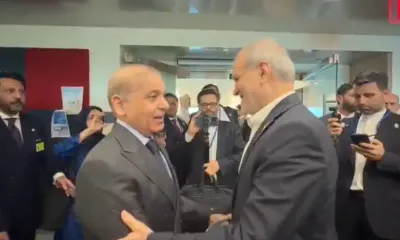 PM Shehbaz stresses implementation of Islamabad MoU in meeting with Iranian presidentPrime Minister Shehbaz Sharif met Iranian President Masoud Pezeshkian on Thursday and stressed the importance of implementing the Islamabad Memorandum of Understanding — a 14-point interim agreement signed between the US and Iran in June that gave a framework for ending the ongoing conflict. Pakistan signed the agreement as a mediator. The conflict has since continued with sporadic strikes and a US naval blockade of Iranian ports, while Iran has maintained control over traffic through the strategic waterway. In his meeting with Pezeshkian, PM Shehbaz expressed “deep concern over the prolonged conflict and emphasised the need for restraint, de-escalation, and sustained diplomatic engagement to achieve lasting peace and stability in the region”, a statement by the Prime Minister’s Office (PMO) said. “He also underscored the importance of implementing the Islamabad Memorandum of Understanding and reaffirmed Pakistan’s readiness to continue playing sincere and constructive role in support of regional peace and stability,” the statement added. The two leaders discussed the evolving regional situation, with Pezeshkian appreciating Pakistan’s “principled diplomacy and concerted efforts for regional peace and security”, according to the statement. “Underlining the importance of maintaining regular consultations and close coordination to address the prevailing challenges and seize the opportunities, the two sides agreed to work for regional peace, security, and prosperity,” it said. Regarding bilateral ties, the two leaders reaffirmed the close and longstanding ties between Pakistan and Iran and underscored the need to further strengthen bilateral cooperation across all areas of mutual interest, it added. “The Iranian President also underscored the enduring strength of Pakistan-Iran relations, rooted in shared history, culture, and faith, and reaffirmed Tehran’s strong desire to further deepen multifaceted cooperation,” it said. The meeting took place on the sidelines of the 81st session of the United Nations General Assembly (UNGA) in New York. Deputy Prime Minister and Foreign Minister Ishaq Dar, Defence Minister Khawaja Asif, and Special Assistant to the Prime Minister Tariq Fatemi were also present at the meeting, as well as Iranian Foreign Minister Abbas Araghchi. PM Shehbaz and Pezeshkian had previously held a meeting in Kyrgyzstan, on the sidelines of the Shanghai Cooperation Organisation (SCO) Council of Heads of State meeting in August, during which they reaffirmed the close and longstanding ties between both countries. At the same time, PM Shehbaz had also stressed the importance of restraint and sustained diplomatic engagement to achieve lasting peace and stability in the region amid the US-Iran conflict. Thursday’s meeting with the Iranian president comes as Islamabad continues efforts to bring the United States and Iran back to the negotiating table regarding the war in the Middle East. Pezeshkian on Wednesday struck a defiant tone speaking at the UN for the first time since Washington and Israel launched an all-out war on his country, vowing Tehran would never “bend at the knee”. He made no reference to the talks to resolve the stalled war in his steely speech. However, the Iranian side earlier this week indicated its willingness to return to dialogue with the US to de-escalate tensions. The flexibility on the issue was indicated by the Iranian side in a meeting between Pezeshkian and Interior Minister Mohsin Naqvi during the latter’s visit to Tehran. Pakistan, meanwhile, has remained engaged in efforts to keep the diplomatic channel open. Chief of Defence Forces and Chief of the Army Staff Field Marshal Asim Munir has used his contacts with the US administration, while Pakistani officials have made repeated visits to Tehran. Diplomatic sources say Qatar is handling the immediate shuttle diplomacy between the US and Iran in New York, while Pakistan is working through a parallel channel with Tehran as regional efforts intensify to keep the latest diplomatic contacts from collapsing. The distinction has emerged from reporting by US and international media on the renewed US-Iran contacts around the United Nations General Assembly, with Qatar and Pakistan both involved in efforts to keep communication open between Washington and Tehran. PM Shehbaz is expected to address the UNGA on Friday.Dawn
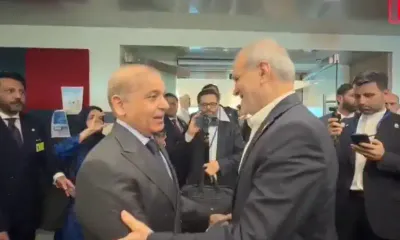 In meeting with Pezeshkian, PM Shehbaz stresses implementation of Islamabad MoUPrime Minister Shehbaz Sharif met Iranian President Masoud Pezeshkian on Thursday and stressed the importance of implementing the Islamabad Memorandum of Understanding — a 14-point interim agreement signed between the US and Iran in June that gave a framework for ending the ongoing conflict. Pakistan signed the agreement as a mediator. The conflict has since continued with sporadic strikes and a US naval blockade of Iranian ports, while Iran has maintained control over traffic through the strategic waterway. In his meeting with Pezeshkian, PM Shehbaz expressed “deep concern over the prolonged conflict and emphasised the need for restraint, de-escalation, and sustained diplomatic engagement to achieve lasting peace and stability in the region”, a statement by the Prime Minister’s Office (PMO) said. “He also underscored the importance of implementing the Islamabad Memorandum of Understanding and reaffirmed Pakistan’s readiness to continue playing sincere and constructive role in support of regional peace and stability,” the statement added. The two leaders discussed the evolving regional situation, with Pezeshkian appreciating Pakistan’s “principled diplomacy and concerted efforts for regional peace and security”, according to the statement. “Underlining the importance of maintaining regular consultations and close coordination to address the prevailing challenges and seize the opportunities, the two sides agreed to work for regional peace, security, and prosperity,” it said. Regarding bilateral ties, the two leaders reaffirmed the close and longstanding ties between Pakistan and Iran and underscored the need to further strengthen bilateral cooperation across all areas of mutual interest, it added. “The Iranian President also underscored the enduring strength of Pakistan-Iran relations, rooted in shared history, culture, and faith, and reaffirmed Tehran’s strong desire to further deepen multifaceted cooperation,” it said. The meeting took place on the sidelines of the 81st session of the United Nations General Assembly (UNGA) in New York. Deputy Prime Minister and Foreign Minister Ishaq Dar, Defence Minister Khawaja Asif, and Special Assistant to the Prime Minister Tariq Fatemi were also present at the meeting, as well as Iranian Foreign Minister Abbas Araghchi. PM Shehbaz and Pezeshkian had previously held a meeting in Kyrgyzstan, on the sidelines of the Shanghai Cooperation Organisation (SCO) Council of Heads of State meeting in August, during which they reaffirmed the close and longstanding ties between both countries. At the same time, PM Shehbaz had also stressed the importance of restraint and sustained diplomatic engagement to achieve lasting peace and stability in the region amid the US-Iran conflict. Thursday’s meeting with the Iranian president comes as Islamabad continues efforts to bring the United States and Iran back to the negotiating table regarding the war in the Middle East. Pezeshkian on Wednesday struck a defiant tone speaking at the UN for the first time since Washington and Israel launched an all-out war on his country, vowing Tehran would never “bend at the knee”. He made no reference to the talks to resolve the stalled war in his steely speech. However, the Iranian side earlier this week indicated its willingness to return to dialogue with the US to de-escalate tensions. The flexibility on the issue was indicated by the Iranian side in a meeting between Pezeshkian and Interior Minister Mohsin Naqvi during the latter’s visit to Tehran. Pakistan, meanwhile, has remained engaged in efforts to keep the diplomatic channel open. Chief of Defence Forces and Chief of the Army Staff Field Marshal Asim Munir has used his contacts with the US administration, while Pakistani officials have made repeated visits to Tehran. Diplomatic sources say Qatar is handling the immediate shuttle diplomacy between the US and Iran in New York, while Pakistan is working through a parallel channel with Tehran as regional efforts intensify to keep the latest diplomatic contacts from collapsing. The distinction has emerged from reporting by US and international media on the renewed US-Iran contacts around the United Nations General Assembly, with Qatar and Pakistan both involved in efforts to keep communication open between Washington and Tehran. PM Shehbaz is expected to address the UNGA on Friday.Dawn
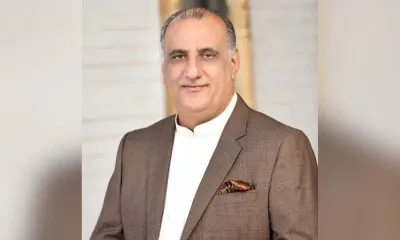 PML-N's Dr Najeeb Naqi sworn in as AJK president after his electionMUZAFFARABAD: Dr Najeeb Naqi of the ruling PML-N was sworin in as the president of Azad Jammu and Kashmir (AJK) on Thursday, hours after his election to the office. AJK Chief Justice Raja Saeed Akram administered the oath to Dr Naqi at a ceremony held at the President’s House in Muzaffarabad. He had secured 32 votes in the election held at the AJK Legislative Assembly’s Secretariat earlier in the day, while PPP’s Chaudhry Latif Akbar secured 13 votes. Polling began at 11am and concluded at 1pm. Under the AJK Constitution, the president is elected by the members of the Legislative Assembly by a majority of the total 53 members. Since elections to seven seats of Poonch and Sudhnoti districts have not been held due to the law and order situation, the current strength of the assembly is 46. Forty-five of the 46 lawmakers cast their votes to elect the president on Thursday, with one PPP lawmaker being absent. After the results were announced, people who had come from Poonch and other areas gathered outside the assembly and raised slogans. In his brief address to the gathering, Dr Naqi said Poonch — the AJK division from where he hails — was facing a difficult situation and expressed hope that “with full determination and effort”, the area would overcome its difficulties and return to the path of development. He thanked the people for coming from far-off places despite difficulties on the way and said he would make every effort to meet the expectations of the people of Azad Kashmir. “I will do my best to ensure that the new government of Azad Kashmir lives up to the expectations of its people,” he said, thanking his audience once again and saying that he would continue to meet them in the future. Dr Naqi has previously served as AJK health minister. He has also held the portfolios of education and information technology. Dr Naqi was set to contest the 2026 polls . However, elections in seven constituencies of Poonch division, including his own, were put on hold due to the law and order situation in the region. Prime Minister Shehbaz Sharif congratulated Dr Naqi on his victory and conveyed his best wishes, according to a statement issued by his office. “Dr Najeeb Naqi’s election reflects the confidence of the people of AJK,” PM Shehbaz was quoted as saying. The premier, in his message to Dr Naqi, expressed hope that he would fulfil his responsibilities effectively and play a constructive role in the development, prosperity and welfare of the people of AJK. PM Shehbaz also reaffirmed that the federal government will extend its full cooperation to AJK, the statement added. The office of the AJK president has remained vacant since January this year following the death of Barrister Sultan Mahmood. Previously, then-Legislative Assembly Speaker Chaudhry Latif Akbar was serving as the acting president. The role was then assumed by incumbent Legislative Assembly Speaker Chaudhry Tariq Farooq after being elected speaker on Aug 25. ‘Breeze of fresh air’ Following the announcement of the results at the legislative assembly session on Thursday, Leader of the Opposition Chaudhry Muhammad Yasin was the first to take the floor and congratulate Dr Naqi. However, he reiterated the PPP’s allegations that the recent elections held in AJK had been rigged and regretted that the new government was taking decisions based on “political vengeance”. Former prime minister Raja Farooq Haider then took the floor and dismissed Yasin’s allegations. Speaker Chaudhry Tariq Farooq suggested the allegations should be left for another occasion, saying that the day’s speeches should focus on the presidential election. He offered the floor to any other opposition lawmaker wishing to speak. However, when no one else showed interest, he gave the floor to Leader of the House and Prime Minister Iftikhar Gillani. Gillani congratulated Dr Naqi, his party’s central leadership and the people of Poonch on his election. Describing Naqi as a “noble person,” he said his election had sent a “breeze of fresh air” to Poonch division. Gillani called for strengthening the legislature and said the government was committed to working through the assembly. He also denied allegations that any package approved by the previous PPP government was shelved or overturned. He said the cabinet only had decided to review the education package after objections were raised over some of its provisions. He assured the opposition that its due share and role would never be undermined. Before adjourning the session, Speaker Farooq also greeted Dr Naqi and expressed hope that with him in office, AJK would see an improved governance system.Dawn
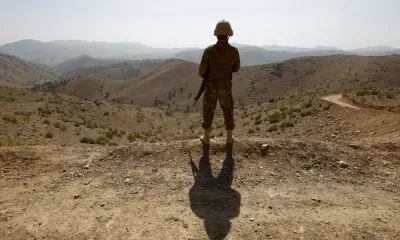 8 terrorists killed in KP's North Waziristan: security sourcesSecurity forces killed eight terrorists in Khyber Pakhtunkhwa’s North Waziristan during an intelligence-based operation (IBO), security sources said on Thursday. The sources said the terrorists belonged to Fitna al Khawarij — a term the state uses for terrorists belonging to the banned Tehreek-i-Taliban Pakistan (TTP). The hideouts used by the terrorists were also completely destroyed during the operation, according to security sources. Although the terrorists attempted to use a mosque as a shield to evade the security forces, the operation was carried out “with precision”, keeping the sanctity of the mosque in view, the sources were quoted as saying. Interior Minister Mohsin Naqvi paid tribute to the security forces for eliminating “eight Khawarij ”. “KP is on the front line against terrorism, and the security forces are determined to uproot terrorism from its roots,” he was quoted as saying by his ministry. “We are proud of the brave sons of the security forces who foiled the terrorists’ nefarious designs.” KP and Balochistan have witnessed an increase in terrorist attacks in recent weeks, prompting security forces to intensify counter-terrorism operations. KP, excluding the merged districts, recorded 54 terrorist attacks in August compared with 36 in July, representing an increase of 50pc, according to data compiled by the Pakistan Institute for Conflict and Security Studies (PICSS). On the night between Aug 31 and Sept 1, security forces killed 15 terrorists who had tried to cross into North Waziristan through the Afghan border, and later eliminated 10 more terrorists holed up in the area, according to Inter-Services Public Relations (ISPR). Another seven terrorists were neutralised in a separate encounter in North Waziristan after their movement along the Pak-Afghan border was detected, ISPR had said. In late August, the official vehicle of the Miramshah assistant commissioner came under fire in North Waziristan’s Mirali tehsil. The AC was not travelling in the vehicle, and while his children and other family members were on board, they remained unharmed.Dawn
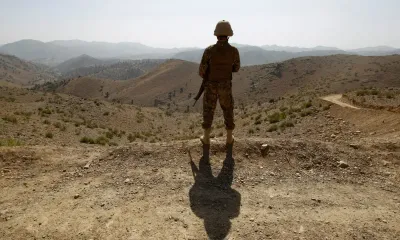 Security forces kill 8 terrorists in KP's North WaziristanSecurity forces killed eight terrorists in Khyber Pakhtunkhwa’s North Waziristan during an intelligence-based operation (IBO), security sources said on Thursday. The sources said the terrorists belonged to Fitna al Khawarij — a term the state uses for terrorists belonging to the banned Tehreek-i-Taliban Pakistan (TTP). The hideouts used by the terrorists were also completely destroyed during the operation, according to security sources. Although the terrorists attempted to use a mosque as a shield to evade the security forces, the operation was carried out “with precision”, keeping the sanctity of the mosque in view, the sources were quoted as saying. Interior Minister Mohsin Naqvi paid tribute to the security forces for eliminating “eight Khawarij ”. “KP is on the front line against terrorism, and the security forces are determined to uproot terrorism from its roots,” he was quoted as saying by his ministry. “We are proud of the brave sons of the security forces who foiled the terrorists’ nefarious designs.” KP and Balochistan have witnessed an increase in terrorist attacks in recent weeks, prompting security forces to intensify counter-terrorism operations. KP, excluding the merged districts, recorded 54 terrorist attacks in August compared with 36 in July, representing an increase of 50pc, according to data compiled by the Pakistan Institute for Conflict and Security Studies (PICSS). On the night between Aug 31 and Sept 1, security forces killed 15 terrorists who had tried to cross into North Waziristan through the Afghan border, and later eliminated 10 more terrorists holed up in the area, according to Inter-Services Public Relations (ISPR). Another seven terrorists were neutralised in a separate encounter in North Waziristan after their movement along the Pak-Afghan border was detected, ISPR had said. In late August, the official vehicle of the Miramshah assistant commissioner came under fire in North Waziristan’s Mirali tehsil. The AC was not travelling in the vehicle, and while his children and other family members were on board, they remained unharmed.Dawn
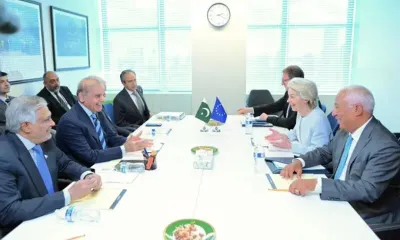 In meeting with top EU officials, PM Shehbaz reiterates commitment to continued engagement under GSP+Prime Minister Shehbaz Sharif has reaffirmed Pakistan’s commitment to continued engagement with the GSP+ of the European Union (EU), the Prime Minister’s Office (PMO) said on Thursday. The prime minister made the remarks during a meeting with European Council President António Luís Santos da Costa and European Commission President Ursula von der Leyen on the sidelines of the United Nations General Assembly in New York. During the meeting, the leaders reviewed the full spectrum of Pakistan-EU relations and expressed satisfaction at the growing momentum in high-level exchanges and engagement between Pakistan and the EU, according to the PMO. PM Shehbaz underscored the importance of “sustained leadership-level engagement” in providing greater direction and momentum to the relationship. He reaffirmed Pakistan’s commitment to further strengthening its “broad-based partnership” with the European Union and the full implementation of the Pakistan-EU Strategic Engagement Plan, the PMO said. The leaders also exchanged views on regional and global developments and reaffirmed the importance of dialogue, diplomacy, international law and the “peaceful resolution of disputes”. The prime minister also reiterated his invitation to the presidents of the European Council and European Commission to visit Pakistan and expressed his desire to continue working closely with them to “further deepen the mutually beneficial partnership”. PM Shehbaz’s remarks came as Pakistan and the EU on Monday signed €65 million (about $75m) in financing agreements to support Global Gateway investments, strengthen the rule of law and business environment, and enhance energy and environmental resilience. Meanwhile, in a post on X, Von der Leyen described the meeting with PM Shehbaz as “very good” and said the EU valued its partnership with Pakistan. She said the EU and Pakistan had discussed how to take their partnership forward, “from trade to addressing illegal migration”. She also thanked the prime minister for his initiative to mediate in the conflict between the United States and Iran, adding that Pakistan was playing an “important role” in support of de-escalation, dialogue and the peaceful resolution of conflicts. Earlier this week, Deputy Prime Minister and Foreign Minister Ishaq Dar met the EU High Representative for Foreign Affairs and Security Policy, Kaja Kallas, where he stressed the significance of GSP+ for Pakistan’s trade relations with the EU. The meetings take place against the backdrop of an intense engagement between Islamabad and Brussels over the trading scheme and its future. The current EU GSP+ framework is set to expire at the end of this year, and Pakistan is required to seek inclusion in the successor regime, which would carry more stringent requirements. Though the new trading framework will take effect with the turn of the year, Pakistan and other existing beneficiaries will continue to receive preferences during a two-year transition period ending on Dec 31, 2028. But the transition does not amount to an automatic continuation of the facility for the two years or a roll over into the new scheme. A European Commission assessment covering the years 2023-25, released in July this year, concluded that Pakistan had faced compliance issues with its obligations, regressed in several areas and made limited positive change. It should be mentioned that the EU’s GSP+ regime is tied to compliance with international conventions on human rights, labour rights, environmental protection and good governance. The report had identified significant concerns relating to enforced disappearances and extrajudicial killings, freedom of expression, journalists’ and minority rights, judicial independence, access to justice and forced labour. Earlier this month, the European Union’s ambassador to Pakistan, Raimundas Karoblis, had also cautioned that GSP+ benefits could not be taken for granted. Transitioning from ‘macroeconomic stabilisation towards a recovery path’: Shehbaz tells IMF On Wednesday, PM Shehbaz, in a meeting with the International Monetary Fund’s top official, stressed that Pakistan was transitioning from “macroeconomic stabilisation towards a recovery path”, PMO said. PM Shehbaz met with the Managing Director Kristalina Georgieva on the sidelines of the UNGA. Pakistan is currently under a $7 billion, 37-month IMF programme , aimed at stabilising the economy through fiscal discipline, structural reforms, and measures to support long-term growth. In the meeting, the premier thanked the IMF for its “continued support” for Pakistan’s economy. He reaffirmed that his government was committed to implementing the IMF-supported reform programme. PM Shehbaz also appreciated Georgieva’s role in “strengthening Pakistan’s constructive partnership” with the lending agency. The premier also reaffirmed the government’s “strong ownership” of the IMF’s es economic reform agenda. He also “reiterated Pakistan’s strong resolve to maintain the momentum of reforms and advance structural measures aimed at strengthening the economy and laying the foundations for sustainable and inclusive growth,” the PMO added. The prime minister also held that Pakistan was transitioning from “macroeconomic stabilisation towards a recovery path, supported by prudent fiscal and monetary policies,” despite regional conflict and external inflationary pressures. PM Shehbaz also highlighted progress made in “fiscal discipline, external buffers and investor confidence,” citing “the National Tariff Policy, enhanced domestic revenue mobilisation, and progress on privatisation”. He also said that the government was protecting vulnerable segments of society. Georgieva, for her part, lauded Pakistan’s performance under the IMF, while also acknowledging that Pakistan’s efforts aimed at economic stabilisation were showing “tangible results”. Pakistan’s upcoming IMF programme review and “continued cooperation between Pakistan and the fund in advancing reforms, strengthening economic resilience and supporting sustainable growth”. Deputy Prime Minister & Foreign Minister Ishaq Dar and Finance Minister Muhammad Aurangzeb were also present at the meeting, among other senior government functionaries. In meeting with EXIM Bank, Aurangzeb discusses Reko Diq, PIA procurement Meanwhile, Finance Minister Muhammad Aurangzeb met with the Chair of the US Export-Import Bank, John Jovanovich, on the sidelines of the UNGA. According to a statement issued by the finance ministry, the two discussed the Reko Diq mining project and funding opportunities for procuring an aircraft for Pakistan International Airlines (PIA). The finance minister shared PIA’s interest in Boeing’s 787 Dreamliners and “sought support for a financing package covering aircraft and engines”. “He also raised the need for spare parts to return grounded Boeing 777 aircraft to service,” the ministry said. Aurangzeb also stressed Reko Diq’s significance to Pakistan’s “future exports and the cost of delays”. “Both sides agreed that work on a broader cooperation framework should continue while prioritising specific transactions, including possible financing for aircraft pre-delivery payments,” the statement read. The two also discussed refinery upgrades and EXIM Bank’s support. The finance minister also participated in the Digital Cooperation Organisation’s high-level ministerial dialogue, where he spoke about the adoption of virtual assets and Pakistan’s efforts on the legislation, oversight and licensing of virtual assets. Aurganzeb also called for practical use of virtual assets beyond cryptocurrency, “including cheaper and more seamless remittances and the potential tokenisation of public debt and real estate”.Dawn
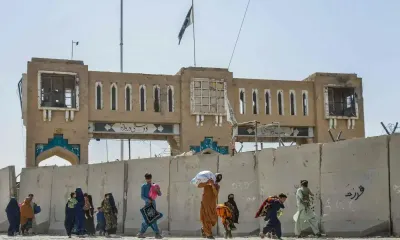 Dangerous borderWITH no let-up in terrorist attacks on Pakistan by elements finding refuge in Afghanistan, Islamabad has again launched kinetic action in the border area to target terrorist groups. The actions have resulted in exchanges of fire with the Afghan Taliban regime. Pakistan seems to be trapped in a cycle of escalation for the simple reason that Kabul is unwilling to act against terrorist groups active on its soil, such as the banned TTP, that seek to harm this country. Until this fundamental issue is addressed, bilateral ties will not improve. It was reported on Wednesday that the military had shot down drones apparently originating from Afghanistan as they attempted to violate Pakistani airspace. Earlier, Pakistan had launched air strikes in the border area, which killed a number of terrorists, after a spate of violent attacks, including the assault targeting the old Police Lines in Kohat last week. Pakistani forces also thwarted infiltration attempts in the Kurram area, which resulted in an exchange of fire with the Afghan Taliban. Along with taking kinetic action, Pakistan has highlighted this grim situation on the world stage. The UN Security Council has condemned the Kohat terrorist attack, calling for the “perpetrators … and sponsors” of the atrocity to be brought to justice. Pakistan had earlier told the UNSC that it would respond to threats originating from Afghanistan in self-defence. Moreover, the deputy prime minister, while speaking at a meeting of the OIC contact group on Afghanistan on the sidelines of the ongoing UN General Assembly session, reiterated the need for a verifiable mechanism to prevent the use of Afghan soil for terrorism. China, as well as Muslim states such as Saudi Arabia and Qatar, has backed diplomatic efforts to resolve the differences between Kabul and Islamabad. While hostilities are undesirable, if the Afghan Taliban take no action against those who spill innocent blood in this country, Pakistan will have no option but to take action to defend itself against terrorism. Yet while immediate threats must be confronted, long-term peace can only come through dialogue, and a commitment by the Taliban to curb cross-border terrorism. As has been highlighted in these columns previously, a bevy of terrorist groups call Afghanistan home, and pose a threat to the whole region, not just Pakistan — although this country, owing to its physical proximity, has been hit the hardest. Therefore, only a sustained and coordinated regional effort can succeed in eliminating the terrorist threat emanating from Afghanistan. It is clear that, ultimately, the Taliban must decide whether they want to integrate with the rest of the region, or remain a pariah regime because of their stubborn ideological attachment to their violent comrades. Published in Dawn, September 24th, 2026Dawn
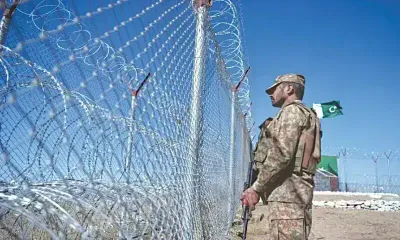 Pakistan conducted strikes at 10 locations in Afghanistan in response to recent drone attacks: info ministerPakistan has conducted precision aerial and drone strikes in 10 locations across Afghanistan in retaliation for drones launched from the neighbouring country a day earlier, Information Minister Atauallah Tarar said in the early hours of Thursday. “In exercise of its sovereign right to self-defence, Pakistan conducted precision aerial and drone strikes against 10 locations in Afghanistan used for launching and storing these drones,” Tarar wrote in a post on social media platform X. He added that the strikes were “deliberate, precise, calibrated and proportionate and strictly limited to identified military objectives directly linked to the attempted attacks against Pakistan”. In the post, Tarar condemned Wednesday’s “deliberate and unlawful” drone incursion, calling it a “blatant violation of Pakistan’s sovereignty and territorial integrity”. He held the drone attacks were a “grave and unacceptable act of aggression”. Tarar said Pakistan had conveyed its concerns to the Afghan Taliban over the terrorist elements emanating from Afghan soil and the presence of terrorist sanctuaries. However, he noted that rather than dismantling the terrorist networks and taking action against them, the Afghan Taliban chose to “escalate the situation through hostile drone operations against Pakistan”. He said that in Wednesday’s attack, Pakistan’s Air Defence systems had “detected, tracked and neutralised all intruding platforms before they could reach any of their intended targets, comprehensively thwarting the attempted attack”. Tarar held that Pakistan will “neither accept nor tolerate” attacks from Afghan territory — whether by terrorist groups or the Afghan Taliban regime itself. He warned against violation of Pakistan’s sovereignty, vowing that it will be met with “an immediate and decisive response”. The minister further held that: “Any threats, denials or attempts to deflect responsibility by [the] Afghan Taliban will neither alter the facts nor constrain Pakistan’s inherent right to defend its territory, its people and its national security.” Tarar, in the post, called upon the Afghan Taliban to halt immediately “hostile activity” and abide by international obligations “by taking effective, concrete, verifiable and sustained action against terrorist entities operating from Afghan soil”. Tarar warned that the Afghan territory should not be used for attacks against Pakistan. He maintained that Pakistan remained committed to “regional peace, dialogue and constructive engagement” and was not seeking escalation. However, the information minister warned: “This commitment must not be mistaken for weakness or an unlimited tolerance of hostile actions”. He vowed that the country will defend its sovereignty, territorial integrity and the lives of citizens with “full resolve and take all necessary measures to protect them”. “Any further provocative act by [the] Afghan Taliban will be responded with [a] firm and resolute response,” the information minister warned. Pakistan’s response came after eight drones, launched from Afghanistan, entered the Pakistani airspace near the Torkham border and Kohat on Wednesday. Security sources said they were subsequently shot down. It was also reported that the Afghan Taliban engaged in unprovoked firing the night before near Kurram as security forces foiled an attempt by terrorists to cross into Pakistan. On Sept 21, Pakistan, in response to recent terrorist attacks in KP, conducted “calibrated” airstrikes in the border region with Afghanistan against terrorist hideouts and safe havens of terrorist organisations. A statement from the information ministry on Monday said that over 28 terrorists were eliminated in the strikes. “It is a matter of grave concern that Afghanistan continues to remain a hub of terrorism,” the ministry said at the time, specifying that the “threat to Pakistan emanates from Afghanistan”. The airstrikes had come after a major attack in the old Police Lines in KP’s Kohat claimed 23 lives and injured about 100 others. Eight terrorists were killed during an overnight clearance operation launched to clear the area. Ghazab lil Haq Tarar described Pakistan’s action as part of its ongoing counterterrorism campaign, Ghazab lil Haq. On the night of February 26, following unprovoked firing by the Afghan Taliban from across the border, Pakistan launched Operation Ghazab lil Haq against terrorist hideouts. Pakistan also carried out strikes in the border region with Afghanistan in late June , with the government saying they were in response to a wave of terrorist attacks, including one on a Rangers camp in Karachi . At the time, Tarar said that 25 terrorists were killed in those strikes in Paktia, Paktika and Kunar. Pakistan had carried out similar strikes on terrorist hideouts along its border with Afghanistan earlier that month, killing 26 terrorists. In July, security forces responded to unprovoked firing by the Afghan Taliban at border posts in Kurram, security sources had said. In the same month, the Afghan Taliban regime launched four rudimentary drones across the border into Balochistan, which were shot down by security forces. Two drones were also shot down in June in Qila Abdullah and Chagai districts. Pak-Afghan ties As clashes continue, tensions between Islamabad and Kabul have remained high. Islamabad has repeatedly urged the Taliban administration in Kabul to dismantle terrorist sanctuaries on Afghan soil, particularly those linked to the banned TTP, that are used for attacks in Pakistan. Officials say those appeals have gone unheeded. Earlier this week, Deputy Prime Minister and Foreign Minister Ishaq Dar addressed a meeting of the Organisation of Islamic Cooperation (OIC), where he called for steps towards concrete and verifiable action to prevent the use of Afghan soil for terrorism against any neighbouring country, particularly Pakistan. Dar said Pakistan was “seriously concerned” about the presence of over two dozen terrorist groups in Afghanistan that threatened regional and international peace and security. Last week, Pakistan also told the UN Security Council that it would respond to terrorist threats emanating from Afghanistan in self-defence as and when needed and in accordance with international law. Earlier this month, the Foreign Office (FO) declared that meaningful progress in relations with Kabul would depend on the Taliban taking concrete and verifiable action against Tehreek-i-Taliban Pakistan (TTP) and other terrorist groups operating from Afghan territory. It maintained that while Islamabad welcomed China’s continuing engagement, the external facilitation could not substitute for action by Kabul against terrorist infrastructure. According to a UN Security Council-mandated monitoring report — covering the period from December 16, 2025 to June 9, 2026 — Afghan Taliban’s continued support for TTP has contributed to a rise in the frequency and lethality of terrorist attacks in Pakistan, even as Kabul has taken some initial steps to rein in the group. The report also pointed to growing operational and facilitation linkages among the TTP, Al Qaeda, Islamic State-Khorasan (ISIL-K) and the Baloch Liberation Army (BLA).Dawn
 Trump, Greenland, Denmark sign deal in bid to end Arctic standoffUnited States President Donald Trump and the leaders of Greenland and Denmark signed an agreement on Tuesday that permits a larger US military presence on Greenland and may resolve a standoff over the strategically located and mineral-rich island. The agreement, signed during Trump’s visit to the UN General Assembly in New York, stops short of Trump’s demand that the US adopt Greenland as a US territory to head off the growing Arctic presence of Russia and China. But the deal does permit a greater US military presence on the icy territory, an option that emerged as Greenland leaders argued against a complete US takeover. A text of the deal released after the signing event said the US can establish a “Golden Dome” defence system in Greenland as a shield against ballistic missile threats. The shortest route from Europe to North America runs via the Arctic island, which is the location of the northernmost US military base. In his speech to the assembled world leaders at the UN before the signing ceremony, Trump said the agreement gives the US “permanent control over security and all other needs on that territory”. “No US adversary will ever be permitted to establish a military presence in Greenland any more, or make sensitive investments there without our express written approval,” Trump said. Trump signed the agreement along with Danish Prime Minister Mette Frederiksen and Greenland Prime Minister Jens-Frederik Nielsen in a trilateral ceremony after Trump gave his UN speech. Frederiksen described the agreement as a deal that can “last forever” and said it underlines the importance of the Nato alliance and respects Greenland’s right to self-determination. A strong Nato Nielsen emphasised the importance of Nato in the Arctic region. “We believe that it is vital to keep Nato strong, also in the Arctic, where the alliance has a key role to play,” he said. Greenland, a former colony and now a semi-autonomous territory of the Kingdom of Denmark, sits between the Arctic and North America and holds vast energy resources. The US already operates Pituffik Space Base in remote northwestern Greenland. The deal opens two new military sites: Narsarsuaq, a former Cold War airbase whose population has dwindled to just a few dozen, and Mestersvig, currently used by the Sirius Dog Sled Patrol, a Danish special forces unit. “We will immediately begin the process of developing a large military presence in the appropriate location. We will be building two very major military bases,” Trump said in his UN speech. Trump’s refusal to rule out military or economic force to acquire Greenland triggered a diplomatic crisis in January within Nato and forced Denmark and the island’s government into months of intensive negotiations. “The reason why we can conclude this agreement, which is beneficial from Greenlandic, American, and European perspectives, as well as on behalf of the Kingdom of Denmark, is that it is a matter of security policy,” Frederiksen said in New York on Monday. The text of the agreement says it amends a 1951 defence treaty that had been the legal basis for the US presence. It adds that Washington may seek further bases in the future, with details decided by mutual agreement. The deal has no end date, grants US aircraft and vessels broad access across Greenland and its territorial waters, and bars non-Nato states from establishing military installations on the island. It also restricts foreign investment, effectively blocking states and investors from countries outside Nato, Nato partners and the European Union from holding control or significant influence in sectors deemed particularly sensitive, including critical infrastructure and resource extraction. The deal, which needs approval by the parliaments of Denmark and Greenland, marks a shift from Trump’s earlier ambitions for an outright acquisition of Greenland, an island three times the size of Texas with a population of only 57,000 scattered along its rugged coastline. But it represents the first major increase in US military infrastructure in Greenland since the Cold War, when the US maintained 17 installations and more than 10,000 personnel there.Dawn
 11 hurt as teen opens fire outside Turkiye schoolA teenager opened fire outside a high school in western Turkiye on Tuesday, wounding 11 people before being detained by police, a minister said. The incident happened around 8am (10am PKT) in Turgutlu in the province of Manisa, near the western resort city of Izmir, the regional governor’s office said. School shootings are rare in Turkiye, although there were two attacks in April on consecutive days in southern Turkiye that sparked widespread anger. “Eleven students were injured, two of them seriously.. The minor who carried out the attack was quickly apprehended and taken into custody,” Justice Minister Akin Gurlek wrote on X. He said the suspect’s parents and grandfather had also been detained by investigators probing the attack, which saw police and rescuers rushing to the scene alongside panicked parents. Several media outlets, including IHA news agency and NTV private television, said students were among the injured, with police and rescuers rushing to the scene. DHA news agency broadcast CCTV footage of the alleged attacker, a young man wearing black jeans, a black jacket and a green top, walking along a street holding what appeared to be a rifle. IHA had a similar image of what appeared to be the same person with a gun, although this time running. Footage from outside the school showed police wrestling a man in a white shirt to the ground before leading him away, as a woman screamed, with onlookers pressed against the school fence, filming with their mobile phones. Authorities have opened an investigation into the incident, the governor’s office said. School safety The attack came five months after two back-to-back school shootings that raised public concerns about security in Turkish schools. In April, a 14-year-old opened fire at a school in the southern province of Kahramanmaras, killing a teacher and nine students aged 10 and 11. The attacker died at the scene. A day earlier, another teenager opened fire at his former high school in the southeastern province of Sanliurfa, wounding 16 people before taking his own life when confronted by police. Following the two attacks, President Recep Tayyip Erdogan dismissed a deputy education minister and pledged his government would introduce tighter controls on gun ownership. He vowed school safety would be one of the government’s top priorities. “When we look at similar attacks around the world, especially in the United States, we see one of the perpetrators’ aims is to terrorise society,” he said. New security measures The attack came a day after Education Minister Yusuf Tekin and Interior Minister Mustafa Ciftci signed a protocol setting out security measures for the 2026-2027 academic year, which began on September 14. Ciftci said authorities had strengthened school security following the April shootings. “To ensure such pain is never experienced again, I would like to remind everyone that we must be extremely vigilant this year,” he said. He said 31,000 school grounds supervisors had been deployed for the first time. The interior ministry also carried out a fresh security assessment of schools and assigned police officers to first- and second-degree risk schools, where they remain on permanent duty, he said. Schools classified as lower risk are assigned police liaison officers who work in coordination with school administrations. Police charged with monitoring security, public order, narcotics and juvenile issues would conduct regular patrols around schools, he said. Authorities would also inspect school buses and review abandoned buildings near schools under the new measures.Dawn
 8 injured in shooting outside Turkiye school, suspect detainedA gunman opened fire outside a high school in western Turkiye on Tuesday, wounding eight people, before being detained by police, local officials said. The incident happened around 8am (10am PKT) in Turgutlu in the province of Manisa, near the western resort city of Izmir, the regional governor’s office said. School shootings are rare in Turkiye, although there were two attacks in April on consecutive days in southern Turkiye that sparked widespread anger. Several media outlets, including IHA news agency and NTV private television, said students were among the injured, with police and rescuers rushing to the scene. DHA news agency broadcast CCTV footage of the alleged attacker, a young man wearing black jeans, a black jacket and a green top, walking along a street holding what appeared to be a rifle. IHA had a similar image of what appeared to be the same person with a gun, although this time running. Footage from outside the school showed police wrestling a man in a white shirt to the ground before leading him away, as a woman screamed, with onlookers pressed against the school fence, filming with their mobile phones. Authorities have opened an investigation into the incident, the governor’s office said. School safety The attack came five months after two back-to-back school shootings that raised public concerns about security in Turkish schools. In April, a 14-year-old opened fire at a school in the southern province of Kahramanmaras, killing a teacher and nine students aged 10 and 11. The attacker died at the scene. A day earlier, another teenager opened fire at his former high school in the southeastern province of Sanliurfa, wounding 16 people before taking his own life when confronted by police. Following the two attacks, President Recep Tayyip Erdogan dismissed a deputy education minister and pledged his government would introduce tighter controls on gun ownership. He vowed school safety would be one of the government’s top priorities. “When we look at similar attacks around the world, especially in the United States, we see one of the perpetrators’ aims is to terrorise society,” he said. New security measures The attack came a day after Education Minister Yusuf Tekin and Interior Minister Mustafa Ciftci signed a protocol setting out security measures for the 2026-2027 academic year, which began on September 14. Ciftci said authorities had strengthened school security following the April shootings. “To ensure such pain is never experienced again, I would like to remind everyone that we must be extremely vigilant this year,” he said. He said 31,000 school grounds supervisors had been deployed for the first time. The interior ministry also carried out a fresh security assessment of schools and assigned police officers to first- and second-degree risk schools, where they remain on permanent duty, he said. Schools classified as lower risk are assigned police liaison officers who work in coordination with school administrations. Police charged with monitoring security, public order, narcotics and juvenile issues would conduct regular patrols around schools, he said. Authorities would also inspect school buses and review abandoned buildings near schools under the new measures.Dawn
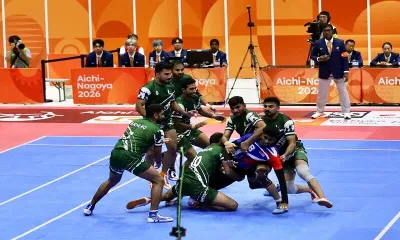 Asian Games: Pakistan kabaddi team cruise past Malaysia as Asim Khan takes MMA bronzePakistan’s kabaddi team opened their Asian Games campaign in commanding fashion on Monday, while Asim Khan’s run in the MMA event ended in the semi-finals with a bronze already secured. In the kabbadi’s Group B fixture at the Tokai Citizen Gymnasium, Pakistan dismantled Malaysia 65-22, racing to a 38-11 lead by half-time before adding 27 more in the second period. The national side also recorded 10 all-out points in a dominant display. Pakistan face Nepal, who lost 48-59 to Thailand, on Tuesday. Pakistan’s first medal of this edition came in Modern Mixed Martial Arts (MMA) event, where Asim lost his semi-final bout to Mirzobek Umarov of Tajikistan in the -60kg category at the Nagoya City Inae Sports Centre. He had already confirmed bronze by reaching the last-four on Sunday, beating Sopanha Pheng of Cambodia in the quarter-final. In the pool, Hamza Asif failed to progress from the 50m freestyle heats, finishing second in his heat in 24.04 seconds, 0.13 seconds behind Alan Muhin of Turkmenistan. Overall, his time placed him 30th, well outside the cutoff — Singapore’s Jonathan Tan was the last to qualify in 10th place with 22.43. Pakistan’s woes in the table tennis team event continued, with the men’s side also finishing winless after a 3-0 defeat to India on Monday. Mohammad Khan lost 11-4, 11-3, 11-5 to Harmeet Desai, while Abbas Khan went down to Sathiyan Gnanasekaran 11-1, 11-8, 11-9. Taimur Khan was then beaten by Payas Jain 11-2, 11-5, 11-7. The women’s team fared no better in the doubles event, as the duo of Fatima Khan and Aleena Khan lost 11-5, 11-1, 11-4 to North Korea’s Gyong Song Pyon and Im Jong Choe. There was more disappointment in the soft tennis mixed doubles at the Higashiyama Park Tennis Centre, where Pakistan were swept aside. The duo of Sabrina Khan and Rafae Bashir were outclassed by Indonesia’s Rizky Laluyan and Allif Nafiiah 4-1, 4-1, 4-0, 4-0, 4-1 in just nine minutes. The pairing of Kainaat Shallwani and Hamza Arain also lost both of their matches 5-0, going down to South Korea and the Philippines. Against Hyunsoo Kim and Sujin Lee, Pakistan lost all five sets 4-0, while the Philippines’ Noelle Manalac and Samuel Nuguit won 4-2, 4-0, 4-0, 4-0, 4-1. In the mixed relay triathlon, Pakistan’s quartet of Anisha, Noor Mohammed Mustaghis, Sana Arif and Ali Hassan were unable to finish the race.Dawn
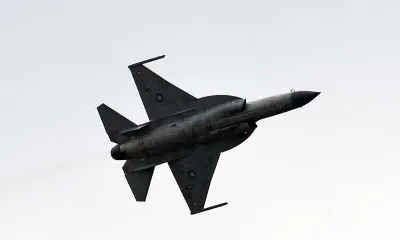 Pakistan carries out 'calibrated’ airstrikes against terrorist targets in border region with AfghanistanThe information ministry confirmed on Monday that Pakistan had conducted airstrikes on terrorist sites “in the border region with Afghanistan”, killing more than 28 terrorists. The ministry stressed that the “calibrated” strikes were carried out “against the hideouts and safe havens of terrorist organisations responsible” for the recent multiple terrorist incidents in Khyber Pakhtunkhwa. “Based on credible intelligence, selective targeting of terrorist camps and hideouts belonging to Fitna al Khawarij and its affiliates has also been carried out in the border region with Afghanistan with precision and accuracy,” the statement said. It added: “Three targets were destroyed with precision, including a suicide bombers’ training markaz (centre), killing 28 terrorists alongside multiple suicide bombers. “Large quantities of weapons and ammunition stored at these marakiz (centres) and hideouts were also destroyed.” The state uses the term Fitna al Khawarij for the banned Tehreek-i-Taliban Pakistan (TTP). Prior to the airstrikes, security forces conducted a “well-planned intelligence-based ground operation” on Sunday against a group of terrorists in KP’s Kohat and Hangu districts, the ministry said. “As a result of precise and skilful engagement, nine khawarij belonging to Indian proxy Fitna al Khawarij were sent to hell, while several were injured,” the statement added. The ministry highlighted that Pakistan had “always strived for the maintenance of peace and stability in the region”. “However, the safety and security of our citizens remains our foremost priority. It is a matter of grave concern that Afghanistan continues to remain a hub of terrorism,” it said, specifying that the “threat to Pakistan emanates from Afghanistan”. “In this context, our action precisely targeted the terrorist hubs. Maximum precautions were taken, and it was ensured that no collateral damage occurs,” the ministry asserted. The airstrikes come a few days after a major attack in the old Police Lines in KP’s Kohat claimed 23 lives and injured about 100 others. Eight terrorists were killed during an overnight clearance operation launched to clear the area. On Sunday, two officers and four others were martyred while eight terrorists were eliminated during a fire exchange between a security forces convoy and armed combatants, the military’s media wing said. There has been a resurgence in terrorism in Pakistan since the Afghan Taliban returned to power in Kabul in 2021. Islamabad has repeatedly urged the Taliban administration in Kabul to dismantle terrorist sanctuaries on Afghan soil, particularly those linked to the banned TTP, that are used for attacks in Pakistan. Officials say those appeals have gone unheeded. According to a UN Security Council-mandated monitoring report — covering the period from Dec 16, 2025 to June 9, 2026 — Afghan Taliban’s continued support for TTP has contributed to a rise in the frequency and lethality of terrorist attacks in Pakistan, even as Kabul has taken some initial steps to rein in the group. The report also pointed to growing operational and facilitation linkages among the TTP, Al Qaeda, Islamic State-Khorasan (ISIL-K) and the Baloch Liberation Army (BLA). ‘Ghazab lil Haq under vision Azm-i-Istehkam’ In its Monday statement, the information ministry reaffirmed that the “relentless counterterrorism campaign Ghazab lil Haq under vision ‘ Azm-i-Istehkam ’ by security forces and law enforcement agencies of Pakistan will continue at full pace to wipe out the menace of foreign-sponsored and supported terrorism from the country”. On the night of February 26, following unprovoked firing by the Afghan Taliban from across the border, Pakistan launched Operation Ghazab lil Haq against terrorist hideouts. The last time Pakistan carried out strikes in the border region with Afghanistan was in late June , with the government saying they were in response to a wave of terrorist attacks, including one on a Rangers camp in Karachi . According to Information Minister Attaullah Tarar, 25 terrorists were killed in those strikes in Paktia, Paktika and Kunar. Pakistan had also carried out similar strikes on terrorist hideouts along its border with Afghanistan earlier that month, killing 26 terrorists. In July, security forces responded to unprovoked firing by the Afghan Taliban at border posts in Kurram, security sources had said. Earlier this month, the Foreign Office (FO) declared that meaningful progress in relations with Kabul would depend on the Taliban taking concrete and verifiable action against TTP and other terrorist groups operating from Afghan territory. It maintained that while Islamabad welcomed China’s continuing engagement, the external facilitation could not substitute for action by Kabul against terrorist infrastructure. Last week, responding to Afghan Taliban spokesperson Zabihullah Mujahid’s remarks , the information ministry had stressed that Pakistan consistently pursued constructive engagement with the Afghan Taliban, but would not allow what it called the “pretence of dialogue” to shield those threatening its people. In his remarks, Mujahid had said Kabul wanted dialogue with Islamabad, but had also warned of “retaliatory action” if Pakistan carried out military operations inside Afghanistan — a warning that the information ministry rejected.Dawn
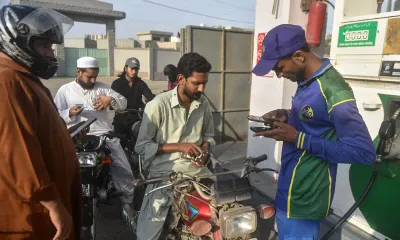 Footprints: TALES FROM THE FUEL QUEUEFOR photojournalists like myself, mobility is a key part of the job. We are expected to be present when news breaks, to capture action, emotion and provide visual reference for the reporting of our colleagues. The US-Israeli invasion of Iran has been dominating headlines for several months now, but its impact is directly felt by those whose household budgets have been thrown out of whack by inordinate hikes in fuel prices. When the Prime Minister’s Special Relief Scheme was announced last week, I was one of the multitudes who breathed a sigh of relief at the prospect of some respite from rising fuel costs. But just how easy is it to avail the facility? To answer this question, I decided to enrol myself for the Rs100 per litre discount available to motorcyclists, and visited several fuel pumps across the city to see whether it is actually benefitting ordinary people. Despite some teething issues, govt has been learning from the hiccups witnessed during the first week of PM’s fuel relief scheme On Sunday, Information Minister Attaullah Tarar announced that over 2.2 million people from across the country had signed up for the fuel price relief, with more than 90pc of them owning motorcycles, rickshaws or Qingqis. I must confess I was not one of those who signed up for the scheme immediately after it was announced. This is because I had heard about the press conference held by the Pakistan Petroleum Dealers Association, where they complained about a lack of clarity on how they would be compensated for the discounted fuel. The next day, after my colleagues assured me that the dealers’ payment issues had been resolved, I visited a few petrol pumps to see what the process was like. I made a bee-line for the cashier at the first pump and asked him directly, “Are people really getting Rs100 per litre relief?” He told me that if one has the required SMS, one can get discounted petrol after verification. Hearing this, I went to the kiosk he indicated. There, pump staff took my mobile phone and checked my details. After verification, I received five litres of petrol at the discounted rate. So far, so good. Others weren’t so lucky, though. One of my colleagues told me they had witnessed an early morning altercation at a North Karachi fuel pump. The reason was that the person who operated the subsidy kiosk would show up at 9am, meaning that most office-going commuters weren’t able to avail the facility during their morning commute. So, after filling up my own bike, I went to other pumps to observe the process. There, I observed Eastern ingenuity (read Jugaar) at work. At the time, the relief scheme only allowed you to get five litres, not less. In case someone doesn’t need five litres, there wasn’t any provision for ‘saving’ some of the fuel quota for later, as the token generated was valid for a single transaction only. However, some industrious bikers had come up with a harmonious solution; to share the tokens. There were a couple of occasions when two motorcyclists would arrive at the pump together. If one needed let’s say, two litres and the other needed three, they would just use one token and get both bikes filled up. Such cooperation may or may not be fully kosher as far as the scheme was concerned, but it did make life easier for the common motorcyclist. While I was watching people get fuel, another thought struck me: not everyone has Rs2,000 to spare for fuel. What about the daily wager, or the student, who only has a limited amount of money and wish to avail the fuel subsidy? If they cannot pay for the full five litres, they are effectively left out. This is exactly what happened as I witnessed a number of people leaving without taking discounted petrol, even though they were registered for the scheme. Admittedly, the government has been learning from the hiccups experienced by beneficiaries of the relief scheme over the first week of its rollout. Later the same day, I heard that the government had revised their rules, and the five-litre compulsion had been dropped, and SMS charges waived for those registering for the scheme. This seems like a logical step, and one hopes that in the days to come, the scheme will become more user-friendly, so more and more people can benefit from it. Published in Dawn, September 21st, 2026Dawn
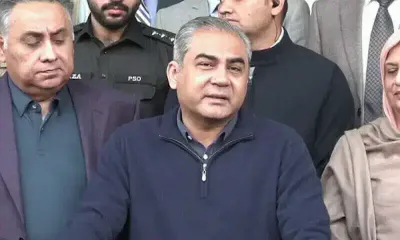 Naqvi due in Iran for talks as Hormuz terms conveyedTEHRAN: With Interior Minister Mohsin Naqvi due in Iran for talks on Sunday, Iranian parliament speaker Mohammad Bagher Ghalibaf has said that terms for the reopening of the Strait of Hormuz have been clearly conveyed to the United States through mediators. “Our messages and the explanation of our conditions have been clearly conveyed to the other party through mediators,” said Iran’s chief negotiator in talks to end the war. “As long as the conditions are not met… and the US commitments are not honoured, it will be impossible to return to the situation from before the negotiations and to an open strait,” he added. In a post on X, Mr Ghalibaf wrote, “It’s Schrödinger: the empire is in the SOH [Strait of Hormuz] cabinet with falling plates, projecting hegemony but fully exposed, trying to suffocate Iran without blowback (impossible).” “This endgame cannot be modelled. It will be opened, and Iran’s hand is already on the lever,” he said, sharing a recent note by JPMorgan wherein analysts said they “simply don’t know how to model the endgame” to the oil market crisis. Also, Mohsen Rezaei, the head of supreme national security council, earlier said Iran had conveyed its conditions to the US via mediator Qatar. “Our conditions are an end to the war on all fronts, the release of our frozen funds and an end to the naval blockade,” he said, in an interview with Al Jazeera. He warned that the US would face an Iran that was better prepared than at the start of the war. The Iranian security chief said Iran had increased the speed of its hypersonic missiles from Mach-6 to Mach-10, improved air defences and developed electronic warfare systems. “Therefore should war break out again, US ships, unless they withdraw from the Indian Ocean, will be subject to attack.” Also, Iran’s Khatam al-Anbiya central military command warned that if the US made a mistake in dealing with Iran, all of its bases and interests in the region would become the target of continuous, effective and painful attacks, without any limit or restraint. Published in Dawn, September 21st, 2026Dawn
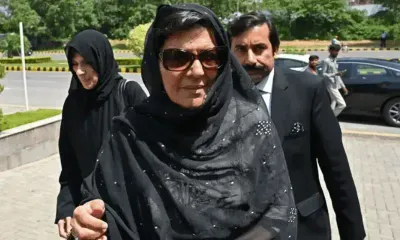 PTI says Aleema detained by authorities as Lahore DC orders arrest under MPOThe PTI said on Sunday that ex-prime minister and party founder Imran Khan’s sister, Aleema Khan, had been detained by authorities, after the office of Lahore’s deputy commissioner (DC) ordered her detention or arrest for 30 days. The development takes place amid reports of a crackdown on the PTI ahead of its September 27 countrywide protest and march to Islamabad, which the party has called to demand Imran’s release from jail and mobilise people for the supremacy of the Constitution. The September 20 order, a copy of which is available with Dawn , said DC Muhammad Ali Ijaz had ordered the detention or arrest of Aleema and a man named Muhammad Ameer under the Punjab Maintenance of Public Order Ordinance, 1960 (MPO). The MPO ordinance allows the authorities to order detention and restrict judicial review of such orders. “Their custody shall be placed under the superintendent, Central Jail, Kot Lakhpat, Lahore. They shall be at liberty to make a representation to the provincial government against this order,” the document read. The DC’s order cited a letter by the Lahore capital city police officer. It said the letter referred to police reports that said Aleema and Ameer “are prejudicial to the public safety and maintenance of public order”. The reports also mentioned that the two had been involved in roadblocks and protests on May 9, 2023, when PTI supporters and workers took to the streets against Imran’s arrest. “They motivated the workers to damage public and government property. Moreover, they are again mobilising the workers through social media and public meetings to create law and order situation, raising/chanting objectionable slogans amongst the general public against the government/institution in order to provoke and incite them,” the order read. It said multiple cases had been registered against the two, declaring them “potential dangers to public peace and tranquillity”. According to the order, the Civil Lines Division superintendent of police and district intelligence branch in-charge recommended their detention under the MPO for a 30-day period “in order to keep the law and order situation in the city intact”. Dawn has reached out to police for a comment but there has been no immediate response. Meanwhile, PTI Chairman Barrister Gohar Ali Khan posted on X that he had been informed about Aleema’s “arrest” by her sister, Noreen Niazi. In his post, Gohar said, “We have clarified that our protest will be peaceful. Our objective is to peacefully struggle for the fulfilment of our constitutional and political demands; we don’t want any kind of clash or violence. “Arresting Aleema Khan sahiba under the MPO in this situation is tantamount to fuelling violence and tension. We strongly condemn it.” He called for an end to all such actions and demanded Aleema’s immediate release. The party would soon present its strategy against such actions, he said. Earlier, the PTI posted on X that Aleema had been “abducted” in Lahore from outside her home by the authorities. In another statement, the party termed the action a “cowardly and deliberate attempt to worsen the situation”. PTI Central Information Secretary Sheikh Waqas Akram also demanded in a post on X that Aleema be presented in court immediately. “A sister is being punished for speaking up for her brother,” Akram alleged. Aleema’s son Shahrez Khan, in a post on X, said his mother “was abducted after leaving home this morning”. “Our family has had no contact or news of her whereabouts,” he wrote, clarifying that Aleema was on bail in all cases against her in Lahore. “We demand the government immediately disclose her whereabouts and ensure her safe return,” Shahrez wrote. Meanwhile, opposition alliance Tehreek-i-Tahafuz-Ayin-i-Pakistan (TTAP) condemned the arrest in a statement. The statement said the move was tantamount to crossing all limits of “state oppression and political revenge. “The TTAP strongly condemns this step by the government, especially the Punjab government. This action exposes the Punjab government’s current oppressive system,” it added. The opposition alliance said Aleema’s arrest would not be tolerated and demanded her immediate release. “The Punjab government must realise that oppression, arrests and revengeful acts cannot resolve political differences,” the TTAP said, reiterating its demand for Aleema’s release, as well as that of other “political prisoners”. Detentions ahead of protest Aleema’s arrest follows a string of reported actions against the PTI in Punjab ahead of its September 27 protest. District authorities had also issued preventive detention orders against dozens of PTI workers under MPO a week ago, including 31 in one Punjab notification and a further 14 in Toba Tek Singh. Similar reports have come from Islamabad, where the PTI plans to march on the protest day. However, the government has vowed to stop the march, and the Islamabad High Court (IHC) has ruled that no political party or its leadership has the “lawful right to occupy public roads, highways, interchanges, toll plazas and buildings in Islamabad”. On Saturday, the capital police took into custody four PTI activists and workers. A police officer told Dawn the activists were arrested under separate charges on a complaint lodged by a sub-inspector. The police got information that the PTI workers were holding a meeting in connection with the planned protest at a property dealer’s office in the area of E-16. Subsequently, a police team was constituted for the raid and arrests. The police claimed that the workers tortured the police team when they raided the meeting venue, besides tearing their uniforms and taking them hostage. On Thursday, PTI Secretary General Salman Akram Raja said he was “released” after being briefly detained, with the party claiming he was held by Islamabad police. Officers in the police and capital administration also said they have started preparations to counter the PTI’s countrywide protest. Authorities have placed hundreds of containers at the city’s entry points as the administration braces for protests.Dawn
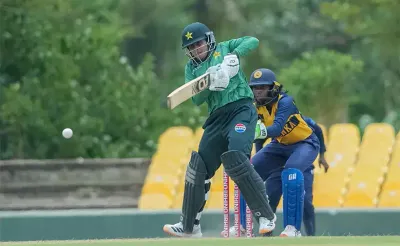 Pakistan miss out on Asian Games women's cricket final as Athapaththu blitz takes Sri Lanka throughPakistan missed out on the Asian Games women’ cricket final as Sri Lanka captain Chamari Athapaththu’s unbeaten half century gave the side an emphatic eight-wicket victory over Fatima Sana’s charges in the semi-final at Korogi Sports Park in Nisshin, Japan on Sunday. Chasing 178, Sri Lanka raced to 178 with 13 balls to spare, with Athapaththu finishing unbeaten on 83 off 50 balls, having struck seven fours and six sixes. Harshitha Samarawickrama was unbeaten on 17. Pakistan had appeared to set a challenging target after posting 177 for four, with Ayesha Zafar top-scoring with 71 off 40 balls and Shawaal Zulfiqar contributing 54 off 50. But Sri Lanka’s chase quickly turned into a one-sided affair, led by their captain’s destructive hitting as Pakistan’s bowlers struggled to contain the scoring rate. It was Pakistan’s second defeat against Sri Lanka in 10 days after the former was knocked out of the recent Women’s Asia Cup as the latter won the tournament’s semi-final. Sri Lanka later lost to India and may meet the Asian champions again in the final if they beat Bangladesh in the second semi-final of the Games. The loser of that match will take on Pakistan for the bronze medal encounter on Tuesday, the same day the final is to be played. Brisk start Sri Lanka made a brisk start despite opening against spin, with Imesha Dulani taking the attack to Umm-e-Hani. They reached 19 without loss after two overs before a costly third over from Momina Riasat, who conceded two no-balls and a wide. Fatima provided Pakistan with their first breakthrough in the fifth over, having Dulani bowled for 27 off 21 balls. Sri Lanka were 39 for one at that stage. Athapaththu, initially watchful, then accelerated spectacularly. She hit Momina for a six, four, six and four in the eighth over to take Sri Lanka to 70 for one. The Sri Lankan captain continued her assault, striking Nashra Sandhu for two fours and a six in the 10th over. Hasini Perera joined in the acceleration, particularly against Tuba Hassan, and Sri Lanka moved to 121 for one after 13 overs, needing 57 from 42 balls. Nashra eventually broke the partnership in the following over when Hasini, who had reached 42 off 26 balls with three fours and three sixes, was caught by Umm-e-Hani at cover. Sri Lanka were 131 for two with 47 still required from 36 deliveries. There was little further resistance from Pakistan. Athapaththu moved to 65 off 44 balls after Fatima’s return over went for 11, before taking 15 from Umm-e-Hani’s final over, including consecutive sixes. Sri Lanka were 157 for two after 16 overs and needed only 21 from the final four overs. Pakistan were also unable to hold on to a chance when Aliya Riaz dropped Athapaththu at long-off off Ayesha Zafar with the batter on 79. Athapaththu hit a four in the same over before completing the chase with two balls of the 18th over remaining. Ayesha stars Earlier, Pakistan’s innings had suffered an early setback when opener Gull Feroza was clean bowled by Sugandika Kumari off the second delivery. Saira Jabeen and Shawaal steadied the innings, but Saira fell for a brisk 17 off 14 balls when Sri Lanka captain Athapaththu had her caught at deep midwicket in the sixth over. Ayesha then joined Shawaal and took the attack to the Sri Lankan bowlers. The pair added 115 runs, with Ayesha particularly aggressive against the spin. She reached her half-century off just 27 balls as Pakistan crossed 100 in the 12th over. Ayesha eventually fell for a 40-ball 71, including nine fours and two sixes, when a risky single resulted in a run-out at the bowler’s end in the 17th over. Shawaal brought up her half-century from 47 balls, having struck three fours and two sixes, but was dismissed for 54 off 50 balls in the following over, caught at deep midwicket after failing to get enough power behind a shot. Fatima provided the late impetus with an unbeaten 20 off 12 balls, including two fours and a six, while Eyman Fatima struck a four from the final delivery to take Pakistan to 177 for four. Pakistan’s innings was also helped by several fielding lapses from Sri Lanka, who missed opportunities during the middle overs. Kumari, Athapaththu and Kawya Kavindi took one wicket apiece for Sri Lanka, with Kumari the most economical of the three, conceding 31 runs from her four overs.Dawn
 An eye on Balochistan borderTHE intensifying Yemeni Houthi strikes on Saudi Arabia have triggered a debate over the possible activation of the Makkah accord . Statements and clarifications about possible and emerging scenarios are coming from all stakeholders. But a recent incident in Saravan county in Sistan-Baluchestan, close to the Pakistan border, has also drawn attention to the Iran-Pakistan border region. This has broadened the debate over the Gulf region’s security and evolving geopolitics, and Pakistan’s role in it. The incident was reported on Sept 12, when heavy fighting between Iranian security forces and unidentified gunmen spread across parts of Saravan, with reports of attacks on military vehicles and dozens of security personnel killed or wounded. Although the identity of the armed group is not yet clear, some analysts have attributed the attack to Jaish al-Adl or the People’s Fighters Front, an alliance of several groups, reportedly including Jaish al-Adl. Since the start of the conflict in West Asia, Balochistan’s security dynamics have changed. The conflict has altered the operating environment in which an existing insurgency was already functioning. The BLA and other allied groups have intensified their terrorist activities . The economic blockade announced by these groups has disrupted transportation and halted economic activity, particularly in the mineral sector. The closure of the frontier with Afghanistan and the partial closure of the border with Iran have contributed to the crisis. Taken together, these developments have affected the region’s security, internal political dynamics and geopolitical environment, bringing new risks to the province. An angle that has largely been overlooked in the broader conflict theatre in this area is the state of affairs along the Pakistan-Iran border, which stretches for around 900 kilometres and where multiple violent religious and nationalist insurgent groups, as well as transnational criminal networks, operate. The border’s porous nature raises further security concerns. According to media reports, Pakistani security institutions had placed Balochistan on high alert because of the possible fallout from the Iran war. The situation along the Pakistan-Iran border in the broader conflict has been largely overlooked. The Jan 16, 2024, Iranian strike inside Pakistan , allegedly targeting Jaish al-Adl hideouts, followed by Pakistan’s retaliatory strikes on militant targets in Iran, changed the dynamics of their bilateral relations and prompted greater security cooperation. That cooperation has largely remained intact. However, the recent Saravan attack has raised questions about how the changing regional environment could affect the future course of frontier security, particularly as Pakistan’s border with Afghanistan remains closed and Iran is an alternative, although very expensive, route for transnational trade. For Iran, if the Revolutionary Guard (IRGC) has to concentrate its resources on US and Israeli strikes, the Strait of Hormuz and operations in the Gulf, Sistan-Baluchestan could become a peripheral theatre competing for Iranian security resources. Any escalation of tensions between Iran and Pakistan is in neither country’s interest. However, non-state actors always try to find an opportunity in evolving conflicts, especially when wider regional contexts provide them with more meaning and relevance in the conflict theatre. The BLA and other insurgent groups appear to have viewed the war as an opportunity to escalate their operations, perhaps hoping that they could eventually be considered as potential proxies against Iran, as happened in Syria with America’s partnership with the Syrian Democratic Forces. The SDF was a coalition that included Kurdish armed groups such as the YPG and YPJ, along with Syrian Arab and Assyrian/ Christian elements. The BLA has also issued a few statements supporting US strikes on Iran. Perhaps the BLA believes it can find meaning in the wider conflict in West Asia. Still, the BLA is missing a point in its calculation: the convergence of US, Pakistani, and Saudi geopolitical and strategic interests will persist in the coming years. At the same time, Jaish al-Adl and several smaller groups have reportedly sought to broaden their activities against the Quds Force and IRGC. The group remained relatively quiet until Iranian security forces launched an operation against suspected terrorists in Saravan last August, reportedly apprehending several Jaish al-Adl members and killing one. During the operation, security forces said they recovered a significant arsenal of military hardware, including dozens of Kalashnikov automatic rifles, hand grenades, RPG-7 launchers, around 20 kilograms of C-4 military-grade explosives, 150 rounds of ammunition, and several Starlink satellite internet devices. The Saravan operation reported last week has since been interpreted in multiple ways, mostly based on assumptions rather than established evidence. One popular theory links the attack to the intensification of Houthi strikes on Saudi Arabia. The incident also occurred while Pakistan was diplomatically engaged with Iran. According to a media report, subsequently denied by Pakistan, Islamabad had conveyed a Saudi message to Tehran asking Iran to restrain the Houthis. A popular perception in the border region of Balochistan is that if Iran can use the Houthis as a proxy against Saudi Arabia, it must also expect the possibility of a similar reaction from Saudi Arabia. The Sunni militias operating in Sistan-Baluchestan, from Jundullah to the People’s Fighters Front, are said to be proxies of foreign powers including the US and Saudi Arabia. That perception is nurturing new theories. A few of them are critical of Pakistan too. Whether such perceptions translate into an actual Saudi strategy is another question. But perceptions themselves can influence the behaviour of armed groups and local actors, particularly in a region where terrorist networks, cross-border tribal connections and informal economic networks overlap. Beyond all the theories surrounding the strategic calculus of West Asia and the prospects of Saudi proxies emerging along the Pakistan-Iran border, one fact remains clear: Pakistan cannot afford further chaos in the border region of Balochistan. Any expansion of the regional conflict in an already fragile security environment could make the country’s internal security dynamics considerably more complex. The writer is a security analyst. Published in Dawn, September 20th, 2026Dawn
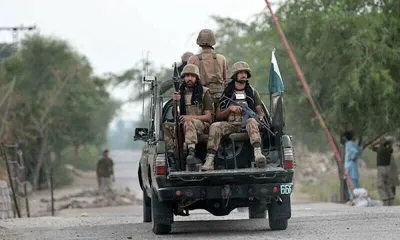 Security forces kill 5 terrorists, recover 23 abductees in operation along N-25 highway near Balochistan's Kalat: ISPRSecurity forces have killed five terrorists and recovered 23 kidnapped individuals from their hideout during an operation along the N-25 Karachi-Chaman highway near Balochistan’s Kalat, the military’s media affairs wing said on Sunday. In a statement, the Inter-Services Public Relations (ISPR) said that terrorists belonging to Fitna-al-Hindustan tried to disrupt people’s movement by establishing a checkpost for abduction for ransom, extortion and snatching of vehicles along the N-25 highway, also knows as the Pakistan Expressway, on the night between Sept 18 and Sept 19. “Security forces responded immediately and after intense fire exchange, five terrorists belonging to India-sponsored proxy of Fitna-al-Hindustan were sent to hell,” the statement said. The state has designated Balochistan-based groups as Fitna-al-Hindustan to highlight India’s alleged role in terrorism and destabilisation across Pakistan. According to the ISPR, 23 abductees were recovered from the terrorists’ hideout near Kalat. Six trucks, three buses and two cars were also recovered, as well as large quantities of weapons, ammunition and explosives, the statement said. “Successful operations by the security forces resulted in thwarting the nefarious designs of India-sponsored proxy of Fitna-al-Hindustan ,” it added. The ISPR said sanitisation operations were ongoing in the surrounding areas to eliminate any remaining terrorists and ensure the safety and security of the local population and national highways. “The relentless counter-terrorism campaign under the vision of ‘ Azm-i-Istehkam ’, as approved by the Federal Apex Committee on the National Action Plan, will continue with full resolve. Security forces and law enforcement agencies remain committed to eliminating the menace of foreign-sponsored and foreign-supported terrorism from the country,” the statement concluded. Balochistan has been facing security challenges and terrorism, which has prompted security forces to intensify counter-terrorism operations. The number of terrorist attacks in the province increased by seven per cent from 83 in July to 89 in August, according to a monthly assessment by the Pakistan Institute for Conflict and Security Studies. The ISPR and the state media has reported several actions in the province over recent weeks. On the night of Aug 31-Sept 1, terrorists of the banned Tehreek-i-Taliban Pakistan (TTP) launched a coordinated attack on the Customs House, located at Ziarat Cross on the N-50 National Highway, in the Pishin district. In retaliatory action, security forces killed 10 terrorists while two officers were among six martyred in the fire exchange, the military’s media affairs wing said. Also on August 31, 11 terrorists belonging to Fitna-al-Hindustan, who had blocked the N-40 Quetta-Taftan highway by establishing an illegal checkpoint for extortion in Chagai’s Nokcha area, were killed following an intense exchange of fire. On September 2, security forces killed 12 terrorists in the Kalat district during an intelligence-based operation (IBO). Days later, the troops killed 11 terrorists and recovered 2.9 tonnes of explosives during separate IBOs in Kharan and Washuk districts. Another 36 terrorists were eliminated during multiple “high-tempo” operations conducted in Mastung, Quetta, Kalat and Sibi districts, the Inter-Services Public Relations said on September 4. These also included thwarting an attack on a police station in Sibi’s Bhag area. On Thursday, seven terrorists were killed by security forces in an IBO in the Badrang area of Balochistan’s Awaran district, while seven terrorists were killed during two IBOs in the province’s Panjgur and Kachhi districts on Friday, the state media reported. The killing of 11 more terrorists by security forces in Panjgur and Chagai districts under Operation Raddul Fitna 3 was reported on Saturday.Dawn
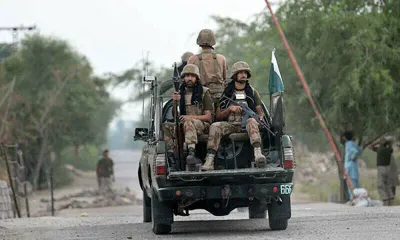 Security forces kill 5 terrorists, recover 23 abductees in operation along N-25 highway near Kalat: ISPRSecurity forces have killed five terrorists and recovered 23 kidnapped individuals from their hideout during an operation along the N-25 Karachi-Chaman highway near Balochistan’s Kalat, the military’s media affairs wing said on Sunday. In a statement, the Inter-Services Public Relations (ISPR) said that terrorists belonging to Fitna-al-Hindustan tried to disrupt people’s movement by establishing a checkpost for abduction for ransom, extortion and snatching of vehicles along the N-25 highway, also knows as the Pakistan Expressway, on the night between Sept 18 and Sept 19. “Security forces responded immediately and after intense fire exchange, five terrorists belonging to India-sponsored proxy of Fitna-al-Hindustan were sent to hell,” the statement said. The state has designated Balochistan-based groups as Fitna-al-Hindustan to highlight India’s alleged role in terrorism and destabilisation across Pakistan. According to the ISPR, 23 abductees were recovered from the terrorists’ hideout near Kalat. Six trucks, three buses and two cars were also recovered, as well as large quantities of weapons, ammunition and explosives, the statement said. “Successful operations by the security forces resulted in thwarting the nefarious designs of India-sponsored proxy of Fitna-al-Hindustan ,” it added. The ISPR said sanitisation operations were ongoing in the surrounding areas to eliminate any remaining terrorists and ensure the safety and security of the local population and national highways. “The relentless counter-terrorism campaign under the vision of ‘ Azm-i-Istehkam ’, as approved by the Federal Apex Committee on the National Action Plan, will continue with full resolve. Security forces and law enforcement agencies remain committed to eliminating the menace of foreign-sponsored and foreign-supported terrorism from the country,” the statement concluded. Balochistan has been facing security challenges and terrorism, which has prompted security forces to intensify counter-terrorism operations. The number of terrorist attacks in the province increased by seven per cent from 83 in July to 89 in August, according to a monthly assessment by the Pakistan Institute for Conflict and Security Studies. The ISPR and the state media has reported several actions in the province over recent weeks. On the night of Aug 31-Sept 1, terrorists of the banned Tehreek-i-Taliban Pakistan (TTP) launched a coordinated attack on the Customs House, located at Ziarat Cross on the N-50 National Highway, in the Pishin district. In retaliatory action, security forces killed 10 terrorists while two officers were among six martyred in the fire exchange, the military’s media affairs wing said. Also on August 31, 11 terrorists belonging to Fitna-al-Hindustan, who had blocked the N-40 Quetta-Taftan highway by establishing an illegal checkpoint for extortion in Chagai’s Nokcha area, were killed following an intense exchange of fire. On September 2, security forces killed 12 terrorists in the Kalat district during an intelligence-based operation (IBO). Days later, the troops killed 11 terrorists and recovered 2.9 tonnes of explosives during separate IBOs in Kharan and Washuk districts. Another 36 terrorists were eliminated during multiple “high-tempo” operations conducted in Mastung, Quetta, Kalat and Sibi districts, the Inter-Services Public Relations said on September 4. These also included thwarting an attack on a police station in Sibi’s Bhag area. On Thursday, seven terrorists were killed by security forces in an IBO in the Badrang area of Balochistan’s Awaran district, while seven terrorists were killed during two IBOs in the province’s Panjgur and Kachhi districts on Friday, the state media reported. The killing of 11 more terrorists by security forces in Panjgur and Chagai districts under Operation Raddul Fitna 3 was reported on Saturday.Dawn
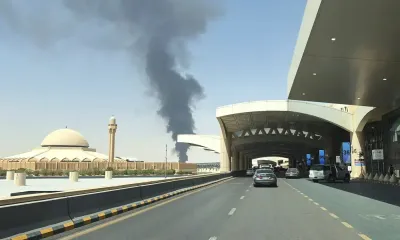 Smoke visible near Riyadh airport after Saudi Arabia issues all-clearA large plume of smoke was visible near Riyadh’s main airport on Saturday after booms were heard and Saudi Arabia sent alerts overnight warning of potential danger around the capital, amid an escalation in attacks by Yemen’s Houthi rebels. This is the first time since Yemen’s long-standing civil war resumed that it has threatened the Saudi capital, further shaking a global economy already under pressure by nearly seven months of war between the United States and Iran. Reuters video and photographs showed a huge pillar of black smoke rising in the area, with the airport highway, main terminal building and other facilities in the foreground. Aircraft tracking website FlightRadar24 reported major issues at the Saudi capital’s Riyadh King Khalid International Airport, including cancellations and delays. The airport was listed under the site’s maximum disruption index of 5.0, meaning the airport was seeing “major problems with long delays and several cancelled flights”. There was no immediate comment from the Saudi government’s media office in response to Reuters’ questions about the smoke and the overnight alerts. Saudi civil defence sent the alerts by phone overnight for potential danger in Riyadh and the city of Al-Kharj east of the capital, before issuing an all-clear on Saturday morning. “The area is under a hostile aerial threat,” said a message received just before 3:00am by Riyadh residents, urging them to stay indoors. AFP journalists then heard two explosions, before the Saudi civil defence agency lifted the alert half an hour later. A Reuters journalist in Riyadh’s Olaya area also heard booms before the all-clear was sent. “I heard the alarm, then my windows shook,” a Riyadh resident, 27, living in the city’s north, told AFP. “It was definitely scary. I was not expecting this.” Another resident described the attack as “terrifying”. “I was extremely anxious — especially because, unlike previous times, the ‘all-clear’ signal didn’t come right away,” the central Riyadh resident said. Saudi Arabia has not commented on the threat mentioned in the warnings sent overnight to residents of several regions and has not identified where it originated from. Although some alerts had been issued in Riyadh this year after the start of the US-Iran war, these were the first since the escalation began with the Houthis in July. The incident comes days after Riyadh accused the Houthis of targeting Makkah on Wednesday, denouncing it as a “cowardly terrorist attack” on the holy city, which welcomes millions of pilgrims each year. Houthis strongly denied the accusation, calling it a “worn-out lie”. Houthi attacks The Houthis, who control the most populous parts of Yemen and much of the north, have been launching attacks towards Saudi Arabia since declaring a naval blockade against Riyadh in July, with strikes targeting Saudi vessels in the Red Sea. The attacks have created new threats to global oil supplies, putting at risk trade via Bab al-Mandab — the main alternative Red Sea route for Gulf exports — while traffic through the Strait of Hormuz remains blockaded. The Houthis insist there is no threat to shipping in the sea lane — except for Saudi ships, from the world’s leading crude exporter. On Friday, Houthi military spokesperson Yahya Saree said the group had foiled unspecified “criminal attempts” in the Yemeni capital Sanaa, blaming Saudi Arabia and vowing a response. The group, which seized Yemen’s entire Red Sea coast in a lightning advance this month, says the Saudi Air Force has conducted hundreds of airstrikes against it in recent days. The UN Security Council (UNSC) in a statement on Friday “condemned in the strongest terms continued Houthi attacks against the Kingdom of Saudi Arabia, including attacks impacting civilian and energy infrastructure, which have resulted in the injury of civilians, including women and children”. In the statement, the UNSC also condemned “Houthi military escalation in Yemen”. The US, according to Axios, last week refused to strike the Houthis at Saudi Arabia’s request. On Thursday, Washington approved a $24.3 billion sale of 48 F-35 fighter jets to the kingdom to help Riyadh “deter current and future threats”, the US State Department said. The attack targeting Riyadh comes as the Houthis improve their defences in newly conquered territory along Yemen’s Red Sea coastline, with members of the group telling AFP they have been installing radar and digging tunnels. The United Nations said on Friday that the renewed fighting had displaced more than 112,000 people while nearly 3,000 others had fled across the sea to Djibouti. The war in Yemen broke out in 2014 when the Houthis seized control of the capital Sanaa and other regions, triggering a military intervention led by Saudi Arabia in March 2015. The fragile truce reached in 2022 between the warring parties collapsed in July, when the Houthis defied Riyadh’s control of Yemeni airspace by allowing an Iranian aircraft to land in Yemen.Dawn
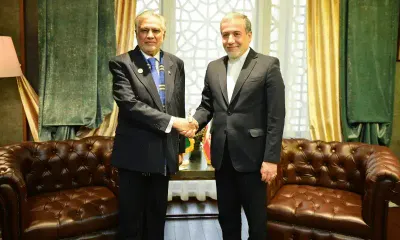 Dar stresses importance of uninterrupted energy supplies in phone call with Iran's FM AraghchiDeputy Prime Minister and Foreign Minister Ishaq Dar stressed the importance of “uninterrupted energy supplies” and the “safe and expeditious passage of ships” during a conversation with Iranian Foreign Minister Abbas Araghchi on Saturday, the Foreign Office (FO) said. In a post on X, FO said the deputy premier and the top Iranian diplomat discussed the latest regional developments. Dar “stressed the importance of uninterrupted energy supplies and the safe and expeditious passage of ships, particularly given their implications for developing countries and global supply chains”. He underscored that “dialogue and diplomacy remain the only viable means to ensure peace and stability in the region”, the statement added. The two agreed to maintain close cooperation and meet in New York on the sidelines of the 81st UN General Assembly next week , according to FO. The phone call came amid concerns over disruptions to commercial shipping in the Strait of Hormuz and Bab al-Mandab , two key maritime routes for global trade and energy supplies. Iran’s stranglehold on the strategic Strait of Hormuz since the US launched its war on February 28 has already impacted oil exports from the Middle East. Fears of worsening disruption have intensified after the Houthis seized control of Yemen’s Red Sea coast and the Bab al-Mandab strait a week ago, declaring a maritime blockade on Riyadh. While the current blockade is limited to Saudi ships, fears of a wider closure persist. On Friday, Pakistan condemned Houthi attacks on merchant shipping in Bab al-Mandab and called for their immediate cessation. Pakistan’s Permanent Representative to the UN Ambassador Asim Iftikhar Ahmad said that disruptions and attacks on merchant vessels could have implications far beyond the affected regions, including by affecting energy prices and global food security. Ambassador Asim also linked Pakistan’s position on maritime security to its diplomatic efforts following the outbreak of hostilities between Iran and the United States. “Guided by these foundational principles, Pakistan acted as a mediator between Iran and the United States, following the outbreak of hostilities between the two countries,” he said. Last week, FO described the situation around the Bab al-Mandab Strait as “ exceptionally serious ” and said Islamabad was concerned about the widening conflict and its implications for regional stability and maritime security. It called for the Houthi conflict to be addressed through “dialogue and diplomacy, and not through coercive measures”. Meanwhile, Iran’s interior ministry said on Saturday that efforts were under way to resolve outstanding issues and return to the Islamabad Memorandum of Understanding signed between Tehran and Washington in June. Ministry spokesperson Ali Zeynivand said Iran demands that “the other party adhere to its commitments in this agreement”, according to Al Jazeera , which cited the semi-official Tasnim news agency. The fragile ceasefire had collapsed in July after attacks on commercial ships in the Hormuz strait, with the US and Iran trading strikes for 13 consecutive days .Dawn
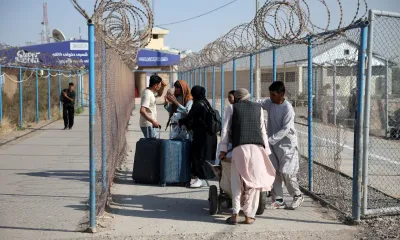 Impoverished by war in Iran, Afghan migrants return to Taliban ruleMohammad Saeed had just turned 18 when he fled to Iran with his parents and younger brother and sister, escaping the Taliban’s return to power in Afghanistan in 2021. Now Saeed and his family are among thousands who have returned home to escape the economic crisis in Iran triggered by the conflict with the US and Israel. The family came back nearly empty-handed, Saeed said. “The Iranian currency had fallen so sharply,” he said, that the family’s savings, held in Iranian rials, lost over two-thirds of their value. Afghan nationals carrying their belongings walk after crossing the border from Iran at the Islam Qala border crossing in Herat province, Afghanistan, on Sept 3, 2026. — Reuters For decades, Iran’s industrialised and much larger economy offered Afghans an escape from poverty and, in the 1990s and again since 2021, from the harsh rule of the Taliban. Now, Iran’s economy has collapsed so severely that many Afghans said they saw returning as their only option. They are coming back with their wives and daughters, despite the severe restrictions on women in Afghanistan, with curbs on their education, travel and employment. Reuters journalists spent one week in the border regions of Afghanistan’s Herat province and neighbouring Farah speaking to people returning from Iran. Free to discuss it without fear of Iranian government scrutiny, most of those returning described a shattered economy in Iran. At the dusty Islam Qala border crossing between Iran and Afghanistan, a near-constant flow of returning migrants were undergoing document checks and registration formalities. Afghan nationals eat meals inside a temporary shelter after crossing the border from Iran at the Islam Qala border crossing in Herat province, Afghanistan, on Sept 3, 2026. — Reuters Officials were sitting in makeshift shipping containers. Coming back to their homeland, the returnees were faced with barren desert mountains and a pothole-plastered highway, the road to Herat, the biggest city in western Afghanistan. Most returning Afghans said they had been out of work for months and crushed by spiralling inflation before they decided to return. Compounded by the impact of tightening sanctions and a US naval blockade that has recently left Iran without shipping any meaningful crude exports through the Strait of Hormuz, consumer prices have surged by nearly 90 per cent year on year, according to Iran’s Statistical Centre. Food inflation has been even higher, at almost 130pc, making bread, milk and other essentials increasingly unaffordable. An Afghan national pushes a cart carrying his wife after they crossed the border from Iran, at the Islam Qala border crossing in Herat province, Afghanistan, on Sept 3, 2026. — Reuters Iran’s mission in New York did not respond to a request for comment. In the past, some Afghan salesmen could make profits in Iran’s bazaars by selling goods at around double the price at which they’d been purchased, said Sayed Jawed Qazi Khani, a 40-year-old migrant. But inflation and vanishing savings among both Iranians and Afghan migrants led to a collapse in consumer demand. “What remained was day labour,” he said, often at the same wage as one year ago. Only 29pc of Afghans who recently returned from Iran said they had any savings left after their average income fell by nearly one-third compared to pre-crisis levels, according to surveys by the International Organisation for Migration (IOM). More women return More than two million Afghans have left Iran over the past two years. Most were deported or pressured to leave by Iranian authorities before the latest wave of returnees, who left amid the war, according to data from the UN Refugee Agency. Mother of Abdul Jabbar, an Afghan national who along with his family recently returned from Iran where they lived for nearly four decades, sits in her house in Farah province, Afghanistan, on September 1, 2026. — Reuters Forced deportation remains a leading reason why Afghans are returning, with unaccompanied men long appearing to be the primary focus of Iranian authorities. But compared to pre-crisis levels, the crowds of returning Afghans increasingly also include women and entire families, according to returnees and IOM data. For many Afghan mothers and their daughters who had held out in Iran after the Taliban takeover of Afghanistan, Iran’s recent economic crisis has confronted them with an almost impossible choice: face poverty there, or return to a country where half the women leave home only once or twice a month, according to the UN. The Taliban’s rules restrict women from travelling without male guardians and have barred them from some professions. The Taliban insist they respect women’s rights in accordance with Islamic law. Abdul Jabbar, 44, said he did not want to take his wife, two daughters, grandson and mother back to Afghanistan. Their family had lived in Iran for nearly four decades and Jabbar had found work as an exterior finisher of buildings. The family had a comfortable life and a modern apartment in Kerman, near an Iranian military base. His face flushed from the heat of the flatbread oven wedged into the one room they now have in Afghanistan, he said in an interview: “I used to say that even if Afghanistan was only two streets away, I would not go.” When the nearby military base was repeatedly hit by missiles and work dried up amid the war this year, Jabbar said, extended Afghan family members encouraged him to return, promising work and safety from American missiles. Abdul Jabbar, 44, an Afghan national who recently returned from Iran where he lived for nearly four decades and worked as an exterior finisher of buildings, sits next to his mother at their house in Farah province, Afghanistan, on Sept 1, 2026. — Reuters When Jabbar arrived in Afghanistan with virtually no belongings or savings, relatives donated essentials and lent him money. Two months on, he remains unemployed and, unable to repay the money, has worn out his welcome. The family now lives in a sweltering mud-brick house with only one room where solar panels are the sole source of electricity. The dusty carpet was donated. His 15-year-old daughter Setayesh, who wants to become a fashion designer, misses her life in Iran. “If I could, I would go back,” she said. “For my education, my friends.” Restarting a cheese business At Islam Qala, at least 20 to 40 families, including women and girls, return voluntarily each day, said Abdul Ghani Qazizadeh, a senior Taliban government official at the border. “The wages they earn are no longer enough to cover their basic living expenses,” he said. Many Afghan workers complained that their Iranian employers were withholding wages, he said. “Everyone complains that their money has been left behind.” Family members of Abdul Jabbar, an Afghan national who along with his family recently returned from Iran where they had lived for nearly four decades, prepare flatbread at their house in Farah province, Afghanistan, on Sept 1, 2026. — Reuters In Iran, Saeed and his mother, 42-year-old Rezwana Jami, said they had started a business producing cheese used in pizzas when they arrived in 2021. Initially, it thrived, and the family found loyal customers. As US-Iran tensions escalated this year and inflation surged, food became so scarce that Jami said she struggled to source the ingredients needed for the business, including milk. “I could no longer continue production,” she said, eventually forcing the family to return five months ago. Jami and Saeed said they have used their last savings to buy new kitchen equipment in Afghanistan and have resumed the production of pizza cheese in their new home. A worker processes milk to make cheese inside a cheese-making workshop run by Rezwana Jami, an Afghan woman who recently returned from Iran with her family, in Herat, Afghanistan, on Sept 2, 2026. — Reuters The family sees a market opportunity in Afghanistan, where high-quality pizza cheese is a rare commodity. They say they work with girls who would be of school age in other countries, but are barred from education above sixth grade and from university under Taliban rules. Since Jami’s return to Afghanistan five months ago, she said her 17-year-old daughter has struggled the most. “She keeps telling me, ‘Mother, I studied for eight years, and now I’m just staying at home’,” Jami said. “There is nothing I can do except telling her, ‘Be patient. God is generous’.” Rezwana Jami, 42, along with her workers prepares cheese inside her cheese-making workshop in Herat, Afghanistan, on Sept 2, 2026. — Reuters Header image: Afghan nationals carrying their belongings walk after crossing the border from Iran at the Islam Qala border crossing in Herat province, Afghanistan, on Sept 3, 2026. — ReutersDawn
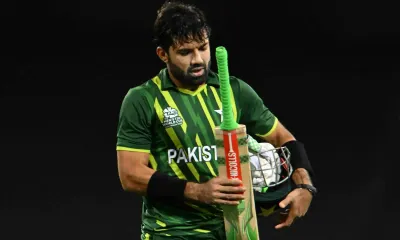 LHC CJ refuses to hear Rizwan's plea against NCCIA probe over alleged online betting, gamblingLAHORE: Lahore High Court Chief Justice Alia Neelum on Thursday refused to hear a plea filed by cricketer Mohammad Rizwan, who has challenged an inquiry initiated against him by the National Cyber Crime Investigation Agency (NCCIA) in connection with alleged online betting and gambling in Pakistan cricket. Rizwan’s counsel, Qazi Umair Ali, appeared before the court today and contended that the NCCIA had unlawfully summoned the cricketer through a notice issued on Sept 8. After receiving the notice, Rizwan and fellow cricket Imamul Haq did appear before the NCCIA on Sept 10, but the latter then went on to challenged the inquiry and the agency’s notice in the LHC. However, Justice Neelum refused to hear the petition on Thursday and directed Rizwan’s lawyer to submit a written response to the NCCIA notice first. “Just go and respond to the notice,” she instructed the lawyer, refusing to entertain the petition at this stage. Rizwan’s plea In his plea, Rizwan criticised the NCCIA notice and the inquiry initiated by agency. According to the plea, the NCCIA had directed Rizwan to appear before it on Sept 10 in connection with allegations of online betting or gambling in Pakistan cricket. He argued in his plea that the notice was vague, arbitrary and issued without legal jurisdiction. The petition contended that online betting was not a scheduled offence under the Prevention of Electronic Crimes Act, 2016 or the amendments made to the law in 2025, which rendered the probe a “fishing and roving expedition” intended to harass and malign Rizwan’s reputation. Expressing apprehension over potential “coercive” measures, including his arrest or detention, Rizwan urged the court to set aside the notice, quash the inquiry, and restrain authorities from taking any “adverse” action against him. The NCCIA inquiry was launched pursuant to a complaint lodged by the Mohsin Naqvi-led Pakistan Cricket Board (PCB) during the recent England series, which ended with a dismal 3-0 Test whitewash for the national side. At the time, it was reported that the NCCIA’s probe pertained to alleged dressing-room leaks during the recent England series. The PCB also announced on Sept 7, while the England series was ongoing, that it had “initiated an internal disciplinary inquiry following media reports concerning discipline and conduct, which are currently being reviewed internally”. On Sept 11, Imam and Rizwan were also barred from playing in the President’s Trophy Grade-I domestic first-class tournament. The two were also among the seven players who were called back home following Pakistan’s defeats in the first two Tests, leaving England with an unassailable lead in the three-match series.Dawn
 Pakistan Hockey Federation requests shift of Asian Champions Trophy out of IndiaThe Pakistan Hockey Federation (PHF) has formally asked the Asian Hockey Federation (AHF) to move next month’s men’s Asian Champions Trophy out of India or shift all of Pakistan’s matches to a neutral venue, citing the “sensitive bilateral situation” between the two countries. The request effectively rules out Pakistan playing their matches at the tournament’s scheduled venues in Jalandhar and Mohali unless the AHF agrees to the proposed change. PHF president Mohyuddin Ahmed Wani, who is also federal secretary of the Ministry of Inter-Provincial Coordination, confirmed to Dawn on Wednesday that the federation had formally approached the AHF. The development came two days after Wani had told Dawn that Pakistan’s proposed tour to India was subject to government clearance and that the PHF would abide by whatever decision the government took. Sources in the PHF said the latest decision to seek a neutral venue had been taken on the direction of the federal government. In an official statement issued on Wednesday, Wani said the request had been made to ensure a “safe, dignified and conducive environment” for Pakistan’s players and officials. “The Pakistan Hockey Federation has formally requested the Asian Hockey Federation to relocate the Men’s Asian Champions Trophy 2026 tournament or shift all of Pakistan’s matches to a neutral venue,” Wani said in the statement. The PHF chief, however, made it clear that Pakistan remained committed to the tournament and was willing to face India. “Pakistan remains fully committed to participating in the Asian Champions Trophy and international hockey and is ready to play against all FIH member nations, including India,” he said. The PHF president also said the federation hoped the AHF would consider the proposal positively to ensure Pakistan’s full participation in the tournament. The request comes two days after Indian Punjab Chief Minister Bhagwant Mann said Pakistan would participate in the tournament, prompting the PHF to clarify that no decision had been taken on the team’s visit to India. Mann, according to a Press Trust of India (PTI) report, had said Pakistan would be among the six teams competing in the Asian Champions Trophy, scheduled to be held from Oct 27 to Nov 5. “There is no problem in multi-national tournaments. Maybe individual series [between India and Pakistan] cannot take place,” Mann said at an event in Mohali when asked about Pakistan’s participation and whether the requisite clearances had been obtained. The tournament is scheduled to feature hosts India, Pakistan, China, Japan, Malaysia and South Korea. Jalandhar is to host the opening ceremony and all league-stage matches from Oct 27 to Nov 2, while the semi-finals and final are scheduled to be played in Mohali on Nov 4 and 5. Pakistan’s proposed match against India is scheduled for Nov 1 in Jalandhar. The PHF’s latest move means that, while Pakistan is seeking to avoid playing its fixtures in India, it is not seeking to withdraw from the competition. The federation has specifically stated that it is prepared to play India and other FIH member nations at a neutral venue. Pakistan had also withdrawn from last year’s Junior World Cup in Tamil Nadu amid heightened tensions between the two countries.Dawn
 Vaccine confusion leaves Karachi’s international travellers counting the costPeople wait in front of a counter at the Federal Govt Civil Dispensary in the airport area for their online registration for Nadra-integrated vaccination certificates. —Fahim Siddiqi / White Star KARACHI: Hundreds of travellers were left scrambling at Karachi’s only designated vaccination centre at the airport on Monday, spending hours in queues and thousands of rupees on a verification process that many of them were subsequently told they did not need after the government extended the deadline for mandatory vaccination certificates for Saudi Arabia and African countries. A large number of people had arrived at the centre. Some were sitting, some were standing, and others were hurrying from one place to another in a visibly distressed state inside the facility, which had no electricity or enough seating arrangements in the ongoing scorching weather. The confusion followed an initial announcement on Sept 7 that was widely understood and reported on some TV channels and on social media as making vaccination certificates mandatory for all international travellers from Sept 14. Travellers rushed to the National Database and Registration Authority (Nadra) verification centres and the Federal Government Civil Dispensary at Jinnah International Airport to get vaccinated, with many arriving early in the morning and waiting for hours to complete the process. Some who were travelling to the US and European countries also arrived for the vaccination certificate due to the ongoing confusion but were told that they did not need it, as the requirement was only for those travelling to Saudi Arabia and Africa. People say they are made to pay thousands before being told vaccination certificates are not required until Sept 25 By Monday, however, the government extended the implementation deadline for the vaccination certificate requirement, even for Saudi Arabia, until Sept 25. A notification issued by the Border Health Services, Pakistan on Sept 14 stated that influenza, meningitis and polio vaccines were mandatory for Umrah pilgrims, people travelling to Saudi Arabia on work visas and those staying in Saudi Arabia for more than six months and that “in the interest of the public and sister agencies,” the deadline for that has been extended until Sept 25. When Dawn contacted BHS-P’s International Health Regulation Focal Person Dr Syed Ghulam Murtaza Shah for further clarity on this, he said that requirement to carry a Nadra-linked vaccination certificate would also apply to workers and those intending to stay in Saudi Arabia for more than six months. He added that the initiative would be extended to more airports in the future. An official at the verification centre also told Dawn that the vaccination requirement did not apply to all international travellers. He said confusion had spread partly because of reports on some TV channels and on social media that portrayed it as a blanket requirement. He also claimed that some travel agents had contributed to the rush as their business had been affected by the government providing the vaccines at a lower cost than the amounts being charged by some agents. However, the extension does not apply to the yellow fever vaccination required for travelling to South Africa, he added. The vaccination process involves three stages: verification through Nadra and the Pak ID app, vaccination at the designated airport facility and issuance of a vaccination card that can subsequently be downloaded. For the travellers who had already gone through the first stage, however, the government’s deadline extension came too late to save either the money they had paid or the hours they had spent waiting. Travellers said they had paid thousands of rupees for the verification process covering three to four vaccines/tests for travel before Sept 25. An elderly woman, who had completed the payment, said she was due to travel on Sept 15 and therefore no longer needed to complete the vaccination process before the extended deadline. “I paid over Rs4,000, but now I am being told that the money will not be returned. So my money has been wasted,” she said. She said she, along with her husband, had reached the centre at around 8am and were still there after 2pm. “Both our money and our time have been wasted,” she said. Another woman, who had arrived with her husband and daughter, complained about the long queues and what she described as a shortage of staff at the centre. “There should be more staff here. That is why it is taking so long,” she said, adding that her family had also arrived early in the morning and had spent hours waiting. She questioned why the government had not announced the requirement several days earlier and made proper arrangements instead of introducing it suddenly. A young man standing there also complained. He said that he had first gone to the Nadra office in Saudabad but its server was down and so the verification could not be done there. Because of that, he said he travelled to a mega centre and got the verification done. “But all that was in vain. I’m travelling for Umrah tomorrow and don’t need the certificate. But because I have paid the fee, which is not being refunded, I am getting the certificate anyway.” A Nadra official present at the airport dispensary confirmed that. He told Dawn that once the verification fee had been submitted, the money went “into the government account” and would not be refunded, whether or not the traveller eventually received the vaccination. Published in Dawn, September 15th, 2026Dawn
 Scottish, Welsh, Northern Irish party leaders claim right to choose independenceLeaders of the main Scottish, Northern Irish and Welsh nationalist parties on Monday declared their right to choose whether to remain in the UK or not at a rare meeting in the Welsh capital Cardiff. All three parties — the Scottish National Party (SNP), Plaid Cymru in Wales and the pro-Irish unity Sinn Fein — want to break away from the UK. The meeting came just days after US President Donald Trump waded in, saying he would back a united Ireland , which Northern Ireland’s Michelle O’Neill said showed “the unity debate is very much alive”. “Our nations have the right to self-determination. No Westminster government (the UK government) has the right to block democracy or undermine the principle that our people will decide their own future,” a memorandum of understanding stated. SNP leader John Swinney, leader of Plaid Cymru in Wales, Rhun ap Iorwerth, and Mary Lou McDonald and O’Neill, leader and deputy leader of pro-Irish unity Sinn Fein, met in their capacity as party leaders, rather than as officials in their respective governments. O’Neill is also Northern Ireland’s first minister while Iorwerth and Swinney are first ministers of their respective nations. (L to R) Scottish Nationalist Party (SNP) leader John Swinney, Rhun ap Iorwerth of Plaid Cymru in Wales, Mary Lou McDonald, president of Irish Republicans Sinn Fein and Michelle O’Neill, vice president of Irish Republicans Sinn Fein speak to the media as they attend a meeting in Cardiff, Wales on September 14, 2026. — AFP Announcing the agreement, Swinney said the three parties were “absolutely united by that principle of self-determination”, adding that this “lies at the heart of the agreement that we have signed today”. “For the first time ever, people across these islands have first ministers in Scotland, in Wales and in the North of Ireland who are all committed to independence from the United Kingdom,” the memorandum of understanding said. “The future of our nations belongs in the European Union.” The independence parties are the biggest in both the Scottish and Welsh parliaments for the first time since devolution measures began in 1999. Sinn Fein has been the biggest party in Northern Ireland’s assembly since 2022. The regional parliaments have key powers on health, education, housing, transport and environment matters, along with some tax gathering. ‘Momentum’ “For people watching across these islands – for people watching around the world — there could be no clearer sign that Westminster’s time is coming to an end,” the agreement said. While the three parties are united in their desire to break away from the UK they have varying positions on how and when this might take place. The SNP wants a second independence referendum after an earlier ballot in 2014 saw Scotland narrowly vote to remain part of Britain. Successive UK governments have ruled out an immediate rerun. Sinn Fein, the former political wing of the paramilitary Irish Republican Army (IRA), wants to see a vote on Ireland being reunified with the UK territory of Northern Ireland. Plaid Cymru seeks Welsh independence in the longer term, but Iorwerth has ruled out pressing for any referendum immediately. Good Friday Agreement In Northern Ireland, British Prime Minister Andy Burnham sparked a sharp response from Sinn Fein in August, shortly after taking power the previous month, when he said a referendum on Irish unity was “off the table”. The 1998 Good Friday peace agreement , which largely ended three decades of conflict over British rule, provides for a referendum if the British government’s Northern Ireland minister believes a majority is likely to favour joining the Republic of Ireland. Sinn Fein leader McDonald said the prime minister had no authority to “remove any provision of the Good Friday Agreement”, and Burnham backtracked in parliament last week. On Scotland, Burnham — a former mayor of Manchester and a strong advocate of giving greater power to English local authorities — told lawmakers there could be another vote if there was a “clear consensus” north of the border for it. He reportedly sent a letter to Swinney later clarifying that a referendum remained “off limits”.Dawn
 Deepening oil market turmoilStrain is growing on the global energy markets. While the energy world already faces a significant reduction in oil flows through the Strait of Hormuz, recent disruptions to shipments via Bab al-Mandab in the Red Sea are adding to the markets’ woes. Approximately 12 to 15 per cent of global maritime trade worth more than $1 trillion transits through the waterway, extending from the Suez Canal in the north to the Bab el-Mandeb Strait in the south, each year. All of that is now under threat. Faced with this double whammy, crude supplies from the Middle East are under even more pressure. A major new risk has emerged on this Red Sea and Bab el-Mandeb corridor. Iran-supported Houthi forces seized Yemen’s port of Mocha, increasing concerns that Gulf and Red Sea shipping routes could be constrained simultaneously. Due to the blockage of the Strait of Hormuz, Saudi Arabia, the world’s top crude oil exporter, was using the Bab al-Mandeb to export most of its crude from its west coast shipping terminal on the Red Sea coast in Yanbu. This strait links Asia to Europe via the Red Sea and Suez Canal. We are faced with the spectre of considerably higher petrol prices in the coming weeks Houthi attacks on Saudi targets and the capture of Mocha port by Houthi militias have added to the pressure on Saudi exports. Saudi Arabia’s crude supply fell 2.3 million barrels per day (bpd) on the month to 6m bpd in August, the lowest level in more than three decades, the International Energy Agency said on Friday. Saudi Arabia also reported to the Organisation of the Petroleum Exporting Countries (Opec) that its crude output fell last month to its lowest level since 1990. The drop follows the targeting, by groups linked to Yemen’s Houthis, of ships transiting the Bab el-Mandeb and Saudi Arabia’s Jazan refinery and shipping near Yanbu, the International Energy Agency (IEA) said in a report. At the same time, the Iran-backed militias in Iraq used drones to target Saudi Arabia’s Abqaiq oil processing site. Last Friday, Saudi Arabia announced it would shut down its crucial East-West crude oil pipeline as a precautionary measure after multiple attacks. The pipeline was targeted in the Riyadh and Madinah regions on Thursday morning, the Saudi oil ministry said. Ever since the beginning of the war in Iran and the resultant blockage of the Strait of Hormuz, the Saudis have relied heavily on the East-West pipeline to bypass the strait. Riyadh has redirected millions of barrels per day through the pipeline to its Red Sea port of Yanbu for shipments. As per an Aramco report earlier, some 7m barrels of crude oil were routed from oil fields in the East of the Kingdom to Yanbu port in the West. Of that, about 5m barrels of crude oil were exported to customers. This alternative route had helped manage Saudi crude exports at a considerable level despite the Hormuz closure. That is now under increasing threat. Markets are reacting. At close on Friday, the crude oil WTI Futures finished down at approximately $100.05 per barrel, and Brent crude settled near $104.23 to $104.85. Even this was a retreat from the multi-month highs registered late Thursday afternoon, when oil landed just short of $109 a barrel, some $8 higher over Wednesday’s close, as markets felt the intractability of the US-Israel war with Iran and the widening war theatre in the Middle East. The reversal that oil markets registered Friday afternoon was only after reports that Middle Eastern foreign ministers were trying to negotiate a temporary arrangement with Iran aimed at managing tanker traffic through the Strait of Hormuz. UBS energy analyst Giovanni Staunovo told Reuters the possibility of renewed talks was weighing on prices. Markets are tight. Already, Hormuz vessel traffic was running well below normal. Vessels transiting through Hormuz fell to seven on Thursday from 11 on Wednesday, compared with a recent 10-day average of 15. Before the advent of war on February 28, the strait was handling about 125 commodity vessels and one-fifth of global daily oil and liquefied natural gas supplies. Houthi strikes on Saudi Arabia’s oil infrastructure have alerted oil markets to the possibility of even less Middle Eastern supply than before, with potential damage to the East-West pipeline jeopardising 3-4m bpd of Saudi crude exports. As a result, Saudi crude oil exports have gone down. Saudi Arabia told the Opec Secretariat that it produced 6.24m bpd in August. The International Energy Agency is now warning that normal oil flow from the Middle East may not return until 2027, with global oil supply expected to fall substantially more this year than previously forecast. Market sentiment is turning bullish. Brent crude oil prices could top $120 per barrel by the end of the year if fighting in the Middle East continues, warned RBC Capital Markets’ Helima Croft while talking to Reuters. Banks including Goldman Sachs, Bank of America, HSBC and Commerzbank raised their Brent price forecasts last week, as persistent disruptions to Middle East shipping tightened oil markets and drove crude prices to multi-week highs. Commerzbank on Friday raised its year-end Brent oil price forecast to $85 per barrel from its previous forecast of $75/bbl. Last Monday, Goldman Sachs raised its Brent and West Texas Intermediate crude oil price forecasts by $5 a barrel for December 2026 and 2027, citing an expectation that shipping disruptions in the Middle East will persist into next year. The bank, in a note, said that Brent crude could climb above $120 a barrel if average Gulf oil output in 2027 remains 4m barrels per day below pre-war levels, compared with its base case assumption of a 0.5m bpd shortfall. “More disruptions could push it toward $120 per barrel, while vast energy infrastructure damage could drive prices to $150/barrel,” Bank of America said, adding that its central view assumes Hormuz flows gradually normalise and a prolonged conflict is avoided. All this is bad news for Pakistan. We are faced with the spectre of considerably higher petrol prices in the coming weeks. The writer is an energy analyst and has delivered talks at the Department of Energy in Washington and the International Energy Agency. X: @rhusainsyed Published in Dawn, The Business and Finance Weekly, September 14th, 2026Dawn