
US ‘Task Force Iron Gate’ in the works to restrict Iranian land commerce alongside naval blockade
After a months-long naval blockade on Iran, the US military has announced the establishment of a task force to bolster Washington’s efforts to restrict Tehran’s movement of advanced weapons systems and other sanctioned material across its land borders and the Caspian Sea. The announcement of the task force, designated “Iron Gate”, was made on Saturday in a statement by US Central Command (Centcom). Based in Tampa, Florida and comprising 20 civilian and military personnel, it will coordinate with other US government agencies. It aims “to prevent Iran from using ground routes to transport advanced weapons and other materials”. “The new Centcom team will coordinate with other US government agencies on preventing the movement of advanced weapons systems, dual-use technologies, sanctioned materials, and illegal revenue streams across Iran’s land borders and the Caspian Sea,” the statement read. “Strengthening Centcom’s collaboration with US interagency partners will further constrain Iran’s ability to finance terrorism, rebuild weapons factories, and replenish their military,” Admiral Brad Cooper, the commander of Centcom, said in a statement, adding that the new task force “reinforces the success” of the US blockade. In the statement, Centcom claimed that its naval blockade has prevented Iran from exporting more than $25 billion in crude oil. This is one of the latest moves by the US to put economic and logistical pressure on Iran after a slowdown in hostilities. In August, US Treasury Secretary Scott Bessent announced ‘Operation Economic Outcast’ — an economic pressure campaign targeting five sectors Iran was using to prop up its economy: digital assets, gold, technology, aviation and shipping. “In the Second World War, D-Day marked the historic beginning of a campaign with our allies to target and drive the enemy from its positions, including in third countries,” he said. “Today, in that same spirit, we are launching an economic onslaught against Iran’s financial connections around the globe. Our objective is to sever every economic lifeline that sustains this tyrannical regime, until Tehran stands alone,” Bessent added. In June, US President Donald Trump reimposed a naval blockade in the Strait of Hormuz to prevent Iranian oil exports, which would apply to all vessel traffic regardless of flag, covering the entire Iranian coastline, including ports and oil terminals. It said the measure would not impede neutral transit passage through the strait to or from non-Iranian destinations, and that humanitarian shipments would be permitted subject to inspection. Despite the blockade, Tehran has been able to export oil and liquefied natural gas.
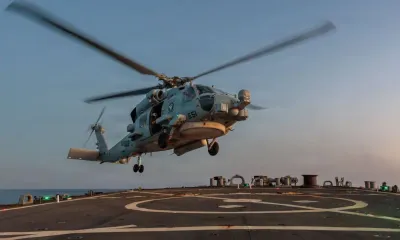
After a months-long naval blockade on Iran, the US military has announced the establishment of a task force to bolster Washington’s efforts to restrict Tehran’s movement of advanced weapons systems and other sanctioned material across its land borders and the Caspian Sea.
The announcement of the task force, designated “Iron Gate”, was made on Saturday in a statement by US Central Command (Centcom). Based in Tampa, Florida and comprising 20 civilian and military personnel, it will coordinate with other US government agencies.
It aims “to prevent Iran from using ground routes to transport advanced weapons and other materials”.
“The new Centcom team will coordinate with other US government agencies on preventing the movement of advanced weapons systems, dual-use technologies, sanctioned materials, and illegal revenue streams across Iran’s land borders and the Caspian Sea,” the statement read.
“Strengthening Centcom’s collaboration with US interagency partners will further constrain Iran’s ability to finance terrorism, rebuild weapons factories, and replenish their military,” Admiral Brad Cooper, the commander of Centcom, says in a statement, adding that the new task force “reinforces the success” of the US blockade.
In the statement, Centcom estimated that its naval blockade has prevented Iran from exporting more than $25 billion in crude oil.
This is one of the latest moves by the US to put economic and logistical pressure on Iran after a slowdown in hostilities.
In August, US Treasury Secretary Scott Bessent announced ‘ Operation Economic Outcast ’ — an economic pressure campaign targeting five sectors Iran was using to prop up its economy: digital assets, gold, technology, aviation and shipping.
“In the Second World War, D-Day marked the historic beginning of a campaign with our allies to target and drive the enemy from its positions, including in third countries,” he said.
“Today, in that same spirit, we are launching an economic onslaught against Iran’s financial connections around the globe. Our objective is to sever every economic lifeline that sustains this tyrannical regime, until Tehran stands alone,” Bessent added.
In June, US President Donald Trump reimposed a naval blockade in the Strait of Hormuz to prevent Iranian oil exports, which would apply to all vessel traffic regardless of flag, covering the entire Iranian coastline, including ports and oil terminals.
It said the measure would not impede neutral transit passage through the strait to or from non-Iranian destinations, and that humanitarian shipments would be permitted subject to inspection.
Despite the blockade, Tehran has been able to export oil and liquefied natural gas