What comes after Riyadh meeting between the Pakistani, Saudi and Turkish military chiefs?
The hurried meeting of the military chiefs of Pakistan, Saudi Arabia and Turkiye in Riyadh on Friday, followed by a separate meeting between Chief of Defence Forces and Chief of Army Staff Field Marshal Asim Munir and Saudi Defence Minister Prince Khalid bin Salman points to how quickly the Makkah Joint Defence Agreement is transitioning to an operational phase. The statements issued after the two meetings do not contain anything that would suggest that joint strikes or ground operations against Yemen’s Ansar Allah — commonly referred to as Houthis — are in the offing. However, the two communiques do show that the agreement signed on August 7 in Makkah is shifting gears from political assurances to putting in place the military arrangements required to give practical effect to its collective defence commitment. That is one notable change since the signing of the agreement. For instance, Islamabad’s position, articulated by the Foreign Office only two weeks ago, was that the Makkah agreement was still being institutionalised and there was no discussion of Pakistani participation in strikes against Houthi targets in Yemen. The FO had further characterised the pact as a defensive alliance aimed at protecting regional security through deterrence. The language contained in the communiques that came out of Riyadh in the early hours of Saturday goes much further. The statement issued after the meeting of the three military chiefs says they discussed ways of strengthening “intelligence cooperation, military coordination, and capability integration” and expressed their “shared determination to immediately begin translating the commitments contained in the Makkah Agreement for Joint Defence into effective military cooperation”. The reference to beginning “immediately” and to “effective military cooperation” implies that the three militaries are now looking at how their capabilities can work together, rather than merely reaffirming the principle that an attack on one member would be treated as an attack on all. This fast-tracking of the implementation of the agreements is taking place against the backdrop of repeated missile and drone attacks on Saudi Arabia from Yemen, including attacks threatening civilian and economic infrastructure and, most significantly for Riyadh, one that is claimed to be directed towards the vicinity of Makkah city. While the trilateral statement strongly condemned those attacks and praised the Saudi armed forces for their “vigilance and professionalism” in protecting the kingdom, it is noteworthy for lacking any reference to retaliation, offensive operations or strikes against Ansar Allah positions. Neither Ansar Allah, Houthis, nor Yemen was referenced directly. Instead, emphasis has been placed on intelligence, coordination and integration of capabilities, which would be the first practical steps towards improving Saudi Arabia’s ability to detect, intercept and deter further attacks. In practical terms, this announcement would translate into closer intelligence sharing and early warning arrangements, as well as technical personnel, air defence specialists, sensors, electronic warfare capabilities and other assets that could be incorporated into Saudi Arabia’s existing defensive architecture. On the coordination front, the three countries could, as a follow-up to the meeting of the military chiefs, appoint liaison officers and set up a joint planning cell, which can then work for coordinated responses. The reference to “capability integration” in the statement is particularly significant. Pakistan, Turkiye and Saudi Arabia can cooperate while maintaining separate military systems and operations, but integrating capabilities would require a much closer degree of liaison, planning and command and control arrangements. Despite their longstanding defence cooperation and deep military ties, Pakistan and Turkiye have different military capabilities and equipment inventories from those possessed by Saudi Arabia, and the challenge will be to determine what each can contribute and how those capabilities can be incorporated into the kingdom’s existing defence system. Turkiye has already indicated its readiness to meet Saudi military requirements, particularly on technical matters. Pakistan, meanwhile, has historical military ties with Saudi Arabia and personnel already serving in the kingdom, providing Islamabad with an established channel through which additional support could potentially be arranged. The separate meeting between Field Marshal Munir and Prince Khalid bin Salman, the only publicly known meeting the Saudi defence minister had bilaterally with the participants of the Makkah alliance meeting, adds another dimension to the developing military engagement. Chief of Defence Forces and Chief of Army Staff Field Marshal Asim Munir meets Saudi Defence Minister Prince Khalid bin Salman in Riyadh, Saudi Arabia, in this photo from September 25, 2026. X/@kbsalsaud According to the Saudi statement, the two sides welcomed the outcome of the trilateral chiefs of staff meeting and discussed attacks targeted towards the vicinity of Makkah and towards civilian and economic facilities, while stressing the need to continue “joint efforts to confront these attacks in accordance with the Makkah Agreement for Joint Defence”. The bilateral statement, on the face of it, looks more urgent than the trilateral one with assertions “discussed how to respond” and “continuing joint efforts to confront”. One reason for such categorical assertions is that Pakistan and Saudi Arabia already have a bilateral security relationship, and there is also the 2025 Pakistan-Saudi Strategic Mutual Defence Agreement , under which aggression against one is to be regarded as aggression against both, which provides a more mature bilateral channel through which practical measures could be implemented even as the trilateral mechanism is being built. The composition of the Saudi and Pakistani delegations at the bilateral meeting was also notable. Alongside the Saudi defence minister and chief of general staff were the national security adviser and the adviser to the defence minister for intelligence affairs, while CDF Munir was accompanied by the director general of military operations and his secretary. This may not reveal what was discussed behind closed doors, but it definitely suggests that the bilateral engagement covered a broader security agenda than a routine follow-up to the chiefs of staff meeting, including the sharing of operational capabilities. It may be premature to read the Riyadh meetings as preparation for Pakistani or Turkish participation in offensive operations in Yemen, because no such decision has been announced and the phrasing used in the statement instead remained focused on defending Saudi Arabia, its sovereignty and the integrity of its territory. There are, however, obvious signs of the machinery required for any potential future military response being assembled. The trilateral statement noted that the participants “strongly reaffirmed their commitment to collective defence” and their determination to defend “the security of the kingdom of Saudi Arabia, its sovereignty, and the integrity of its territories”. This formulation gives Turkiye and Pakistan room to strengthen Saudi Arabia’s defences without committing themselves immediately to a wider war in Yemen. As political and diplomatic support, the foreign ministers had already affirmed Saudi Arabia’s right to take measures it considered appropriate to defend its security under Article 51 of the UN Charter. The military architecture now being discussed could nevertheless have implications beyond defensive measures. While intelligence sharing, military coordination and capability integration are necessary for intercepting missiles and drones, they are also the building blocks of a more active military response. If the three militaries establish a common threat picture, stronger intelligence links and mechanisms for coordinating their forces, they would have much of the infrastructure needed if a political decision were later taken to respond to attacks at their source. But for now, that remains a possibility rather than an announced course of action. Therefore, the immediate path appears more likely to run through intelligence and threat assessment, followed by an identification of Saudi requirements and the integration of additional capabilities, with the possible deployment of personnel or equipment at a later stage. Where things go from there would depend on the scale and persistence of the attacks and, importantly, on what Riyadh asks its partners to do.
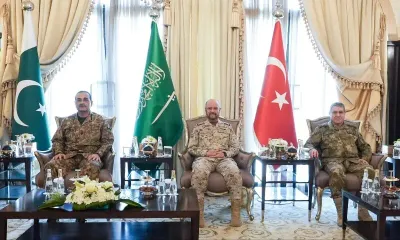
The hurried meeting of the military chiefs of Pakistan, Saudi Arabia and Turkiye in Riyadh on Friday, followed by a separate meeting between Chief of Defence Forces and Chief of Army Staff Field Marshal Asim Munir and Saudi Defence Minister Prince Khalid bin Salman points to how quickly the Makkah Joint Defence Agreement is transitioning to an operational phase.
The statements issued after the two meetings do not contain anything that would suggest that joint strikes or ground operations against Yemen’s Ansar Allah — commonly referred to as Houthis — are in the offing. However, the two communiques do show that the agreement signed on August 7 in Makkah is shifting gears from political assurances to putting in place the military arrangements required to give practical effect to its collective defence commitment.
That is one notable change since the signing of the agreement. For instance, Islamabad’s position, articulated by the Foreign Office only two weeks ago, was that the Makkah agreement was still being institutionalised and there was no discussion of Pakistani participation in strikes against Houthi targets in Yemen. The FO had further characterised the pact as a defensive alliance aimed at protecting regional security through deterrence.
The language contained in the communiques that came out of Riyadh in the early hours of Saturday goes much further.
The statement issued after the meeting of the three military chiefs says they discussed ways of strengthening “intelligence cooperation, military coordination, and capability integration” and expressed their “shared determination to immediately begin translating the commitments contained in the Makkah Agreement for Joint Defence into effective military cooperation”.
The reference to beginning “immediately” and to “effective military cooperation” implies that the three militaries are now looking at how their capabilities can work together, rather than merely reaffirming the principle that an attack on one member would be treated as an attack on all.
This fast-tracking of the implementation of the agreements is taking place against the backdrop of repeated missile and drone attacks on Saudi Arabia from Yemen, including attacks threatening civilian and economic infrastructure and, most significantly for Riyadh, one that is claimed to be directed towards the vicinity of Makkah city.
While the trilateral statement strongly condemned those attacks and praised the Saudi armed forces for their “vigilance and professionalism” in protecting the kingdom, it is noteworthy for lacking any reference to retaliation, offensive operations or strikes against Ansar Allah positions.
Neither Ansar Allah, Houthis, nor Yemen was referenced directly. Instead, emphasis has been placed on intelligence, coordination and integration of capabilities, which would be the first practical steps towards improving Saudi Arabia’s ability to detect, intercept and deter further attacks.
In practical terms, this announcement would translate into closer intelligence sharing and early warning arrangements, as well as technical personnel, air defence specialists, sensors, electronic warfare capabilities and other assets that could be incorporated into Saudi Arabia’s existing defensive architecture.
On the coordination front, the three countries could, as a follow-up to the meeting of the military chiefs, appoint liaison officers and set up a joint planning cell, which can then work for coordinated responses.
The reference to “capability integration” in the statement is particularly significant. Pakistan, Turkiye and Saudi Arabia can cooperate while maintaining separate military systems and operations, but integrating capabilities would require a much closer degree of liaison, planning and command and control arrangements.
Despite their longstanding defence cooperation and deep military ties, Pakistan and Turkiye have different military capabilities and equipment inventories from those possessed by Saudi Arabia, and the challenge will be to determine what each can contribute and how those capabilities can be incorporated into the kingdom’s existing defence system.
Turkiye has already indicated its readiness to meet Saudi military requirements, particularly on technical matters. Pakistan, meanwhile, has historical military ties with Saudi Arabia and personnel already serving in the kingdom, providing Islamabad with an established channel through which additional support could potentially be arranged.
The separate meeting between Field Marshal Munir and Prince Khalid bin Salman, the only publicly known meeting the Saudi defence minister had bilaterally with the participants of the Makkah alliance meeting, adds another dimension to the developing military engagement.
Chief of Defence Forces and Chief of Army Staff Field Marshal Asim Munir meets Saudi Defence Minister Prince Khalid bin Salman in Riyadh, Saudi Arabia, in this photo from September 25, 2026. X/@kbsalsaud
According to the Saudi statement, the two sides welcomed the outcome of the trilateral chiefs of staff meeting and discussed attacks targeted towards the vicinity of Makkah and towards civilian and economic facilities, while stressing the need to continue “joint efforts to confront these attacks in accordance with the Makkah Agreement for Joint Defence”.
The bilateral statement, on the face of it, looks more urgent than the trilateral one with assertions “discussed how to respond” and “continuing joint efforts to confront”.
One reason for such categorical assertions is that Pakistan and Saudi Arabia already have a bilateral security relationship, and there is also the 2025 Pakistan-Saudi Strategic Mutual Defence Agreement , under which aggression against one is to be regarded as aggression against both, which provides a more mature bilateral channel through which practical measures could be implemented even as the trilateral mechanism is being built.
The composition of the Saudi and Pakistani delegations at the bilateral meeting was also notable. Alongside the Saudi defence minister and chief of general staff were the national security adviser and the adviser to the defence minister for intelligence affairs, while CDF Munir was accompanied by the director general of military operations and his secretary.
This may not reveal what was discussed behind closed doors, but it definitely suggests that the bilateral engagement covered a broader security agenda than a routine follow-up to the chiefs of staff meeting, including the sharing of operational capabilities.
It may be premature to read the Riyadh meetings as preparation for Pakistani or Turkish participation in offensive operations in Yemen, because no such decision has been announced and the phrasing used in the statement instead remained focused on defending Saudi Arabia, its sovereignty and the integrity of its territory. There are, however, obvious signs of the machinery required for any potential future military response being assembled.
The trilateral statement noted that the participants “strongly reaffirmed their commitment to collective defence” and their determination to defend “the security of the kingdom of Saudi Arabia, its sovereignty, and the integrity of its territories”.
This formulation gives Turkiye and Pakistan room to strengthen Saudi Arabia’s defences without committing themselves immediately to a wider war in Yemen.
As political and diplomatic support, the foreign ministers had already affirmed Saudi Arabia’s right to take measures it considered appropriate to defend its security under Article 51 of the UN Charter.
The military architecture now being discussed could nevertheless have implications beyond defensive measures.
While intelligence sharing, military coordination and capability integration are necessary for intercepting missiles and drones, they are also the building blocks of a more active military response.
If the three militaries establish a common threat picture, stronger intelligence links and mechanisms for coordinating their forces, they would have much of the infrastructure needed if a political decision were later taken to respond to attacks at their source. But for now, that remains a possibility rather than an announced course of action.
Therefore, the immediate path appears more likely to run through intelligence and threat assessment, followed by an identification of Saudi requirements and the integration of additional capabilities, with the possible deployment of personnel or equipment at a later stage.
Where things go from there would depend on the scale and persistence of the attacks and, importantly, on what Riyadh asks its partners to do.