
PM Shehbaz urges PTI to call off long march, resolve issues through dialogue
Prime Minister Shehbaz Sharif on Tuesday urged the PTI to end its long march to Islamabad and invited the opposition to sit with the government to resolve contentious issues through political dialogue. The opposition has gone ahead with its march despite warnings from the Centre, which has vowed to prevent any gatherings in Islamabad. The protest aims to demand the release of jailed party founder and former prime minister Imran Khan. Addressing the groundbreaking ceremony of the Kashmir Chowk underpass in Islamabad on Tuesday, the premier said it was “unfortunate” that the “dreadful shadows” of long marches were hovering again, despite the PML-N and the PPP making efforts to engage the PTI in talks. The two parties, the prime minister said, held talks for two days in National Assembly Speaker Ayaz Sadiq’s chamber, and “it was hoped that politics of confrontation would end”. “Unfortunately, that did not happen. They [PTI] only had one purpose: to ensure that the talks do not succeed,” the premier said, adding that the opposition party demanded changes to things already settled upon. PM Shehbaz asserted that these protests and long marches primarily affect the country’s economy and create hindrances in exports, imports and manufacturing. “We collectively improved the economy in 2.5 years and reached macroeconomic stability. Now is the time for it to flourish,” the premier added. “In September, our information technology exports, remittances and the country’s production improved,” he said. “If someone harms it, is it not equivalent to being an enemy of the country?” The premier stressed that putting the economy in shambles and the lives of people in danger will not be allowed. “The law will take its course,” he said. Earlier in the same ceremony, Interior Minister Mohsin Naqvi said, without naming anyone, that people had to see for themselves which public representatives were working for their welfare and which ones were engaging in “negative politics”. Tallal says talks conditional on PTI calling off march Separately, Minister of State for Interior Tallal Chaudhry also spoke about the resumption of talks, saying that it remained conditional upon PTI calling off its marches and protests. Addressing a press conference in Islamabad, he warned that constitutional and political measures were in place to respond to the PTI’s ongoing long march and held Khyber Pakhtunkhwa Chief Minister Sohail Afridi responsible for the breakdown in negotiations. “Political and constitutional measures are in place,” Chaudhry said. Minister of State for Interior Tallal Chaudhry speaks to media on Oct 6, 2026. — DawnNewsTV He added that the “wise” people part of the PTI’s delegation had tried to make the talks successful. Chaudhry further said that if the talks had succeeded, Pakistan would have had a united political front and the PTI would have gained “political space”. He added that a “hardening of the state” was now close, stressing that “enough softness has been shown”. “The state is like a mother, but it also has to act like a father at times,” Chaudhry said. “Constitutional options are under discussion, but the political option comes first,” he said. Commenting on the talks, Chaudhry told reporters that on the first day, Naqvi presented the government’s position regarding terrorism in KP, which included facts about the provincial government’s lack of involvement in the province’s affairs, budget and counterterrorism efforts. Chaudhry said the next day, the PTI delegation returned to Islamabad to continue talks after discussing the terms of the agreement with KP’s senior leadership in Peshawar. He said CM Afridi had previously reassured the Centre that the PTI delegation had the authority to reach an agreement on behalf of the provincial government. “We were assured that on terrorism, they [PTI] agreed 100 per cent on the federal government’s points,” Chaudhry said, adding that it was only then that Naqvi travelled to Lahore to PM Shehbaz and informed him that the PTI and the PML-N had agreed on the terrorism issue. “The prime minister said, ‘give as much political space as you can’,” Chaudhry told the media. According to him, PM Shehbaz told Naqvi that “parties’ political capital comes and goes”. Chaudhry said the premier further told Naqvi that when Pakistan was on the brink of financial default, strict measures reduced PML-N’s political capital, but they ensured that the country would not default. The second day of the talks started after the two sides had agreed on the issue of terrorism, Chaudhry said. “The win for us in the draft agreement was that we would be successful in bringing the PTI to the same page for eliminating terrorism,” he said. The draft was ready by 9pm on the second day of the talks, and Naqvi was getting ready to take it to President Asif Ali Zardari, according to the state minister. “Everything was fine,” he said, adding that some back and forth happened on further edits, but they were all agreed upon. “At the last minute, the opposition sat in a separate room for a while to consult with the KP chief minister. When they came out, they couldn’t look us in the eye and asked for permission to leave,” Chaudhry said. He added that the PTI delegation thanked the PML-N for patiently conducting the talks. The nation had agreed on the two National Action Plans (NAP) against terrorism, Chaudhry said, adding that the second plan was agreed upon during the PTI’s government under former prime minister Imran. He said that NAP was linked to “Pakistan’s Constitution, its needs, security, stability and Islamic teachings”. Citing Afridi’s statement that he wouldn’t allow a plan against the people of KP, Chaudhry questioned if Imran’s NAP was against the people of the province. Chaudhry claimed that KP was unsafe for common people and politicians alike; however, he noted that at the same time, the PTI’s leaders and workers were safe from threats in the same region. “The only one safe there is PTI,” he said, questioning, “Why do [terrorists] have a soft corner for you only?” On the possibility of talks resuming, Chaudhry said that any further talks were conditional upon the PTI calling off its marches and protests. “Don’t encourage terrorists. Instead, let’s kill them together,” Chaudhry further stated. Responding to a question about the PTI’s ongoing long march, he said, “Someone could not take over a country of 260 million people by bringing 50,000 to 100,000 people to the capital. “They are mistaken. Once their misunderstanding is cleared this time, a march won’t happen again in Pakistan,” he warned. Opp-govt dialogue failure Over the weekend, the government and opposition held two rounds of talks , which did not yield positive results, with counterterrorism policies and access to Imran emerging as two major sticking points. On Sunday, the PTI said it wanted immediate access to party chief Imran for consultations, and even agreed to forgo other demands in return for a meeting with Imran. However, the government declined to make access to Imran part of the proposed agreement, the opposition party claimed. Another deadlock was terrorism in KP. The federal government asked the KP government to support its counterterrorism measures and support emergency measures within 72 hours in the merged tribal districts, the PTI said. Instead, the PTI proposed that authorised representatives of the federal and KP governments meet within 72 hours to develop a clear, comprehensive and mutually agreed strategy for peace and counterterrorism, the statement added. The PTI said the health and medical treatment of Imran Khan was also raised as a matter of fundamental importance. Meanwhile, PTI leader Salman Akram Raja, who was a part of the opposition’s delegation, said the primary reason for the failure was disagreement on anti-terrorism actions in KP. Raja said the opposition stood firm on its principled position that anti-terrorism actions should be based on an agreement between the federal government and the KP government, and would be framed in consultation with stakeholders. After talks between the government and the opposition ended without headway, interior minister Naqvi on Sunday accused CM Afridi of “sabotaging” negotiations. On Sunday, Naqvi also held a meeting with KP Governor Faisal Karim Kundi to discuss the political and security situation amid speculations of ‘imminent’ governor’s rule in the province. A government source told Dawn that the government was seriously considering the imposition of the governor’s rule in KP. But Special Assistant to the Prime Minister on Political Affairs Rana Sanaullah said on Monday that a return to negotiations was possible if there was an assurance of positive progress by the opposition regarding counterterrorism efforts in KP. Speaking on Geo News ’ programme ‘Capital Talk’, he said that the federal government aimed to end terrorism in Pakistan, protect its borders and keep people safe. “The provincial government will have to play its role at any cost in this policy and operation,” he added. He said that both sides were still in contact, and said that if “better sense prevails” amongst the opposition and they could provide “assurance of some positive progress” in this regard, then they could sit down for more talks.
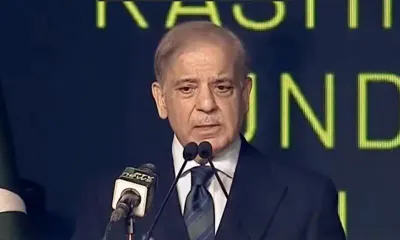
Prime Minister Shehbaz Sharif on Tuesday urged PTI to end its long march and invited the opposition to sit with the government to resolve contentious issues through political dialogue.
The opposition has gone ahead with its march despite warnings from the Centre, which has vowed to prevent any gatherings in Islamabad. The protest aims to demand the release of jailed party founder and former prime minister Imran Khan.
Addressing the inauguration ceremony of the Kashmir Chowk underpass in Islamabad, the PM said it was “unfortunate” that “dreadful shadows” of long marches were hovering again, despite PMLN and PPP making efforts to engage PTI in talks day and night.
The two parties, PM Shehbaz said, held dialogue for two days in the National Assembly Speaker Ayaz Sadiq’s chamber, and “it was hoped that politics of confrontation would end”.
“Unfortunately, that didn’t happen. They (PTI) only had one purpose: to ensure that the talks do not succeed,” the premier said, adding that the opposition party demanded changes to things already settled upon.
PM Shehbaz asserted that these protests and long marches primarily affect the country’s economy and create hindrances in exports, imports, and manufacturing.
“We collectively improved the economy in 2.5 years and reached macroeconomic stability. Now is the time for it to flourish,” the premier added.
“In September, our IT exports, remittances, and the country’s production improved,” he said. “If someone harms it, is it not equivalent to being an enemy of the country?”
The PM stressed that putting the economy in shambles and the lives of people in danger will not be allowed. “The law will take its course,” he said.
Earlier in the same ceremony, Interior Minister Mohsin Naqvi said, without naming anyone, that people had to see for themselves which public representatives were working for their welfare and benefits and which ones were engaging in “negative politics.”
Tallal Chaudhry says talks conditional on PTI calling off march
Minister of State for Interior Tallal Chaudhry also spoke about the resumption of talks, saying that it remained conditional upon PTI calling off its marches and protests.
Addressing a press conference on Tuesday, he warned that constitutional and political measures were in place to respond to PTI’s ongoing long march and held Khyber Pakhtunkhwa Chief Minister Sohail Afridi responsible for the breakdown in recent talks between the government and opposition.
“Political and constitutional measures are in place,” Chaudhry said.
He added that the “wise” people in PTI’s delegation had tried to make the talks successful. Chaudhry further said that if the talks had succeeded, Pakistan would have had a united political front and PTI would have gained a “political space” as well.
He added that a “hardening of state” was now close, stressing that “enough softness has been shown”.
“State is like a mother, but it also has to act like a father at times,” Chaudhry said on Tuesday.
“Constitutional options are under discussion, but the political option comes first,” he clarified. Speaking about the talks, Chaudhry told reporters that on the first day of the talks, Naqvi presented the government’s position regarding terrorism in KP, which Chaudhry said, included facts about the provincial government’s lack of involvement in KP affairs, budget and counterterrorism efforts.
Chaudhry said the next day, the PTI delegation returned to Islamabad to continue talks after discussing the terms of the agreement with KP’s senior leadership in Peshawar.
Chaudhry mentioned that CM Afridi had previously reassured the Centre that the PTI delegation had the authority to reach an agreement on behalf of the KP government.
“We were assured that on terrorism, they [PTI] agreed 100 per cent on the federal government’s points,” Chaudhry said, adding that it was only then that Naqvi travelled to Lahore to PM Shehbaz and informed him that PTI and PML-N had agreed on the terrorism issue.
“The prime minister said, ‘give as much political space as you can’,” Chaudhry told the media.
According to Chaudhry, PM Shehbaz had told Naqvi, “parties’ political capital comes and goes”. PM Shehbaz further told Naqvi that when Pakistan was on the brink of financial default, strict measures reduced PML-N’s political capital, but they ensured that the country would not default.
The second day of the talks started after the two sides had agreed on the issue of terrorism, Chaudhry said.
“The win for us in the draft agreement was that we would be successful in bringing PTI to the same page for elimination of terrorism,” he said.
The draft was ready by 9pm on the second day of the talks, and Naqvi was getting ready to take it to President Asif Ali Zardari, according to the state minister.
“Everything was fine,” he said, adding that some back and forth happened on further edits, but they were all agreed upon.
He continued: “At the last minute, opposition sat in a separate room for a while to consult with the KP CM. When they came outside, they couldn’t look us in the eye and asked for permission to leave,” Chaudhry said.
He added that the PTI delegation thanked PML-N for patiently holding the talks.
The nation had agreed on the two National Action Plans against terrorism, Chaudhry said, adding that the second plan was agreed upon during PTI’s government under former prime minister.
NAP was linked to “Pakistan’s Constitution, its needs, security, stability and Islamic teachings”, Chaudhry said.
Citing KP CM Afridi’s statement that he wouldn’t allow a plan against the people of KP, Chaudhry questioned if Imran’s NAP was against the people of KP.
Chaudhry claimed that KP was unsafe for common people and politicians alike; however, he noted that at the same time, PTI’s leaders and workers were safe from threats in the same region.
“The only one safe there is PTI,” he said, questioning, “Why do [terrorists] have a soft corner for you only?”
On the possibility of talks resuming, Chaudhry said that any further talks were conditional upon PTI calling off its marches and protests.
“Don’t encourage terrorists. Instead, let’s kill them together,” Chaudhry further stated.
Responding to a question about PTI’s ongoing long march, he said, “Someone could not take over a country of 260 million people by bringing 50,000 to 100,000 people to the capital.
“They are mistaken. Once their misunderstanding is cleared this time, a march won’t happen again in Pakistan,” he warned.
Opp-govt dialogue failure
Over the weekend, the government and opposition held two rounds of talks , which did not yield positive results, with counterterrorism policies and access to Imran emerging as two major sticking points.
On Sunday, the PTI said it wanted immediate access to party chief Imran for consultations, and even agreed to forgo other demands in return for a meeting with Imran. However, the government declined to make access to Imran part of the proposed agreement, the opposition party claimed.
Another deadlock was terrorism in KP. The federal government asked the KP government to support its counterterrorism measures and support emergency measures within 72 hours in the merged tribal districts, the PTI said.
Instead, the PTI proposed that authorised representatives of the federal and KP governments meet within 72 hours to develop a clear, comprehensive and mutually agreed strategy for peace and counterterrorism, the statement added. The PTI said the health and medical treatment of Imran Khan was also raised as a matter of fundamental importance.
Meanwhile, PTI leader Salman Akram Raja, who was a part of the opposition’s delegation, said the primary reason for the failure was disagreement on anti-terrorism actions in KP.
Raja said the opposition stood firm on its principled position that anti-terrorism actions should be based on an agreement between the federal government and the KP government, and would be framed in consultation with stakeholders.
After talks between the government and the opposition ended without headway, interior minister Naqvi on Sunday accused CM Afridi of “sabotaging” negotiations.
On Sunday, Naqvi also held a meeting with the KP Governor Faisal Karim Kundi to discuss the political and security situation amid speculations of ‘imminent’ governor’s rule in the province. A government source told Dawn that the government was seriously considering the imposition of the governor’s rule in KP.
But Special Assistant to the Prime Minister on Political Affairs Rana Sanaullah said on Monday that a return to negotiations was possible if there was an assurance of positive progress by the opposition regarding counterterrorism efforts in KP.
Speaking on Geo News ’ programme ‘Capital Talk’, he said that the federal government aimed to end terrorism in Pakistan, protect its borders and keep people safe.
“The provincial government will have to play its role at any cost in this policy and operation,” he added.
He said that both sides were still in contact, and said that if “better sense prevails” amongst the opposition and they could provide “assurance of some positive progress” in this regard, then they could sit down for more talks.