
Mir Raza murder case: Sindh govt extends judicial commission's term until Oct 15
The Sindh government on Thursday extended the term of the judicial commission formed to probe the circumstances and possible negligence surrounding the murder of Mir Raza Ali until October 15. In late August, the provincial government constituted a single-member judicial commission, headed by Sindh High Court’s Justice Omar Sial, to examine the “exact facts and circumstances” surrounding Ali’s death and to determine any negligence in the murder probe. On Monday, following the expiry of its 30-day tenure, the judicial commission adjourned the proceedings after it was informed that a cabinet meeting to approve the extension was set for Oct 1. Chaired by Sindh Chief Minister Murad Ali Shah, the cabinet approved extending the term of the judicial commission until Oct 15, a statement by the CM House confirmed. “The cabinet decided that Justice Omar Sial (who is heading the commission) may continue the inquiry if more time is required,” it said. According to the statement, the cabinet was briefed that the commission had so far conducted extensive proceedings, including the recording of statements of dozens of witnesses. The cabinet was further informed that the commission required more time to complete its investigation, following which the cabinet granted additional time to compile its findings and recommendations. The commission is set to resume its proceedings tomorrow (Friday). Commission proceedings So far, the commission has recorded statements of several involved individuals, including Medico-Legal Officer (MLO) Dr Osama Sheikh, who conducted Ali’s first autopsy that was later dismissed. Justice Sial has noted that Dr Sheikh’s “motives and intentions appear tainted”, and that his conduct “attempted to damage the honour of this commission and to detract from and scandalise its real purpose”. Police Surgeon Dr Summaiya Syed, who disputed the findings of the first postmortem, has said she later faced “threats” and accused MLO Sheikh of instigating a “malicious campaign” against her. Those the judicial panel has recorded statements of include Ali’s business partner Muhammad Ahmed Bhardey ; Station House Officer (SHO) Adeel Afzal of Ferozabad police station, where the case was initially registered; first investigating officer (IO) Inspector Shabbir Ahmed Laghari; director general of health services, Dr Pervez Ahmed Shaikh ; and a cab driver. The panel had earlier also summoned Muhammad Ahsan Anees Shamsi , who has a 30 per cent partnership in the victim’s eatery Wafflix, and Usman Buzai, whose name Bhardey had disclosed in connection with Ali’s business. According to the Aug 24 notification issued by the Home Department, the commission was to “examine the facts and circumstances leading to, and surrounding the death of Mir Raza Ali and determine whether the investigation is being conducted impartially and in accordance with the law and identify any investigative angle or evidence requiring further investigation”. Other terms of reference (ToRs) included determining whether any police officer, medico-legal officer or any other official committed negligence, dereliction of duty, professional misconduct, suppression/manipulation of evidence or any unlawful act, omission or cover-up. The judicial panel would also make recommendations for further investigation, forensic analysis or legal/departmental action. It has powers under the relevant laws for summoning and enforcing the attendance of witnesses, examining them on oath and requiring the discovery and production of documents and other records. The case Ali’s body was found a day after he went missing on July 28. Since then, the case has been mired in controversy, with the deceased’s family accusing the police of trying to bury the facts while the investigators initially attempted to build the case around the possibility of a suicide. Days after the recovery of Ali’s body on July 29, Karachi Police Surgeon Dr Summaiya Syed had told Geo News that the post-mortem findings in the case had raised several questions, as some observations in the report did not appear to match the available photographs. On August 6, a Karachi court took up an application by Ali’s father, allowed the exhumation of his body, ordered the formation of a medico-legal board for the purpose and directed that a second autopsy of Ali’s body be conducted. The Sindh health department then constituted an eight-member board, with police surgeon Dr Syed as the convener. However, in the early hours of August 7, the board was reconstituted through an order issued by the director general of the Sindh health department. While Dr Syed remained the convener of the new five-member board, its members were changed. But Ali’s family rejected the new board, which also resulted in the deferment of the planned exhumation on Friday. Meanwhile, the counsel for Ali’s family, Nasir, accused the authorities of trying to bury the facts. The Sindh government then restored the original medical board, following which Ali’s body was exhumed on August 8. A day later, the Sindh inspector general of police’s (IG) office notified the reconstitution of the investigating team probing Ali’s death, while Karachi Additional IG Azad Khan transferred the investigation into Ali’s murder to Zaman Town police station from Ferozabad Police Station, where the case was registered under charges of kidnapping. The order for the probe team’s reconstitution also showed that a murder charge had been added to the first information report. The same day, the Sindh government decided to seek a judicial commission for the case’s investigation, only to defer the plan a day later after Ali’s family said they had made no such demand and had faith in the new investigation team. On Aug 19, Ali’s parents, Mir Hussain and Mariam Hussain, wrote to Sindh Chief Minister Murad Ali Shah, seeking his “direct supervision of the murder investigation”. They also urged the chief minister to order an investigation and departmental inquiry into the previous investigation team and immediately suspend the officers involved. The provincial government acknowledged the letter and announced the decision on Aug 23 to form a judicial commission to determine whether the investigation in the case was being conducted impartially and to investigate the circumstances surrounding Ali’s death. However, the counsel for Ali’s family approached the SHC, objecting to the provincial government’s decision to form a judicial commission and seeking the formation of an independent and multi-agency JIT “comprising officers who have had no previous involvement in the case”. On Sept 2, the SHC dismissed that petition filed by Ali’s family, observing that constituting such a body was the “prerogative of the government”. Meanwhile, the final report of Ali’s second post-mortem for the Mir Raza Ali murder case confirmed that his death was caused by a gunshot wound to the back. “Death occurred due to cardiac rupture consequent to perforating firearm injury of the chest,” the report stated, adding that the entry wound was on the posterior thorax (back) and the exit wound on the anterior thorax (front of the chest). “The findings are inconsistent with suicide as the manner of death,” it confirmed.
The Sindh government on Thursday extended the term of the judicial commission formed to probe the circumstances and possible negligence surrounding the murder of Mir Raza Ali until October 15.
In late August, the provincial government constituted a single-member judicial commission, headed by Sindh High Court’s Justice Omar Sial, to examine the “exact facts and circumstances” surrounding Ali’s death and to determine any negligence in the murder probe.
On Monday, following the expiry of its 30-day tenure, the judicial commission adjourned the proceedings after it was informed that a cabinet meeting to approve the extension was set for Oct 1.
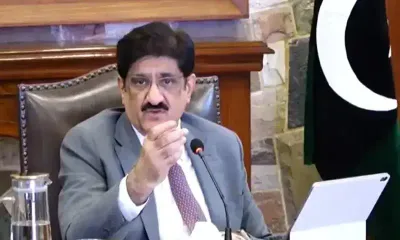
Chaired by Sindh Chief Minister Murad Ali Shah, the cabinet approved extending the term of the judicial commission until Oct 15, a statement by the CM House confirmed.
“The cabinet decided that Justice Omar Sial (who is heading the commission) may continue the inquiry if more time is required,” it said.
According to the statement, the cabinet was briefed that the commission had so far conducted extensive proceedings, including the recording of statements of dozens of witnesses.
The cabinet was further informed that the commission required more time to complete its investigation, following which the cabinet granted additional time to compile its findings and recommendations.
The commission is set to resume its proceedings tomorrow (Friday).
According to the Aug 24 notification issued by the Home Department, the commission was to “examine the facts and circumstances leading to, and surrounding the death of Mir Raza Ali and determine whether the investigation is being conducted impartially and in accordance with the law and identify any investigative angle or evidence requiring further investigation”.
Other terms of reference (ToRs) included determining whether any police officer, medico-legal officer or any other official committed negligence, dereliction of duty, professional misconduct, suppression/manipulation of evidence or any unlawful act, omission or cover-up.
The judicial panel would also make recommendations for further investigation, forensic analysis or legal/departmental action.
It has powers under the relevant laws for summoning and enforcing the attendance of witnesses, examining them on oath and requiring the discovery and production of documents and other records.
The case so far
Ali’s body was found a day after he went missing on July 28. Since then, the case has been mired in controversy, with the deceased’s family accusing the police of trying to bury the facts while the investigators initially attempted to build the case around the possibility of a suicide.
Days after the recovery of Ali’s body on July 29, Karachi Police Surgeon Dr Summaiya Syed had told Geo News that the post-mortem findings in the case had raised several questions, as some observations in the report did not appear to match the available photographs.
On August 6, a Karachi court took up an application by Ali’s father, allowed the exhumation of his body, ordered the formation of a medico-legal board for the purpose and directed that a second autopsy of Ali’s body be conducted.
The Sindh health department then constituted an eight-member board, with police surgeon Dr Syed as the convener. However, in the early hours of August 7, the board was reconstituted through an order issued by the director general of the Sindh health department.
While Dr Syed remained the convener of the new five-member board, its members were changed.
But Ali’s family rejected the new board, which also resulted in the deferment of the planned exhumation on Friday. Meanwhile, the counsel for Ali’s family, Nasir, accused the authorities of trying to bury the facts.
The Sindh government then restored the original medical board, following which Ali’s body was exhumed on August 8.
A day later, the Sindh inspector general of police’s (IG) office notified the reconstitution of the investigating team probing Ali’s death, while Karachi Additional IG Azad Khan transferred the investigation into Ali’s murder to Zaman Town police station from Ferozabad Police Station, where the case was registered under charges of kidnapping.
The order for the probe team’s reconstitution also showed that a murder charge had been added to the first information report.
The same day, the Sindh government decided to seek a judicial commission for the case’s investigation, only to defer the plan a day later after Ali’s family said they had made no such demand and had faith in the new investigation team.
On Aug 19, Ali’s parents, Mir Hussain and Mariam Hussain, wrote to Sindh Chief Minister Murad Ali Shah, seeking his “direct supervision of the murder investigation”. They also urged the chief minister to order an investigation and departmental inquiry into the previous investigation team and immediately suspend the officers involved.
The provincial government acknowledged the letter and announced the decision on Aug 23 to form a judicial commission to determine whether the investigation in the case was being conducted impartially and to investigate the circumstances surrounding Ali’s death.
However, the counsel for Ali’s family approached the SHC, objecting to the provincial government’s decision to form a judicial commission and seeking the formation of an independent and multi-agency JIT “comprising officers who have had no previous involvement in the case”.
On Sept 2, the SHC dismissed that petition filed by Ali’s family, observing that constituting such a body was the “prerogative of the government”.
Meanwhile, the final report of Ali’s second post-mortem for the Mir Raza Ali murder case confirmed that his death was caused by a gunshot wound to the back.
“Death occurred due to cardiac rupture consequent to perforating firearm injury of the chest,” the report stated, adding that the entry wound was on the posterior thorax (back) and the exit wound on the anterior thorax (front of the chest).
“The findings are inconsistent with suicide as the manner of death,” it confirmed.