
DG ISPR addresses media on 'another false-flag' by India
Inter-Services Public Relations (ISPR) Director General Lt Gen Ahmed Sharif Chaudhry is currently speaking about “another false-flag” operation by India. The press conference comes after Indian media reported that an individual wanted in connection with the April 22 Pahalgam terrorist attack last year had been killed during an “encounter” in Indian Illegally Occupied Kashmir’s Korag area. Addressing the media, DG ISPR said he would talk “about a so-called terrorist incident, a false flag that has been staged by the Indian political military”. He presented a five-point timeline, showing that the whole scenario began on Sept 29. “On the night of Sep 29, the Indian corps deployed in IIOK made a tweet, claiming that, based on joint intelligence reports, the Indian Army, police and CRPF launched an operation in general area of Korag, Yousmarg,” he read from a social media post by Chinar Corps. The DG ISPR then referred to another post by Chinar Corps on Sept 20 morning that claimed the Indian forces had found the body of a “Lashkar-e-Taiba terrorist”. The military spokesperson noted that later, India’s ANI news outlet claimed that the deceased had been identified as Mohammad Asif, who had been inducted into the Special Services Group (SSG). Indian claims Indian media had claimed that the supposedly slain individual was affiliated with the banned Lashkar-e-Taiba (LeT) and a soldier of the Pakistan military. The claim, attributed to “sources”, named the individual as Mohammad Asif. It may be recalled that Indian media and authorities have made several allegations regarding Pakistani involvement in the April Pahalgam incident in the past, but failed to substantiate them. The Pakistan government and security forces have yet to respond to this most recent allegation. “Mohammad Asif alias Hashim Moosa was born on 07 March 1980. He joined the Pakistan Army in 2000 under service number PA-3106947 and retired with the rank of Havildar,” India’s Asian News International (ANI) reported on Thursday. It also provided a detailed profile of the slain man. “In 2005, Mohammad Asif was inducted into the Special Services Group (SSG). He served with 4 Commando ‘Yalgar’ Battalion and was posted to Balochistan from 2006 onward. During his deployment in Balochistan, he reportedly participated in approximately 10 operations against Baloch insurgents and is credited with 13 personal kills,” the ANI news report stated, adding that Asif was also part of the security detail of former president Pervez Musharraf. It was stated by ANI that Asif was “wanted in the Pahalgam terror attack”, and the claim was repeated by the Indian Army’s Chinar Corps — part of the Northern Command and headquartered in occupied Kashmir. The corps primary area of responsibility is the Kashmir area of operations. In May 2025, a four-day conflict between Pakistan and India was sparked by an attack on tourists in occupied Kashmir’s Pahalgam, which New Delhi, without evidence, linked to Pakistan. Islamabad had strongly denied responsibility while calling for a neutral investigation. After New Delhi launched deadly air strikes in Punjab and Azad Kashmir on May 7, Pakistan said it downed at least six Indian aircraft in air-to-air combat, later raising the tally to eight. After tit-for-tat strikes on each other’s airbases, it took American intervention on May 10 for both sides to finally reach a ceasefire. During that conflict, Indian media had been heavily criticised for beating the war drums and regurgitating fake news fed by Indian government sources. Many mainstream Indian channels had also aired inflammatory anti-Pakistan and anti-Muslim content. India’s ranking in the Reporters Without Borders’ World Press Freedom Index has deteriorated sharply over the past decade. The country ranked 122nd in 2010 but fell to 157th out of 180 countries in 2026. In April, on the first anniversary of the Pahalgam attack, Pakistan had rejected a renewed Indian propaganda campaign linking it to the attack, deploring that the neighbouring country was focusing on “weaponising its false narrative” in the midst of a regional crisis sparked by the US-Israel war on Iran.
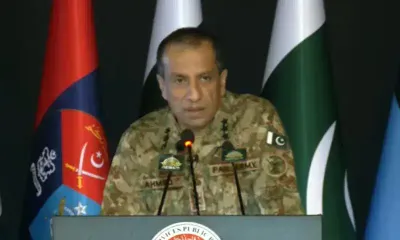
Inter-Services Public Relations (ISPR) Director General Lt Gen Ahmed Sharif Chaudhry is currently speaking about “another false-flag” operation by India.
The press conference comes after Indian media reported that an individual wanted in connection with the April 22 Pahalgam terrorist attack last year had been killed during an “encounter” in Indian Illegally Occupied Kashmir’s Korag area.
Addressing the media, DG ISPR said he would talk “about a so-called terrorist incident, a false flag that has been staged by the Indian political military”.
Indian media had claimed that the supposedly slain individual was affiliated with the banned Lashkar-e-Taiba (LeT) and a soldier of the Pakistan military. The claim, attributed to “sources”, named the individual as Mohammad Asif.
It may be recalled that Indian media and authorities have made several allegations regarding Pakistani involvement in the April Pahalgam incident in the past, but failed to substantiate them. The Pakistan government and security forces have yet to respond to this most recent allegation.
“Mohammad Asif alias Hashim Moosa was born on 07 March 1980. He joined the Pakistan Army in 2000 under service number PA-3106947 and retired with the rank of Havildar,” India’s Asian News International (ANI) reported on Thursday.
It also provided a detailed profile of the slain man. “In 2005, Mohammad Asif was inducted into the Special Services Group (SSG). He served with 4 Commando ‘Yalgar’ Battalion and was posted to Balochistan from 2006 onward. During his deployment in Balochistan, he reportedly participated in approximately 10 operations against Baloch insurgents and is credited with 13 personal kills,” the ANI news report stated, adding that Asif was also part of the security detail of former president Pervez Musharraf.
It was state by ANI that Asif was “wanted in the Pahalgam terror attack”, and the claim was repeated by the Indian Army’s Chinar Corps — part of the Northern Command and headquartered in occupied Kashmir. The corps primary area of responsibility is the Kashmir area of operations.
In May 2025, a four-day conflict between Pakistan and India was sparked by an attack on tourists in occupied Kashmir’s Pahalgam, which New Delhi, without evidence, linked to Pakistan.
Islamabad had strongly denied responsibility while calling for a neutral investigation .
After New Delhi launched deadly air strikes in Punjab and Azad Kashmir on May 7, Pakistan said it downed at least six Indian aircraft in air-to-air combat, later raising the tally to eight .
After tit-for-tat strikes on each other’s airbases, it took American intervention on May 10 for both sides to finally reach a ceasefire .
During that conflict, Indian media had been heavily criticised for beating the war drums and regurgitating fake news fed by Indian government sources. Many mainstream Indian channels had also aired inflammatory anti-Pakistan and anti-Muslim content.
India’s ranking in the Reporters Without Borders’ World Press Freedom Index has deteriorated sharply over the past decade. The country ranked 122nd in 2010 but fell to 157th out of 180 countries in 2026.
In April, on the first anniversary of the Pahalgam attack, Pakistan had rejected a renewed Indian propaganda campaign linking it to the attack, deploring that the neighbouring country was focusing on “weaponising its false narrative” in the midst of a regional crisis sparked by the US-Israel war on Iran.