
Terrorism, with plausible deniability
EDITORIAL: Pakistan’s accusation at the UN General Assembly that India has turned terrorism into an instrument of policy would once have been comfortably dismissed in New Delhi as another instalment in the familiar hostility between two old adversaries. That response has become considerably harder to sustain. Pakistan has spent years presenting evidence of Indian involvement in violence on its soil, but allegations of Indian-linked operations have now travelled far beyond South Asia, reaching countries as distant and powerful as the United States and Canada. The change has become particularly pronounced during Narendra Modi’s BJP era, which began in 2014. Pakistan has repeatedly accused India of financing and supporting militant groups responsible for attacks inside the country, including the TTP and BLA, charges New Delhi denies. Islamabad’s case acquired an especially striking dimension with Kulbhushan Jadhav, the former Indian naval officer convicted in Pakistan on espionage and terrorism charges. India acknowledges that Jadhav is an Indian national but has disputed Pakistan’s account of his activities and the circumstances in which he was apprehended. The International Court of Justice subsequently dealt with India’s complaint over consular rights without determining the truth of the competing allegations about his activities. Developments farther afield have made the wider issue much more difficult to confine to Pakistani claims. In the United States, Indian national Nikhil Gupta pleaded guilty in February this year to murder-for-hire and related charges over a plot to assassinate a Sikh separatist leader in New York. US prosecutors say Gupta acted at the direction of Vikash Yadav, an Indian government employee who was charged separately and remains accused of directing the operation from India. India has denied government involvement. Whatever New Delhi’s defence, the spectacle of American prosecutors pursuing a case involving an alleged Indian official-linked assassination operation represents an extraordinary escalation in the international concern surrounding such activities. Canada has generated similarly grave allegations over the 2023 killing of Sikh activist Hardeep Singh Nijjar in British Columbia, with Canadian authorities accusing Indian agents of involvement and India rejecting the charge. Taken together, the American and Canadian cases have fundamentally altered the context in which Pakistan’s longstanding complaints must be heard. Islamabad can no longer simply be portrayed as the only capital alleging that Indian security interests are being pursued through covert operations beyond India’s borders. Pakistan’s intervention at the UN, therefore, deserves serious international attention. Its claim that nearly 100,000 Pakistanis have been killed by terrorism since the turn of the century illustrates the staggering human cost the country associates with the broader terrorist threat. Responsibility for that entire toll obviously cannot be assigned to India, and Pakistan’s specific allegations of Indian sponsorship must stand or fall on evidence. But evidence presented regarding individual networks, operatives and financing deserves investigation rather than automatic dismissal because it originates in Islamabad. There is also a larger principle at stake. States cannot claim the protections of sovereignty while treating another country’s sovereignty as negotiable whenever an adversary, dissident or separatist happens to be located there. If governments begin normalising assassination plots, proxy violence or covert sponsorship as instruments of foreign policy, the international rules they invoke for their own protection become progressively meaningless. Pakistan has been making that argument about India for years. The uncomfortable development for New Delhi is that Pakistan is no longer the only country asking the questions. Copyright Business Recorder, 2026
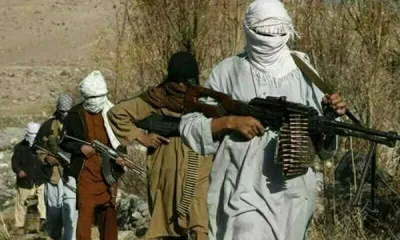
EDITORIAL: Pakistan’s accusation at the UN General Assembly that India has turned terrorism into an instrument of policy would once have been comfortably dismissed in New Delhi as another instalment in the familiar hostility between two old adversaries. That response has become considerably harder to sustain. Pakistan has spent years presenting evidence of Indian involvement in violence on its soil, but allegations of Indian-linked operations have now travelled far beyond South Asia, reaching countries as distant and powerful as the United States and Canada.
The change has become particularly pronounced during Narendra Modi’s BJP era, which began in 2014. Pakistan has repeatedly accused India of financing and supporting militant groups responsible for attacks inside the country, including the TTP and BLA, charges New Delhi denies. Islamabad’s case acquired an especially striking dimension with Kulbhushan Jadhav, the former Indian naval officer convicted in Pakistan on espionage and terrorism charges. India acknowledges that Jadhav is an Indian national but has disputed Pakistan’s account of his activities and the circumstances in which he was apprehended. The International Court of Justice subsequently dealt with India’s complaint over consular rights without determining the truth of the competing allegations about his activities.
Developments farther afield have made the wider issue much more difficult to confine to Pakistani claims. In the United States, Indian national Nikhil Gupta pleaded guilty in February this year to murder-for-hire and related charges over a plot to assassinate a Sikh separatist leader in New York. US prosecutors say Gupta acted at the direction of Vikash Yadav, an Indian government employee who was charged separately and remains accused of directing the operation from India. India has denied government involvement. Whatever New Delhi’s defence, the spectacle of American prosecutors pursuing a case involving an alleged Indian official-linked assassination operation represents an extraordinary escalation in the international concern surrounding such activities.
Canada has generated similarly grave allegations over the 2023 killing of Sikh activist Hardeep Singh Nijjar in British Columbia, with Canadian authorities accusing Indian agents of involvement and India rejecting the charge. Taken together, the American and Canadian cases have fundamentally altered the context in which Pakistan’s longstanding complaints must be heard. Islamabad can no longer simply be portrayed as the only capital alleging that Indian security interests are being pursued through covert operations beyond India’s borders.
Pakistan’s intervention at the UN, therefore, deserves serious international attention. Its claim that nearly 100,000 Pakistanis have been killed by terrorism since the turn of the century illustrates the staggering human cost the country associates with the broader terrorist threat. Responsibility for that entire toll obviously cannot be assigned to India, and Pakistan’s specific allegations of Indian sponsorship must stand or fall on evidence. But evidence presented regarding individual networks, operatives and financing deserves investigation rather than automatic dismissal because it originates in Islamabad.
There is also a larger principle at stake. States cannot claim the protections of sovereignty while treating another country’s sovereignty as negotiable whenever an adversary, dissident or separatist happens to be located there. If governments begin normalising assassination plots, proxy violence or covert sponsorship as instruments of foreign policy, the international rules they invoke for their own protection become progressively meaningless.
Pakistan has been making that argument about India for years. The uncomfortable development for New Delhi is that Pakistan is no longer the only country asking the questions.
Copyright Business Recorder, 2026