Afghan interim govt must move from ‘militant mindset’ to statesmanship: Tarar
Federal Minister for Information and Broadcasting Attaullah Tarar on Tuesday said the Afghan interim government needs to move from what he described as a “militant mindset” to a mindset of a statesman and a state for lasting peace and stability in the region. Addressing a gathering organised by the International Parliamentarians Congress (IPC), Tarar said Pakistan had repeatedly sought dialogue and negotiations with Afghanistan to achieve peaceful coexistence, but questioned whether there was sufficient will on the Afghan side to achieve peace. “The problem is that the mindset needs to be changed,” he said, adding that the Afghan interim government needed to move away from a militant mindset. Tarar said Pakistan and Afghanistan were neighbouring countries with longstanding links and that Pakistan had hosted around four million Afghan refugees over more than four decades. He said Pakistan had made several attempts to resolve outstanding issues through negotiations, with Pakistani delegations travelling to Afghanistan and talks being held in third countries, including recent meetings in Istanbul and Doha. According to Tarar, the main obstacles to peace included militancy and what Pakistan considers the presence of terrorist safe havens in Afghanistan. Pakistan has repeatedly criticised the Afghan authorities of allowing militant groups to operate from Afghan territory, while the Afghan Taliban authorities have rejected such allegations. Recent tensions between the two countries have also included cross-border attacks and Pakistani strikes inside Afghanistan. The minister said peace between the two countries could open opportunities for greater trade and regional connectivity, particularly by linking Central Asian states with Pakistani ports and warm-water routes through Afghanistan. He said Afghanistan had significant economic potential and argued that regional trade and investment could expand if peace and stability were established. Tarar also highlighted Afghanistan’s young population and raised concerns over restrictions affecting women’s participation in the workforce and access to basic rights, including education, assembly and association. “There is a disconnect between the Afghan interim government and sections of the Afghan population,” he said, adding that ordinary Afghans wanted peace, stability and economic prosperity. “Only peace can lead to prosperity,” Tarar said, adding that Afghanistan’s stability would benefit the wider region. He said Pakistan had continued to engage with Afghanistan through dialogue and negotiations despite security concerns. Tarar also warned that Pakistan’s desire for peace should not be interpreted as weakness, saying Islamabad had responded to attacks and would respond to any attempts to destabilise the country. “Pakistan’s desire for peace must not be misconstrued as its weakness,” he said, adding that Pakistan would continue to defend itself against attacks while pursuing peace. The minister said the people of Afghanistan deserved a more prosperous future and that they should have a voice in determining the country’s future.
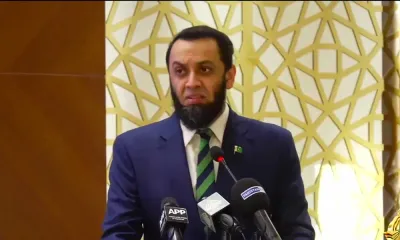
Federal Minister for Information and Broadcasting Attaullah Tarar on Tuesday said the Afghan interim government needs to move from what he described as a “militant mindset” to a mindset of a statesman and a state for lasting peace and stability in the region.
Addressing a gathering organised by the International Parliamentarians Congress (IPC), Tarar said Pakistan had repeatedly sought dialogue and negotiations with Afghanistan to achieve peaceful coexistence, but questioned whether there was sufficient will on the Afghan side to achieve peace.
“The problem is that the mindset needs to be changed,” he said, adding that the Afghan interim government needed to move away from a militant mindset.
Tarar said Pakistan and Afghanistan were neighbouring countries with longstanding links and that Pakistan had hosted around four million Afghan refugees over more than four decades.
He said Pakistan had made several attempts to resolve outstanding issues through negotiations, with Pakistani delegations travelling to Afghanistan and talks being held in third countries, including recent meetings in Istanbul and Doha.
According to Tarar, the main obstacles to peace included militancy and what Pakistan considers the presence of terrorist safe havens in Afghanistan. Pakistan has repeatedly criticised the Afghan authorities of allowing militant groups to operate from Afghan territory, while the Afghan Taliban authorities have rejected such allegations. Recent tensions between the two countries have also included cross-border attacks and Pakistani strikes inside Afghanistan.
The minister said peace between the two countries could open opportunities for greater trade and regional connectivity, particularly by linking Central Asian states with Pakistani ports and warm-water routes through Afghanistan.
He said Afghanistan had significant economic potential and argued that regional trade and investment could expand if peace and stability were established.
Tarar also highlighted Afghanistan’s young population and raised concerns over restrictions affecting women’s participation in the workforce and access to basic rights, including education, assembly and association.
“There is a disconnect between the Afghan interim government and sections of the Afghan population,” he said, adding that ordinary Afghans wanted peace, stability and economic prosperity.
“Only peace can lead to prosperity,” Tarar said, adding that Afghanistan’s stability would benefit the wider region.
He said Pakistan had continued to engage with Afghanistan through dialogue and negotiations despite security concerns.
Tarar also warned that Pakistan’s desire for peace should not be interpreted as weakness, saying Islamabad had responded to attacks and would respond to any attempts to destabilise the country.
“Pakistan’s desire for peace must not be misconstrued as its weakness,” he said, adding that Pakistan would continue to defend itself against attacks while pursuing peace.
The minister said the people of Afghanistan deserved a more prosperous future and that they should have a voice in determining the country’s future.