Londoners face tax rises to fund Andy Burnham's social care reforms even if pensions 'Triple Lock' is scrapped
Exclusive: Tax expert Jonathan Cribb warns ditching ‘Triple Lock’ would not get close to raising billions in coming years to tackle social care crisis
This content is provided by Exco Player and may use cookies or similar technologies. Please click 'Allow and Continue' below to load the content.
Londoners face new tax rises to fund Andy Burnham ’s flagship social care reforms.
A huge political debate has erupted over axing the “Triple Lock”, the mechanism used to raise the state pension , to fund the Government’s landmark social care shake-up.
But Jonathan Cribb, Deputy Director at the Institute for Fiscal Studies , stressed that scrapping the “Triple Lock” would not get close to raising billions of pounds in coming years to radically improve the social care system.
Health experts say that £18 billion more a year may be needed to be spent to tackle the social care crisis , though, the Prime Minister has disputed the figure.
Mr Burnham has been urged not to hit young Londoners, many of who are financially burdened by student loans and the high cost of renting, with tax rises to fund social care improvements.
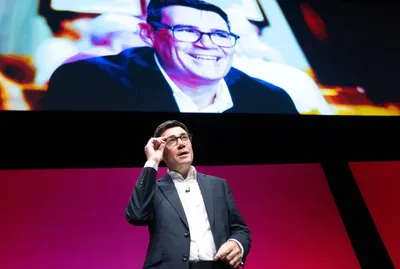
In his first speech to Labour ’s annual conference in Liverpool as leader, the Prime Minister was due to highlight his proposed social care shake-up, with little detail yet of the level of support or how it would be funded.
One possibility that the Government is believed to be considering is reforming the “Triple Lock”, which means the State pension rises by inflation, wage increases or 2.5%, which ever is the highest, to channel funding into social care.
But Mr Cribb told The Standard: “If they scrap or move away from the Triple Lock, that's not enough to fund big entitlement to social care in the next few years, in the early 2030s.
“Therefore, they would need other spending cuts, or tax rises.”
Ditching the “Triple Lock” could save around £600 million a year by 2029 , a figure which could increase to between £5 billion and £40 billion by 2050, he explained.
The funding raised from such a reform over the next decade or so would be “small change compared to the potential spending on social care”.
“If they do tax rises, that's likely to affect Londoners more than the rest of the country,” Mr Cribb added, given the higher salaries and greater wealth in the capital which already pays an income tax bill of at least £80 billion a year.
Burnham under pressure over refusal to say if he backs Heathrow third runway
What is the triple lock on state pensions and why has it been controversial?
Rayner: Pensioners may be willing to back triple lock reform to fund social care
Art After Dark is back with an exciting calendar of cultural events
“If they do broad tax rises through income tax or National Insurance, or an equivalent to National Insurance, some kind of social care levy, that is likely to affect younger and middle-aged people more because they work more and they earn more.”
London has a younger population than regions around the country.
The capital has a working age population of 6.57 million people, with 1.06 million people of State pension age, giving an old age dependency ratio of 162 pensioners per 1,000 individuals of working age, according to the Office for National Statistics.
The highest old age dependency ratio was in the South West with 353 pensioners per 1,000 people of working age, followed by the North East at 318, the East 304, the South East 302, East Midlands 298, Yorkshire and the Humber 290 and West Midlands 284.
So the capital gets proportionately less benefit from the “Triple Lock” than other parts of Britain, while being the region which provides more of its funding.
Communities Secretary Angela Rayner suggested that pensioners could be willing to give up the “Triple Lock” if they know their money is going towards social care rather than to fill a “black hole” in Government spending.