
Europe Intelligence Brief — Thursday, October 8, 2026
Rio Times · Europe Intelligence Brief October 8, 2026 — EU ambassadors agreed to add 1,646 Russian individuals and organisations to the sanctions regime; Chancellor Friedrich Merz and UK Prime Minister Andy Burnham launched a joint partnership targeting sabotage, cyberattacks and other hybrid threats in Berlin; Hungary lifted its objection to technical steps concerning negotiating clusters 2 and 3 in Ukraine’s EU accession process.
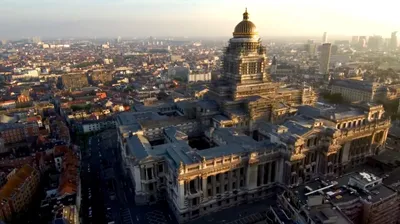
Europe Intelligence Brief for October 8: EU adds 1,646 Russian sanctions targets, UK and Germany launch hybrid threats pact, and Hungary unblocks Ukraine.
Europe’s temper this Thursday is defiant insecurity. Governments are projecting strategic control through sanctions, security partnerships and accession diplomacy, but the breadth of the agenda reveals a continent organising around vulnerability rather than confidence. The EU’s decision to add 1,646 Russian individuals and organisations to its sanctions regime, reported by EU Today on 8 October, is a list of names and entities, but it is also a measure of how deeply the bloc now sees itself entangled in a conflict that reaches into missile supply chains, occupied territories and the daily calculations of member states.
The register is procedural but urgent. In Berlin, Chancellor Friedrich Merz and UK Prime Minister Andy Burnham launched a partnership against sabotage and cyberattacks, the UK Government said on 8 October. In Brussels, ambassadors moved sanctions and accession clusters across the table. In Paris and Berlin, officials argued over the definition of “Made in Europe”. These are not separate stories; they are the same story told in different ministries: Europe is trying to secure its borders, its industries and its institutions at the same time.
What steadies the continent is the machinery of commitment. A sanctions package is prepared, a bilateral security framework is signed, a negotiating position is unblocked, and a budget summit issues a communiqué. None of these acts is dramatic on its own, but together they form a rhythm of collective action. The reported Hungarian decision to lift its objection to Ukraine’s accession clusters 2 and 3, with conditions attached, shows that even the bloc’s most reluctant members are being drawn into the forward motion.
The through-line is a Europe that is simultaneously absorbing a wartime shock and negotiating the domestic costs of its own response. Security policy is converging with industrial policy, and enlargement is colliding with agricultural and fiscal anxiety. The continent is not choosing between defence and prosperity; it is trying to build both at once, and the strain is visible in every compromise.
— Sanctions expansion. EU ambassadors agreed on 7 October to add 1,646 Russian individuals and organisations to the sanctions regime, including more than half linked to the ballistic-missile industrial chain, EU Today reported on 8 October.
— Occupied-territory politicians. The new EU sanctions package includes 77 politicians who stood for election in Russian-occupied Ukrainian territories, EU Today reported on 8 October.
— Formal adoption. EU foreign ministers are expected to formally adopt the expanded Russia sanctions package on Monday, 12 October 2026, EU Today reported on 8 October.
— UK–Germany security partnership. Prime Minister Andy Burnham and Chancellor Friedrich Merz launched a joint partnership targeting sabotage, cyberattacks and other hybrid threats in Berlin on 8 October, the UK Government said on 8 October.
— Ukraine accession progress. Hungary lifted its objection to technical steps concerning negotiating clusters 2 and 3 in Ukraine’s EU accession process on 8 October, Ground News reported on 8 October.
— Hungarian condition. Hungary’s position remains that progress on Ukraine’s accession is conditional on Ukraine adopting a minority-rights law, Ground News reported on 8 October.
— “Made in Europe” dispute. France favours a definition limited to production within the EU’s 27 member states, while Germany supports potentially including trusted partners such as the UK, Canada and Japan, EU Today reported on 8 October.
— Russian grain sanctions call. Lithuanian Prime Minister Mindaugas Sinkevičius renewed calls for EU sanctions on Russian grain on 8 October, linking the demand to Russia’s Black Sea blockade, the Kyiv Independent reported on 8 October.
EU ambassadors agreed on Wednesday, 7 October, to add 1,646 Russian individuals and organisations to the bloc’s sanctions regime, EU Today reported on 8 October. More than half of the new listings are linked to the ballistic-missile industrial chain, a signal that Brussels is targeting the weapons systems that have struck Ukrainian cities and energy infrastructure.
The package also includes 77 politicians who stood for election in Russian-occupied Ukrainian territories, EU Today reported on 8 October. That element is designed to deny legitimacy to the political structures Moscow has installed in occupied areas. Formal adoption by EU foreign ministers is expected on Monday, 12 October 2026.
The scale of the package matters. It is the latest in a series of sanctions rounds that have moved from broad sectoral measures to highly specific targeting of military-industrial supply chains. The inclusion of missile-production links suggests that European intelligence and trade data are being used to trace the components and companies that sustain Russia’s long-range strike capability.
The register in Brussels is methodical escalation. The bloc is not announcing a new strategy; it is deepening the existing one. Each sanctions round is a bureaucratic act, but the cumulative effect is a legal and financial architecture that makes it harder for Russia to source the components it needs.
UK Prime Minister Andy Burnham and German Chancellor Friedrich Merz launched a joint security partnership in Berlin on Thursday, 8 October, the UK Government said on 8 October. The arrangement targets sabotage, cyberattacks and other hybrid threats, with a focus on improved information-sharing, coordinated monitoring, deterrence and disruption capabilities.
The meeting was Burnham’s first face-to-face with Merz, and the agenda extended beyond hybrid threats to include support for Ukraine, Middle East instability and disruption to trade routes including the Strait of Hormuz, DW reported on 8 October. The inclusion of trade-route security signals that the two governments see economic vulnerability as a national-security issue.
The partnership is significant for the UK’s post-Brexit positioning. London has been seeking structured security relationships with key European powers, and Germany is the most important partner in that effort. For Berlin, the arrangement adds a capable intelligence and military ally to its own security architecture at a time when the eastern flank feels exposed.
The register in Berlin is activist and outward-looking. The government is presenting itself as a security organiser, not merely a participant. The partnership with the UK is one element of a broader effort to build resilience against threats that do not fit traditional military categories.
Hungary lifted its objection to technical steps concerning negotiating clusters 2 and 3 in Ukraine’s EU accession process on Thursday, 8 October, Ground News reported on 8 October. The next possible milestones are member-state approval of negotiating positions on Monday, 12 October, followed by an intergovernmental conference on Tuesday, 13 October.
The Hungarian position remains conditional. Budapest has said progress depends on Ukraine adopting a minority-rights law, Ground News reported on 8 October. That condition reflects long-standing Hungarian concerns about the treatment of ethnic Hungarians in western Ukraine, and it means the unblocking is not unconditional.
The development is a significant step for Ukraine’s European ambitions. Clusters 2 and 3 cover areas of the acquis that are central to the functioning of a modern state, and opening them would move the accession process from symbolic support to technical negotiation. The timing, just days before the expected formal adoption of the new Russia sanctions package, underscores the link between security and enlargement.
The register in Kyiv is urgent institutional hope under military pressure. The accession process is moving, but it is moving slowly and conditionally. The war grinds on, but the European path remains open.
France and Germany are at odds over the definition of “Made in Europe” in EU procurement and industrial-preference rules, EU Today reported on 8 October. Paris favours a definition limited to production within the EU’s 27 member states, while Berlin supports potentially including trusted partners such as the UK, Canada and Japan.
The dispute is about more than labelling. It concerns who can access EU strategic-industry supply chains, defence procurement and green-technology incentives. A narrow definition protects European producers but risks excluding partners whose components are already embedded in European manufacturing. A broader definition acknowledges those dependencies but dilutes the preference for domestic industry.
The timing is significant. The EU is simultaneously trying to reduce strategic dependencies on China and Russia while maintaining open trade with allies. The “Made in Europe” debate is a proxy for the larger question of how protectionist the bloc should become in the name of security.
The register in Paris is strategically assertive but economically guarded. France wants European money to build European capacity. Germany, with its export-oriented industrial base, is more comfortable with a broader definition that includes trusted non-EU partners. The argument will shape the next phase of EU industrial policy.
Lithuanian Prime Minister Mindaugas Sinkevičius renewed calls for EU sanctions on Russian grain on Thursday, 8 October, the Kyiv Independent reported on 8 October. He linked the demand to the effect on Ukrainian food-export revenues.
The call is part of a broader effort by frontline states to tighten economic pressure on Moscow. Russian grain exports have continued to flow to global markets, and Lithuania argues that this trade finances the war. The demand has not yet produced a consensus in Brussels, where some member states are wary of disrupting global food markets.
The issue has direct implications for global food prices. Ukraine is a major grain exporter. Sanctions on Russian grain could further tighten supply, affecting importers in the Middle East, Africa and Latin America. The EU is weighing geopolitical pressure against market stability.
The register in Vilnius is urgent and moral. Lithuania has been among the most vocal advocates for tougher measures against Russia, and the grain-sanctions call is consistent with that stance. The demand is unlikely to be adopted quickly, but it keeps the pressure on Brussels to act.
Nine southern EU countries aligned behind an “ambitious” EU budget at a Mediterranean summit on Thursday, 8 October, Contexte reported on 8 October. The grouping includes member states that have historically pushed for stronger cohesion funding and agricultural support.
The summit is part of the early positioning ahead of the next multi-annual financial framework negotiations. Southern member states are seeking to protect funding for regional development, agriculture and migration management, while northern states are focused on defence and fiscal discipline. The budget debate will be one of the defining political battles of the coming years.
The alignment matters because it signals that the southern bloc intends to negotiate as a group. The nine countries share interests in cohesion policy and agricultural support, and their combined weight could influence the final budget package. The summit is an early warning to Brussels that the budget fight will be hard.
The register in the Mediterranean capitals is defensive but organised. The southern states are not opposing the security agenda; they are trying to ensure that it does not crowd out the funding they depend on. The budget is the next battleground.
The France–Germany dispute over the definition of “Made in Europe” could affect Latin American suppliers seeking access to EU procurement and strategic-industry chains, EU Today reported on 8 October. If the EU adopts a narrow definition limited to the 27 member states, Latin American companies could be excluded from certain supply chains. A broader definition that includes trusted partners might create openings, but Latin America is not currently on the list of candidates mentioned.
Lithuania’s call for sanctions on Russian grain, reported by the Kyiv Independent on 8 October, has implications for food-importing countries in Latin America. Any disruption to Russian grain exports could raise global grain prices and freight costs. Latin American importers would feel the effect through higher food costs, while Latin American exporters might see substitution demand.
The UK–Germany security partnership explicitly includes disruption to global trade routes, including the Strait of Hormuz, the UK Government said on 8 October. Any prolonged disruption to that waterway would raise shipping, insurance and energy costs for Latin American exporters and importers. The partnership is a European response to a global risk, but its consequences would be felt far beyond Europe.
The dossier carries the leader, the country health check and the outcome table with its Latin America column — open the Europe Intelligence Dossier .
EU ambassadors agreed on 7 October to add 1,646 Russian individuals and organisations to the sanctions regime, including more than half linked to the ballistic-missile industrial chain and 77 politicians elected in occupied Ukrainian territories, EU Today reported on 8 October. Formal adoption is expected on Monday, 12 October 2026.
Prime Minister Andy Burnham and Chancellor Friedrich Merz launched a joint security partnership on 8 October targeting sabotage, cyberattacks and other hybrid threats, the UK Government said on 8 October. The agenda included support for Ukraine, Middle East instability and disruption to trade routes including the Strait of Hormuz.
Hungary lifted its objection to technical steps concerning negotiating clusters 2 and 3 in Ukraine’s EU accession process on 8 October, Ground News reported on 8 October. The reported Hungarian position remains that progress is conditional on Ukraine adopting a minority-rights law.
France favours a definition limited to production within the EU’s 27 member states, while Germany supports potentially including trusted partners such as the UK, Canada and Japan, EU Today reported on 8 October. The dispute concerns who can access EU strategic-industry supply chains and procurement.
This article was produced by The Rio Times’ automated newsroom system. How we use AI · Report an error · Editorial responsibility: Matthias Camenzind , Editor-in-Chief
LatAm Markets: Live Signals → — real-time movers, turnover leaders and FX across Latin America.