
Asian Games 2026: Samurai spirit to the fore
NAGOYA: A Samurai code of honour is deeply embedded in Japanese culture. As is loyalty and discipline. The finer tenets of Buddhism, Confucianism and the local Shinto were merged into one cultural ethos that is reflected in everything the Japanese do, from corporate to ordinary life. Nagoya is one of the cities that has inherited the Samurai way of life: warriors who never give up and usually pick death over loss.
NAGOYA: A Samurai code of honour is deeply embedded in Japanese culture. As is loyalty and discipline.
The finer tenets of Buddhism, Confucianism and the local Shinto were merged into one cultural ethos that is reflected in everything the Japanese do, from corporate to ordinary life. Nagoya is one of the cities that has inherited the Samurai way of life: warriors who never give up and usually pick death over loss.
On the various grounds across the Aichi Prefecture, 503 athletes from India fought different battles over the last two weeks or so. To give a little tweak to a very popular saying, 'when in Japan, do as the Samurais do'.
After more than half of the Games were over, after half of the athletes left, the remaining tried to salvage India’s medal’s tally; for a period of time, it was looking anaemic to say the least. The weather changed from sunny to gloomy but it finally ended with bright sunshine on Saturday. India’s fortunes too fluctuated like the fickle weather.
India were staring at one of the worst Games in recent times. The bulk of the medal share in the last Asian Games was lifted by the shooters and athletes. Their performance was below expectation and the entire Indian contingent was under pressure. Shooters finally won 15 medals but only three gold; athletics, a usual source for good news stories at the Asian level, won only one gold (23 other medals).
The business end of the quadrennial showpiece continental event saw some of the best performances by Indian athletes. From four gold at the Games' halfway mark, the tally swelled to 21. During the last five days, athletes broke records, created history and marched on. Just like the Samurais, they never gave up.
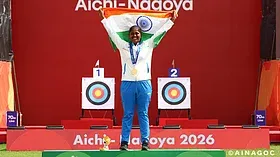
On the sheer merit of their performance, the archery team that had been knocking on the doors of immortality finally shone in golden hues. Kumkum Mohod, 17, emerged as one of the most unlikely warriors with bows and arrows. The teenager who has been shooting with borrowed bows won two gold and one silver. The enormity of her achievement could be gauged from the fact that no archer before this Asian Games had won a gold medal across all recurve events. Dismantling South Korea’s hegemony in archery is no mean task. For a teenager participating in her first Asian Games, in fact, her first major international competition, this is monumental. The band of Indian archers dismantled South Korea so badly that the assembled media persons described it as catastrophic.
If she was shooting with precision, miles away in the Toyota highlands, another woman, Neeru Dhanda, was keeping shooting destiny alive. She won two gold and one silver, including an individual gold. She was aptly chosen as the flag bearer for the Closing Ceremony.
Transition the main word
Transition seems to be the buzz word as youngsters firmly announced their arrival on the big stage. Boxing and wrestling were the two sports that exceeded expectations and would be primed for winning medals at the Olympics. Parveen Hooda, Lovlina Borgohain and Ankush won three gold medals for India – first ever at the Games. On the mat, Sujeet Kalkal and Aman Sehrawat won gold while Antim Panghal won silver. In Greco Roman, Nitesh Siwach secured India’s first silver in the competition after 1962. Men’s and women’s hockey and cricket teams were on the money. Even though the former was expected to win gold, marrying expectations and reality can be a tricky task.
'One Heart, One Asia': Asian Games 2026 close in Japan, over to Qatar
The preparation for the Games is one area that needs to be mentioned. The archery team converted their practice area into a competition venue and simulated final matches day after day for 30 days at the Sports Authority of India (SAI) centre in Sonepat. The Target Olympic Podium Scheme (TOP) took over the preparation of all elite athletes after Target Asian Games chief left in January. Foreign exposure trips helped archers to cope with pressure.
Planning and execution was part of boxers’ regimen as well. Calling sparring partners from Dominican Republic and Iran helped them prepare for different challenges. Return of Santiago Nieva and CA Kutappa at the right moment has undoubtedly revived the boxing team.
The wounds of wrestling protests seem to have healed. The wrestlers are more focused on the job in hand and it showed in the way they fought. Kalkal, like a true Samurai, never gave up, the blade was ready for harakiri when he was down 2-9 but he just wiped out the deficit and made sure India won gold. Sehrawat beat world champion on way to gold.
Those medals were no fluke. Most of the players had to overcome Olympic and world champions on way to the podium.
The most heartening part of most of the medal winners are that they are all young. Kumkum is just 17, Sujeet is 23, Kirti Sharma (Kumkum’s partner in archery is 20), Neeru 26, compound archer Chikitha is 21, Ankush 21, Parveen Hooda 26… the average age is below 24.
This reflects well with respect to the transition that India is having right now in sports like boxing and wrestling. Growth in sports is never linear – but converting it into big medals should be consistent. There is growth in boxing and wrestling where India are winning medals at Olympics but archery is the surprise package here.
Disappointments
If archery was the biggest beneficiary of the Games, shooting and athletics were big let downs within the overall context. Shooting won 15 medals out of which only three were gold (only one individual). Athletics had 24 medals but just one gold. If Neeru had been the runaway hit in shooting, Vithya Ramraj and Gulveer Singh led the way on the track. Gulveer ran in four races in five days to win three medals – 1500, 5000 and 10000m – a task considered herculean.
Yet, after so much investment and training, the two sports should introspect before coming up with changes. There was also the rowing mess, something all stakeholders should avoid at all costs going forward. At the end of the day, it clearly affected all the athletes and it reflected in their performances. The Games are generally the days of their lives and they should be the focus, not officials.
At the same time, sports like swimming and cycling needed to show some more punch. Surprise medals is usually what catches the eye but both of these disciplines had nothing to show for the efforts put in behind the athletes. One sport that went under the radar despite bringing one of the biggest contingents was fencing. But again, the return of investment can and should be questioned.
It is time for TOP Scheme and the sports ministry to start focusing their attention on sports where there is a lot of potential as well as promise in terms of Olympic medals. While a few sports can be part of the development programme, it shouldn't be priority.
The way India started the Games, a fourth finish is not bad at all. Visualisation was key to Kumkum’s success, because she knew nothing else apart from visualization. Perhaps it is time for India as a whole to start visualisation in their desire to go up the leaderboard.
No Instagram & YouTube, second-hand bow from father's savings: Making of double Asiad gold medallist archer Kumkum