
Opening the taps on diesel reserves is a risky gamble for Europe
US President Donald Trump has bounced Europe into a risky gamble. On Friday, under threat of a US ban on diesel exports, the Group of Seven major economies agreed to release emergency petroleum stocks. Mr Trump may be looking just to elections in a month, but London, Paris and Berlin risk burning their remaining reserves. Opening the taps is meant to alleviate the crisis in diesel caused by the US-Iran war.
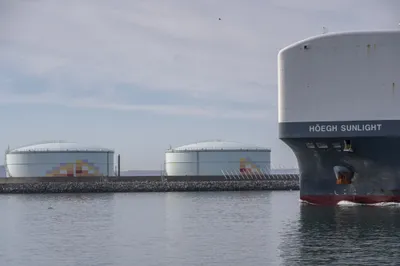
US President Donald Trump has bounced Europe into a risky gamble. On Friday, under threat of a US ban on diesel exports, the Group of Seven major economies agreed to release emergency petroleum stocks. Mr Trump may be looking just to elections in a month, but London, Paris and Berlin risk burning their remaining reserves.
Opening the taps is meant to alleviate the crisis in diesel caused by the US-Iran war. The G7 countries collectively will provide 100 million barrels over four months, split between crude and refined products, and front-loaded with diesel. In return, they have all agreed not to impose restrictions on oil exports – for now.
The Gulf shuttle scheme, guarded by US ships and aviation, appears to have succeeded in restoring crude oil flows to near prewar levels. This comes at a heavy cost in death and injury of mariners, damage to vessels, and hiring and guarding the vessels.
Escorting refined product shipments is harder: they are more varied, travel in smaller ships and are usually more flammable than crude. Before the war, the Arab countries within the Gulf exported about 5.5 million barrels daily of refined products, particularly diesel, jet fuel and heavy fuel oil.
That plunged to below 2 million barrels per day when the US began its attack, and has recovered to 3 million bpd or so. Iran added another 900,000 bpd of net exports of refined products and natural gas liquids. This has now fallen to near-zero by sea, and perhaps minor amounts going overland by lorry or rail.
Europe and Japan hold large stocks of petroleum products, especially diesel and petrol, while the US’s strategic petroleum reserve is almost entirely crude oil.
The US has marketed about 130 million barrels, taking its crude stocks down to the lowest levels since the early 1980s. It looks doubtful that it can provide much more without causing permanent damage to the artificial salt caverns that hold the oil. Though this drawdown has helped keep crude prices hovering at relatively moderate levels, that is not the locus of the current crisis – Brent crude closed the week at $102 per barrel, while wholesale diesel in New York is going for $200.
If half the proposed release consists of diesel, it amounts to about 400,000 bpd over four months, replacing about a third of the exports lost this year. That would be helpful, but far from a full or permanent solution.
There is also the oddity that European stocks are not owned by their governments, unlike in the US. Instead, oil companies are mandated to hold more than normal commercial levels. Approval for a release does not necessarily mean that all that diesel comes on the market. Despite the tight conditions, commercial product stocks at the crucial Amsterdam-Rotterdam-Antwerp hub actually rose last month, and are not down much since May, unlike in the US where they have plummeted.
Hard hit from a diesel ban
The proposed prohibition of American diesel exports would have hit Europe hard. The UK and EU import about 270,000 bpd of diesel from the US, a third of their total imports, though this jumped to 420,000 bpd during the worst of the crunch this summer.
It would have hurt other nations too, and would quickly have rebounded on the US as refiners would have cut back runs. The US still imports significant amounts of petrol – a politically more visible and sensitive fuel – and might well have faced retaliatory bans.
Should the Europeans have resisted the demand, or called Mr Trump’s bluff? On the one hand, they worried about a difficult winter. If he had just forbidden sales specifically to Europe, the fuel would have been shuffled around through other countries to end up there anyway. So, to have a real impact, he would have had to impose a blanket ban.
Strategic stocks are made to be used in emergencies. While the US had already emptied much of the SPR in 2022 and hardly refilled it since, European stocks are well above legal minimum levels, and have been rebuilt since 2022. Solidarity between the G7 and the members of the International Energy Agency is fundamental for collective management of energy shocks.
On the other hand, the European countries did not start this war, they are not combatants, and they do not control it. If they burn through their reserves over the next four months, they had better be sure a resolution to the crisis is coming soon. The hazy thinking coming out of the White House and the Pentagon about war aims and strategy does not inspire such confidence.
Polls suggest the Republicans will suffer a drubbing in November’s midterm elections. After that, Mr Trump will find it hard to advance any of his domestic agenda. Many expect he will back down in Iran, perhaps after launching one final thunderclap so he can go home claiming a victory. That itself runs the risk that Tehran miscalculates, and decides to respond in kind rather than absorbing the blow.
But it is at least as likely that, unable to achieve much at home, he will escalate. In turn, if the Iranians had not realised it already, all the headlines inform them that refineries are an Achilles heel. The Ukrainian campaign against Russia tells the same tale.
Refineries in Israel and in all the Gulf states except Oman were damaged earlier this year. Saudi refineries in Jazan and Yanbu have been attacked from Yemen over the past month, and on Saturday, there were reports of a fire and smoke at a refinery in Riyadh.
Europe wants to avoid the worst cases of a US diesel export ban on the one hand, and running short in the middle of a flare-up of the conflict in midwinter. The way it structures its strategic stocks gives it a way out. It can appear to have conceded to Mr Trump’s demands for a big release.
But if its companies do not actually want to sell much of their stocks, that is not the governments’ fault, and will not become apparent for some weeks anyway. By then, the US elections will be over and the next moves by Washington and Tehran may be clearer.