
Iran says Strait of Hormuz will not reopen until its conditions are met
Iran said the Strait of Hormuz will not reopen until its conditions are met, as indirect talks with Washington stall and officials in Tehran prepare for the possibility of another major round of fighting. Parliament Speaker Mohammad Baqer Ghalibaf said the US had recently made proposals through intermediaries, contradicting what he said Washington was saying publicly in the media, but that Tehran’s position was “completely clear and definitive”.
 Hormuz Closure Chaos$HCC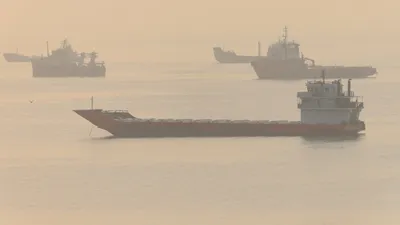
Iran said the Strait of Hormuz will not reopen until its conditions are met, as indirect talks with Washington stall and officials in Tehran prepare for the possibility of another major round of fighting.
Parliament Speaker Mohammad Baqer Ghalibaf said the US had recently made proposals through intermediaries, contradicting what he said Washington was saying publicly in the media, but that Tehran’s position was “completely clear and definitive”.
“Until our seven conditions based on the Islamabad memorandum of understanding are realised, the Strait of Hormuz will not be opened,” he said, referring to the June 17 framework for talks on securing a durable peace.
Mr Ghalibaf did not disclose the contents of the US proposals, but his comments indicate that the two sides are still exchanging messages and negotiating over the conditions for reopening the strait.
The hardliner said Iran would pursue diplomacy while remaining prepared for war. “We will neither become emotional nor intimidated; we will both fight and negotiate,” he said. “The person who is victorious at the negotiating table is the one who has prepared himself for war.”
A source in Tehran told The National on Saturday that Iran was preparing for a “major round of fighting” as diplomatic efforts faltered and Washington considered its next steps.
“The military option [for the US] has not been abandoned,” the source said.
“But the Iranians are also preparing for a major round of fighting and have the capabilities to do so,” the source added. “The door to diplomacy remains open and has not been closed. But assessments in Iran are that the war is resuming.”
The latest impasse follows several indirect meetings in New York last month between Iranian Foreign Minister Abbas Araghchi and US envoys Steve Witkoff and Jared Kushner, with Qatar passing messages between the two sides. No breakthrough emerged.
Mr Araghchi subsequently presented a seven-day proposal for reopening the Strait of Hormuz and returning to negotiations. “If the necessary conditions are met, the strait could be reopened,” he said. “The choice now is with the US.”
Tehran has since received Washington’s response through Qatari mediators.
The exchange suggests that the immediate diplomatic dispute is increasingly focused not on whether the two sides are communicating, but on the terms and sequencing of concessions needed to reopen the strait and resume negotiations.
The UAE has meanwhile reaffirmed its commitment to resolving its dispute with Iran over the three islands of Greater Tunb, Lesser Tunb and Abu Musa through peaceful means, rejecting Iranian official Ali Akbar Velayati's criticism of the UAE’s statement at the UN.
Anwar Gargash, diplomatic adviser to the UAE President, said Mr Velayati’s criticism was contradicted by the facts and documents underpinning the UAE’s claims to the islands. “The UAE’s approach is clear and consistent: resolving the dispute peacefully through direct bilateral negotiations or by recourse to the International Court of Justice,” Mr Gargash said. He added that the UAE would continue to pursue its “legitimate rights” responsibly until a peaceful resolution was reached in accordance with international law.
The diplomatic standoff was accompanied by a dispute over Iran’s delegation in New York. US officials said Secretary of State Marco Rubio ordered the delegation to leave after the General Assembly ended, while Iran’s UN mission rejected that account, saying its departure had been scheduled in advance.
Iran has also proposed a nuclear measure as part of efforts to break the deadlock, with sources saying Tehran offered to dilute its stockpile of uranium enriched to 60 per cent before transferring it to a third party under mechanisms recognised by the International Atomic Energy Agency.
The crisis follows the outbreak of the war, which has since reshaped the regional security landscape and left both sides preparing for the possibility of renewed fighting even as diplomatic channels remain open.
Iran’s Quds Force commander, Brig Gen Esmail Qaani, has meanwhile described the US withdrawal from Iraq as a victory and said Iran-backed groups would continue to play a role there, amid uncertainty over Baghdad’s plans to bring weapons under state control.
The deadline for that process has been pushed back to June 2027, while Kataib Hezbollah has denied reaching an understanding with the Iraqi government on disarmament.