
Bear 910 and Backpack emerge as Alaska’s Fat Bear Week finalists
The event this year featured 16 bears vying for the heavyweight title in a single-elimination, bracket-style tournament
Want to bookmark your favourite articles and stories to read or reference later? Start your Independent Membership today.
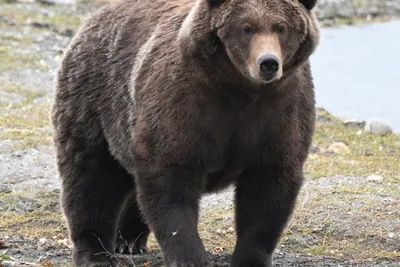
After a week of intense competition, Bear 910 and Backpack have emerged as the final two contenders vying to be named the heftiest brown bear in Alaska's Katmai National Park and Preserve.
Only one contestant can win Fat Bear Week, with voters deciding the ultimate champion on Tuesday.
The competition, currently in its 12th year, honors the resilience of the 2,200 brown bears living in the preserve along the Alaska Peninsula, which stretches from the southwest region of the state toward the Aleutian Islands. Established in 2014, Fat Bear Week was created as an interactive initiative to educate the public about coastal brown bears, the close relatives of grizzlies.
Chunk — officially recognized as Bear 32 — won last year’s title at an estimated 1,200 pounds. He was knocked out during the first round of this year’s competition by Bucky, who later lost a direct faceoff to Backpack, officially designated as Bear 89.
A total of 16 bears entered this year's single-elimination, bracket-style tournament to compete for the heavyweight crown. Voting is conducted entirely online at www.fatbearweek.org , with the winner announced Tuesday evening when the final poll closes. Members of the public can watch the contestants on explore.org’s livestream cameras before choosing their favorite contender.
"Fat bears are successful bears," the nonprofit explains on its website. The animals gorge on the abundant salmon that return to the Brooks River beginning in late June. It is along the river that they build up the vital fat reserves required to survive winter hibernation. To be included in the tournament, bears must frequently visit the river area.
In midsummer, adult male brown bears generally weigh between 600 and 900 pounds (roughly 270 to 410 kilograms). By the time hibernation approaches, following months of feeding on migrating and spawning salmon, large males can weigh significantly more than 1,000 pounds (454 kilograms). Female brown bears are approximately one-third smaller. Bears may consume as many as 30 fish each day during this time of year, working relentlessly to eat a year’s worth of food in approximately six months.
During their winter hibernation, the bears go without eating or drinking and lose a third of their overall body weight.
Contenders in Fat Bear Week also included five bear families, reflecting the record number of families and cubs present at the river this summer. A mother bear must feed and protect her young while consuming sufficient calories to sustain herself through hibernation. Cubs frequently face the danger of attacks by other bears because of territorial behavior or food scarcity.
Bear 132 and her three spring cubs successfully reached the semifinals, but ultimately lost to Bear 910.
Contestant profiles from the nonprofit identify Bear 132 as one of the largest and most experienced mother bears at Brooks River. In mid-July, one of her cubs became separated from the family for several days and roamed the river corridor alone. They were reunited a short time later.