
WHO questions Russia on reported second plague lab death
The World Health Organization is pressing Russia for more information about the unexplained death of a worker at a Siberian plague research institute — and a potential second incident. WHO Director-General Tedros Adhanom Ghebreyesus said in a statement Tuesday that the agency has asked Russian authorities to clarify what caused the severe case of pneumonia…
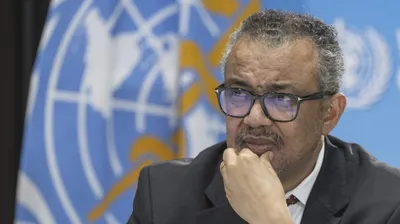
The World Health Organization is pressing Russia for more information about the unexplained death of a worker at a Siberian plague research institute — and a potential second incident. WHO Director-General Tedros Adhanom Ghebreyesus said in a statement Tuesday that the agency has asked Russian authorities to clarify what caused the severe case of pneumonia that killed the 28-year-old worker at the Irkutsk Anti-Plague Research Institute last week.
“Timely, complete and transparent information sharing under the International Health Regulations is essential to clarify conflicting reports and enable an accurate assessment of potential public health risks,” the statement reads. The worker died on Oct. 2 after being hospitalized with severe pneumonia following reports of an alleged accidental lab exposure. Russian authorities have not publicly identified what caused the infection or how she became ill.
The case drew international scrutiny, including from President Trump, who called the case "concerning" and said Tuesday that he planned to speak with Russian President Vladimir Putin about the situation “very soon.” According to Ghebreyesus, Russian health authorities told the WHO that no plague cases have recently been recorded in the Irkutsk region and that an epidemiological investigation was conducted. Officials said contacts of the worker were tested and placed under medical observation, with no high-threat pathogens detected, and preventative and control measures had been implemented.
Roughly 200 people were initially quarantined as authorities investigated the death. The WHO chief said his organization has remained in contact with Russian officials and offered technical support but is seeking additional information about the cause of the worker’s pneumonia, the pathogen that prompted the public health response and reports involving a second employee. Kremlin spokesperson Dmitry Peskov disputed reports surrounding the incident, saying the “vast majority” of media coverage about the situation was false and directing people to information provided by Russian public health watchdog Rospotrebnadzor.
Peskov also pushed back on Trump saying there was a scheduled phone call with Putin to discuss the matter, saying no such conversation had been scheduled.