
Elon Musk calls on Quebec, Alberta and Saskatchewan to separate from Canada
Premiers Danielle Smith and Scott Moe say they do not share his views on breaking up the country
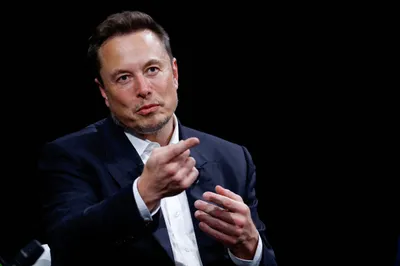
Elon Musk's comments arrive in the wake of a series of pro-secession statements from prominent American political and religious leaders. Gonzalo Fuentes/Reuters
The richest man on Earth wants Canada to break apart, calling for three provinces to leave Confederation in the wake of an election in Quebec that brought separatists back to power.
Trillionaire Elon Musk , who attended university in Ontario, has fathered children with multiple Canadian women and has called himself “half Canadian,” said Wednesday that he supports those who want their provinces to be independent.
“Quebec should separate,” he wrote on X, the social media platform he owns and has used to share his views with hundreds of millions of people around the world.
Quebec “would be better off” as its own country, he added. “Alberta and Saskatchewan should separate too.”
On Monday, the Parti Québécois won a minority government after promising a third referendum on independence. In less than two weeks, Albertans will vote on whether that province should remain in Canada or begin the process of holding a legally binding referendum on separation. In Saskatchewan, meanwhile, some polls have shown increased support for secession.
On Wednesday, Saskatchewan Premier Scott Moe responded to Mr. Musk with a single word, posted to X: “No.”
“Our government, our Caucus, and our party support Alberta remaining in Canada,” added Alberta Premier Danielle Smith in a statement.
But Alberta separatists welcomed support from the man who built electric automaker Tesla into a global operation, turned rocket company SpaceX into a major player and has maintained ownership of one of the world’s most powerful social media networks.
He is “somebody that’s done really well and looks at our situation, business-wise, and says we’d be better off on our own. It just gives it some credibility for him to actually think that,” said Mitch Sylvestre, chief executive officer of the Alberta Prosperity Project.
The argument that Alberta, Saskatchewan and Quebec would be better off outside Canada − “I agree with all of that,” Mr. Sylvestre said. “We’ve made the case over and over again.”
Mr. Musk’s intervention arrives in the wake of a series of pro-secession statements from prominent American political and religious leaders. In January, U.S. Treasury Secretary Scott Bessent called Alberta a “natural partner” for his country. U.S. President Donald Trump has repeatedly threatened the annexation of Canada. Influential conservative pastors and podcasters in the U.S. have openly supported Alberta secession.
Mr. Musk has cultivated close ties with the Trump administration, most recently being chosen as a leader of Project Meridian, a Pentagon effort to examine the future of warfare.
“The foreign interference in this campaign is unprecedented,” said Thomas Lukaszuk, a former deputy premier of Alberta who has led Forever Canadian, an initiative that has campaigned for Alberta to remain in Canada.
He called Mr. Musk’s comments “offensive.”
“I hope that Canadians in their shopping practices keep in mind whom we are supporting as consumers in Canada,” he said.
Tesla sells tens of thousands of vehicles a year in Canada, and Canada is the fifth-largest market for satellite internet services provided by Starlink, a division of SpaceX, network diagnostics company Ookla reported last year. In 2024, Mr. Musk said Starlink was in 3 per cent of Canadian homes.
But Canadian political leaders have also worked to counter the influence of some of Mr. Musk’s businesses in the country. Last year, Ontario said it had scrapped a $92-million contract with SpaceX for its Starlink service, fulfilling a vow by Premier Doug Ford to retaliate against U.S. tariffs. Prime Minister Mark Carney has said publicly that he intends to work with partners in Europe and Asia to ”diversify away” from Starlink.
Last year, a petition backed by Charlie Angus, then an NDP MP, called on the Prime Minister to revoke Mr. Musk’s Canadian passport.
Mr. Musk moved to Canada from South Africa in 1989 and attended Queen’s University in Kingston for two years. He also worked on a cousin’s farm in Saskatchewan, once posting a photo of himself holding a hammer and wearing a white cowboy hat.
”I love Canada! I’m half Canadian,” he wrote in 2017. “My Mom was born in Regina. My grandfather (her Dad) was American, born in Minnesota.”
He has since soured on the place, his condemnation growing more strident during the years Justin Trudeau was prime minister.
“Canada is not a real country,” he wrote in one message, then deleted, in response to the petition against his citizenship.
He accused Mr. Trudeau of “trying to crush free speech in Canada,” calling it “shameful.” He criticized Canada’s bilingual laws, which he called “extremely hypocritical and unfair!” He publicly sided with Mr. Trump when the U.S. President suggested Canada treats American banks unfairly.
In 2024, he said it was “high time” Mr. Trudeau was voted out of office.
Early last year, he sneered at a statement from Mr. Trudeau that said “there isn’t a snowball’s chance in hell that Canada would become part of the United States.”
Mr. Musk responded on the day after Mr. Trudeau said he would resign, using a title Mr. Trump often used to troll the prime minister: “Girl, you’re not the governor of Canada anymore, so doesn’t matter what you say.”