Trump-Xi meeting: Minister backs more active role
Taiwan must take a more active role in international risk management, Minister of Foreign Affairs Lin Chia-lung (林佳龍) said yesterday following Chinese President Xi Jinping’s (習近平) three-day state visit to the US.Xi and US President Donald Trump held their second face-to-face meeting this year follow
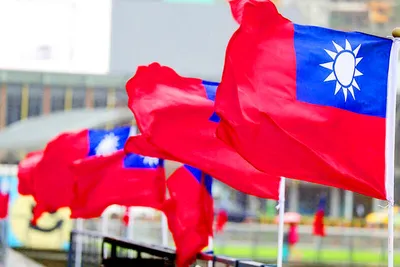
Taiwan must take a more active role in international risk management, Minister of Foreign Affairs Lin Chia-lung (林佳龍) said yesterday following Chinese President Xi Jinping’s (習近平) three-day state visit to the US.
Xi and US President Donald Trump held their second face-to-face meeting this year following a summit in Beijing in May, with the latest meeting drawing renewed attention to the situation across the Taiwan Strait.
The government maintained close communications with the Trump administration and groups in the US ahead of the meeting in Washington, exchanging views on key issues concerning peace and stability across the Taiwan Strait and Taiwan-US relations, Lin said.
The communication channels have remained stable and effective, he said.
Following the Washington meeting, US Ambassador to China David Perdue told an interviewer that “US policy toward Taiwan has not changed,” Lin said.
This again underscored the importance of sustained communication and mutual trust between Taiwan and its key partners in maintaining stability across the Taiwan Strait, Lin said.
The US and China continued negotiations on trade, economic, technology and security issues, including measures such as extending their trade truce by another two months, he said.
That shows that despite efforts to pursue “constructive strategic stability,” structural competition and differences between the two countries remain, he said.
The meeting itself was a form of risk management, as the US and China need to maintain dialogue to prevent miscalculations from escalating, he said.
“Managing risks while engaging with each other” has become a key challenge for the international community as it deals with China’s rise, Lin said.
Whenever high-level US-China interactions draw attention, discussion centered on “doubting the US” or “abandoning Taiwan” emerge in Taiwan, he said.
However, managing the risks posed by China does not mean the international community must seek a full-blown confrontation with Beijing, he said, adding that the China policies of other nations do not mean they must sacrifice ties with Taiwan.
In practice, policies regarding China and Taiwan can coexist, he said.
For Taiwan, that means it must take a more active role in international risk management, Lin added.
US policy toward China is based on a framework established by the Three Joint Communiques, while its relations with Taiwan are institutionally grounded in the Taiwan Relations Act, the “six assurances” and laws passed by the US Congress, he said.
Taiwan-US relations are gradually developing into a “symbiotic partnership” spanning security, economics, technology and industry, he said.
A similar trend is unfolding in Europe and the Indo-Pacific region, Lin said, adding that the developments show that Taiwan should not underestimate its own importance.
The international community has a greater understanding of the economic, security and systemic risks posed by China and is placing greater emphasis on Taiwan’s role in democracy, technology, supply chains and regional security, he said.
Separately yesterday, Vice President Hsiao Bi-khim (蕭美琴) said that while Trump’s meeting with Xi in the US touched on strategic stability, Taipei and Washington have long shared significant common interests, including maintaining peace and stability across the Taiwan Strait, preserving the “status quo” and promoting economic prosperity.
An increasing number of countries, including the US, Japan and South Korea, have recently issued statements underscoring the importance of peace and stability across the Taiwan Strait, while supporting the maintenance of the “status quo” and opposing any attempt to change it through force or coercion, Hsiao said.
However, Taiwan cannot rely solely on foreign concern and support, she said.
“We must protect the democracy we cherish most,” she added.
Additional reporting by Chang Tsung-chiu
A Hualien pomelo farmer refused to sell to China after the country announced it would permit more Taiwanese pomelo imports, prompting widespread support from Taiwanese consumers, who rallied to buy his fruit. China’s Taiwan Affairs Office last month said that China’s General Administration of Customs registered an additional 79 Taiwanese pomelo orchards and packing facilities in Hualien County, allowing more Taiwanese producers to export pomelos to China.
“I am a Hualien fruit farmer and I refuse to sell to China,” Liu Tzu-hao (劉子豪) from Ruisui Township (瑞穗) said in an online post. Liu is a well-known farmer in the community and has served
Ocean Affairs Council (OAC) Minister Kuan Bi-ling (管碧玲) on Wednesday said decommissioned coast guard vessels were given to the Philippines to enhance regional rescue capacity and would not affect Taiwanese fishers’ rights and benefits. Kuan made the remarks after confirmation on Tuesday that a 500-tonne Coast Guard Administration (CGA) patrol and rescue vessel would be given to the Philippine Coast Guard. The donation ceremony was reportedly done in Manila, but whether the vessel — previously numbered “CG123” and named Kinmen (金門) — has been handed over has yet to be confirmed.
China’s Taiwan Affairs Office (TAO) on Wednesday criticized the donation for “taking
UPDATE: The submarine would need to undergo combined systems testing and crew training for navy personnel before it is ready for mission, an expert said Taiwan’s first domestically built submarine, the Hai Kun (Narwhal, 海鯤), could be delivered to the navy as early as next month, military expert and Taiwan Association for Security and Development chairman Chi Tung-yun (紀東昀) said yesterday. The submarine was yesterday morning observed departing for its 21st sea trial and its 15th submerged test.
The vessel missed the initial delivery deadline of November last year due to “testing delays,” its primary contractor, shipbuilder CSBC Corp, Taiwan, said in June. The contractor also cited “political pressure from China” in procuring critical equipment. All testing operations are in the final stages, with the
Six NT$10 million (US$315,527) special prizes and seven NT$2 million grand prizes in Taiwan's May-June uniform invoice lottery remained unclaimed as of today, including one NT$10 million winner who spent only NT$10 on an Uber Eats delivery order, the Ministry of Finance said.
The ministry said the 13 winners need to claim their prizes by Nov. 5.
The eight-digit serial number that won the NT$10 million special prize for May-June was 38548029, with 18 winning receipts in total.
The NT$2 million grand prize number was 10138845, of which there were 22 winning receipts, the ministry said.
In addition to the receipt issued for an