How China is seeking to transform the meaning of great power
As China has emerged as a peer competitor to the United States in many areas, an increasingly familiar question is whether it has become a superpower. The question, however, may rest on a definition of power that belongs to another era. China possesses many attributes traditionally associated with great powers: a large population, vast territory, a major economy, advanced technological capabilities and growing military strength. Yet Beijing describes China as a “major country” rather than a...
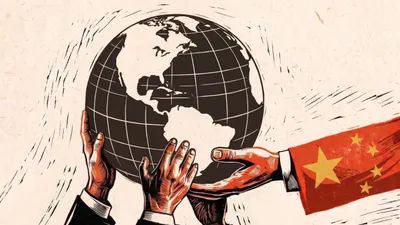
As China has emerged as a peer competitor to the United States in many areas, an increasingly familiar question is whether it has become a superpower. The question, however, may rest on a definition of power that belongs to another era.
China possesses many attributes traditionally associated with great powers: a large population, vast territory, a major economy, advanced technological capabilities and growing military strength. Yet Beijing describes China as a “major country” rather than a “great power” or “superpower”. Its white paper on global governance, for example, presents China as a major country advocating a more just and equitable international order.
It reflects a different conception of what power is for, and perhaps what constitutes responsible power in the 21st century.
The term “superpower” dates from the second world war. In his 1944 book The Super-Powers: The United States, Britain, and the Soviet Union – Their Responsibility for Peace, American political scientist William T.R. Fox identified the three as a new category of states whose military and geopolitical capabilities gave them an exceptional role in shaping the post-war order.
The ability to move and sustain armed forces across major theatres of war, supported by overseas bases and extensive geopolitical reach, was a defining attribute of the new superpowers. Fox’s argument also carried an important implication: those possessing such exceptional capabilities would bear an exceptional responsibility for preserving peace.
That concept remains relevant. Military power, strategic reach and the ability to deter or defeat adversaries continue to shape international politics. But they no longer exhaust the sources of national power.
Over the past eight decades, economic interdependence, global supply chains, technology, finance and industrial capacity have become increasingly important instruments of geopolitical influence. Power can also arise from the ability to produce critical goods, control strategically important technologies, withstand economic pressure or impose costs on an adversary through disruption of commercial networks.
This is one reason the experience of the past decade is difficult to fit neatly into a purely military definition of power.
The US-China confrontation over trade and technology offers one illustration. During last year’s tariff escalation, China responded not simply with matching tariffs but with measures affecting critical minerals and other areas in which it possesses substantial leverage. The subsequent negotiations showed the degree of economic interdependence between the world’s two largest economies. Neither side could treat the other simply as an external adversary without incurring significant costs.
The lesson is not that economic power has replaced military power. Rather, the two have become increasingly intertwined. A country with a formidable armed force may nevertheless be constrained by weaknesses in its industrial base, supply chains, finances or ability to sustain a prolonged confrontation. Conversely, a state without comparable military reach can acquire substantial bargaining power from its position in strategically important economic networks.
The continuing strategic importance of the Strait of Hormuz, for example, illustrates how geography and asymmetric capabilities can give a regional power leverage over actors with vastly greater military resources. Military superiority does not automatically translate into unlimited political freedom of action.
This raises a broader question: should a 21st-century great power be defined only by the ability to dominate other states, or also by its capacity to contribute to the stability and development of the international system?
China’s answer is increasingly explicit. Its diplomatic language emphasises what it calls a “major country” role, with sovereignty, multilateralism, international law, development and a people-centred approach among the principles it associates with global governance. Its white paper presents the Global Governance Initiative as an effort to build a more just and equitable international system and stresses the importance of multilateral cooperation and the UN-centred international order.
The concept of a “superpower” traditionally describes an exceptional concentration of capabilities. The concept of a “responsible major country”, by contrast, puts greater emphasis on how those capabilities are used.
There is a historical logic to this distinction. China’s experience of statecraft has produced a political tradition in which stability, order and people’s welfare are important measures of performance. Contemporary leaders have adapted elements of that tradition to a modern conception of development and international governance. Its official discourse increasingly presents China’s international role in terms of development, cooperation and problem-solving, rather than formal domination.
This does not mean China rejects power. On the contrary, its economic and technological rise, military modernisation and growing diplomatic reach have given Beijing considerably greater capacity to shape international outcomes. The more interesting question is how China chooses to conceptualise and deploy that capacity.
The distinction between “superpower” and “responsible major country” points to a larger transformation in international politics. The ability to project military force remains a crucial component of power, but it is increasingly only one component. Industrial resilience, technological capacity, economic relationships, control of critical supply chains and the ability to provide international public goods can also shape the choices available to states.
Fox’s 1944 insight was that extraordinary power carries extraordinary responsibility. Eighty years later, the nature of extraordinary power itself may be changing.
The question for China may not be whether it can satisfy an old definition of superpower. It is whether it can show that a major power can exercise influence without making domination the organising principle of international relations.
That would amount to more than a change in terminology. It would be a different answer to the question Fox posed in 1944: what should the world’s most powerful countries do with their power?