
Africa’s wildlife population plunges by 80 percent in five decades, WWF warns
Wildlife populations monitored across Africa have declined by an average of 80 percent over the past five decades, according to a major new assessment by the World Wide Fund for Nature (WWF), which warns that changes to energy, food and financial systems are essential to reversing biodiversity loss.
Wildlife populations monitored across Africa have declined by an average of 80 percent over the past five decades, according to a major new assessment by the World Wide Fund for Nature (WWF), which warns that changes to energy, food and financial systems are essential to reversing biodiversity loss.
The conservation organisation’s Living Planet Report 2026 found that the average size of monitored populations of mammals, birds, amphibians, reptiles and fish in Africa fell sharply between 1970 and 2022.
Africa recorded the second-largest regional decline after Latin America and the Caribbean, where monitored wildlife populations fell by an average of 95 percent. The Asia-Pacific region recorded a 49 percent decline, while the global average was 73 percent.
The figures come from the Living Planet Index , compiled by the Zoological Society of London, which tracks changes in monitored wildlife populations rather than calculating the total number of animals lost.
“The first message is that the decline is continuing,” Yann Laurans, director of conservation programmes at WWF France, told RFI. “The number of wild vertebrates on the planet is still falling.”
But Laurans cautioned that the pronounced decline in Africa partly reflects the high levels of biodiversity still present when systematic monitoring began in the 1970s.
“The decline in African biodiversity began later,” he said. “In the 1970s, biodiversity levels in Africa were still extremely high, so the decline has occurred more recently.”
By contrast, much of Europe had already suffered considerable biodiversity loss before the monitoring period began, he added.
The report comes ahead of the Cop17 United Nations biodiversity conference in Armenia on 19-30 October, where governments are expected to assess progress towards international commitments to halt and reverse nature loss.
WWF singled out the Congo Basin – the world’s second-largest tropical rainforest – as one of the areas facing particularly intense pressure.
Home to species including forest elephants and great apes, the region is being affected by agricultural expansion, logging, mining and the construction of roads and other infrastructure.
These developments can fragment habitats and open previously inaccessible forests to further exploitation, while unsustainable hunting and poaching are adding to the pressure.
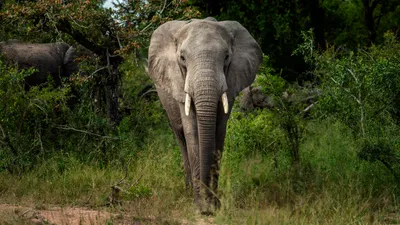
African forest elephant populations have fallen by more than 60 percent in recent decades, driven mainly by ivory poaching and habitat loss.
WWF says climate change, habitat destruction, overexploitation, pollution, invasive species and disease are among the main threats facing wildlife worldwide.
It calls for a shift away from fossil fuels, which produce the greenhouse gas emissions causing climate change and contributing to biodiversity loss across every ecosystem on the planet.
But it identifies the global food and agricultural system as the biggest single driver of biodiversity loss, through the destruction of habitats and excessive extraction of natural resources.
Expansion of farmland can come at the expense of forests, wetlands and other ecosystems, while intensive production places additional pressure on soil, water and wildlife.
Despite the scale of the decline, WWF stressed that biodiversity loss is not irreversible. Around half of the wildlife populations monitored globally are stable or increasing.
Laurans said conservation programmes backed by steady funding had already shown that depleted species can recover.
“When we provide the necessary resources for nature conservation, we can see biodiversity recover,” he said.
He cited the tiger , whose global wild population has risen significantly after years of conservation work, as well as signs of recovery among some western lowland gorilla populations in Africa.
“When conservation works, is funded and is sustained over the long term, we see positive results,” Laurans said.
WWF also points to recoveries among green sea turtles, bluefin tuna and some southern African elephant populations.
While savanna elephants are declining across much of their range and remain classified as endangered, some populations in southern Africa have recovered. WWF puts the rebound down to a combination of community efforts, anti-trafficking work and crackdowns on corruption.
The report argues, however, that conservation measures need to be accompanied by broader changes to economic and financial systems.
The United Nations Environment Programme estimates that around $7.3 trillion was spent in 2023 on activities harmful to nature, compared with just $220 billion on protecting or restoring it. The annual shortfall in biodiversity funding has been calculated at $942 billion .
WWF is calling for more investment to be redirected towards conservation and restoration. Durrel Halleson, head of policy and partnerships at WWF Africa, said the findings were “a stark warning, but also a call to action”.
Daily newsletter Receive essential international news every morning
Keep up to date with international news by downloading the RFI app