The New Republic
Latest crypto news and market updates from The New Republic.
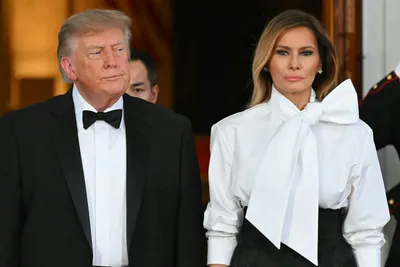 “Where Are the Cameras?”: Trump, 80, Is Confused About Own Media BanThe president apparently did not realize that he’d lose the spotlight when he decided to ban news outlets from the White House. MS NOW’s Jonathan Lemire told Morning Joe Friday that Donald Trump was confused by the lack of cameras at the executive mansion the night before, despite the fact that he had banned MS NOW, CNN, and Politico, sparking a press pool–wide protest as a result. Trump did not consult with his aides before he banned the trio, according to Lemire. “They understand that, first of all, he needs the media like he needs oxygen,” Lemire said. “So he would be the one to miss it.” “In fact, even yesterday I am told he was asking aides ‘Where are the cameras?’ because there was no pool camera, and here’s why,” Lemire added. Trump announced last week that he was banning MS NOW, CNN, and Politico from the White House, writing on Truth Social that the prohibition was the result of “FAKE NEWS.” Within days, the trio had filed a lawsuit against the president and his administration, describing the selective ban as a “a blatant violation” of the First Amendment. U.S. District Judge Timothy Kelly reinstated the outlets’ access for a two-week period starting Thursday morning, though the Trump administration immediately defied the order. The denied entry sparked a request for an emergency hearing , in which an attorney for the media entities claimed that the White House “already repeatedly” violated the court order. Reporters were not allowed to return to the premises until Thursday afternoon. Some journalists with the affected broadcasters, including CNN and MS NOW, were still denied entry well into the evening as Trump’s state dinner with Chinese President Xi Jinping commenced. “Whoever gave them that order should go to jail,” said Morning Joe host Joe Scarborough. “I mean, that’s contempt of court.” “There will be a time when justice will be done for people in this administration ignoring court orders. There will be a time when the masks will be taken off of ICE agents and justice will be done for every person that they beat, for every person that they jailed, for every person that they starve, for every person that they tortured, that time is coming.” “So I want to know,” Scarborough continued. “I want somebody to take note in the White House, who gave those Secret Service agents, who defied a court order, who gave them that order to defy a federal judge? Because when you defy a federal judge, you’re in contempt.”The New Republic
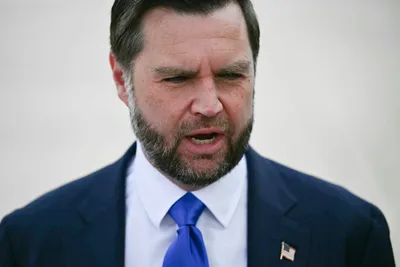 JD Vance Planted the Story That Sparked White House Media BanOne of the stories the White House cited to justify its ban on Politico, MS NOW, and CNN had Vice President JD Vance as its main source. The Washington Post reports that during a press call in June, the Trump administration invited news outlets to a briefing where a White House aide told participants, “The contents of this call are on background, attributable to a senior administration official. By remaining on the line, you agree to those terms. There is no embargo for the contents of the call.” That senior administration official was none other than Vance, who told the media outlets on the call that a peace agreement with Iran was “80, 85 percent” done. Politico published an article with the quote attributed to a senior administration official—only for the White House to later claim in court that “Publication of sensitive security information, and misinformation about national security information, diverts White House resources and those of the national security team in particular.” “The spread of misinformation, especially relating to national security, is a threat that undermines the President’s ability to safeguard the national security,” the White House wrote in a letter submitted to the U.S. District Court in Washington, D.C. on Tuesday. Status News reports that multiple news agencies were on that call and they all granted Vance anonymity in exchange for the information. Vance said on Monday that he supported banning Politico and other outlets, calling President Trump’s decision “totally appropriate.” “If you actually look at the objective analysis, Politico is as anti-Trump as Breitbart was anti-Obama or anti-Biden,” Vance said. “They can still report on the Trump White House. They can still get the public reports. They can still, of course, talk to people in the administration and outside the administration.” But the administration’s complaint about anonymously sourced news reports compromising national security rings hollow with this revelation. It’s overwhelmingly likely that Vance isn’t the only “senior administration official” who has delivered information to the press in this way. A judge already lifted the ban late Wednesday night, but the White House still barred CNN, MS NOW, and Politico reporters from White House grounds Thursday morning. That, plus the news about Vance, is likely to further undermine the administration’s legal defense for its attack on the free press.The New Republic
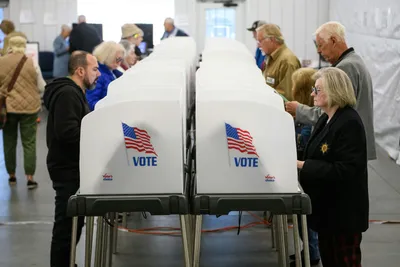 Bashing Trump Isn’t the Best Way to Win These Fickle VotersThe centrist strategists in Washington have had one message for Democrats trying to win back seats in this year’s midterm elections: Appeal to Trump voters. Don’t make them angry . Moderate on cultural issues. And don’t be a socialist . Whatever moral or political objections anyone has to that advice, there’s another big reason candidates can feel free to ignore it: There’s good evidence it doesn’t work. Way to Win, a left-leaning “strategic donor collaborative and strategy hub” founded after the 2016 election, has been working with Lake Research Partners to investigate why Democrats lost in 2024. In a report last year, they found that many voters weren’t necessarily more conservative and switched to Trump, but instead stayed home instead of voting for Vice President Kamala Harris. On Thursday, the two groups released the second phase of their research , revealing which messages resonate enough with uncommitted voters to convince them to vote for Democrats in the midterms this November. The research surveyed persuadable voters in the middle: low-motivation Democrats and independents, voters who picked Trump in 2024 but feel negatively about the economy, and those who hold unfavorable views of both parties. It focused on voters in Arizona, Georgia, Mississippi, North Carolina, Nevada, and Texas because these states have growing populations that are younger and more diverse than the nation as a whole, which means they could hold the key to future victories, as well as one this fall. The survey dial-tested messages to see which ones won these key voters over for Democrats. The research found that populist economic messages and anti-fraud messages that named specific harms from corruption won across all of these groups. Some of the most popular messages included statements like, “Our leaders should be fighting to make all of our lives better,” and, “We need leaders willing to stand up to right-wing corporate interests that hold influence in both political parties.” Other popular messages named no-bid contracts, donor favors, ballrooms, monuments, and corporate price gouging as some of the consequences of government corruption. These messages worked better than the more conservative options, and also worked better than simply bashing Trump, which might feel too partisan for voters. In the beginning of the survey, the generic ballot was nearly evenly split, with Democrats losing to Republicans 43–44. After the messages were tested, Democrats pulled ahead 48–39. “We’ve tested the conservative message, and we trounced it,” said Celinda Lake of Lake Research Partners. What that means overall is that trying to aim for the center might only yield a narrow slice of the voters whom Democrats need to win, but a more robust populist message could also work for those voters and win over many more who are all necessary for a Democratic win. That’s especially important in the midterms, when turnout rates drop from the sixtieth percentile, where it is in presidential years, to below 50 percent. Who votes and who stays home becomes critical. A lot of the voters already liked the sound of some Democratic messaging but didn’t necessarily believe the Democratic candidates in their elections were going to make a real difference, said Jenifer Fernandez Ancona, a co-founder and vice president of Way to Win. “There is an issue on whether they feel like Democrats are fighting for them,” she said. That may be changing as we near November, she said. More respondents seem to have faith in messages that promised a “government that works” or “prioritizes people.” “In other polls or research studies we’ve done before, when we try to say Democrats are fighting for this, people really don’t believe it,” she said. “But in this moment, it feels like there is actually an opening, and that could be because of what people have seen over the past year.” Even still, voters don’t just want to hear about everything terrible Trump has done since returning to the White House, but what Democrats can actually do to improve these problems. With politicians like Mayor Zohran Mamdani in New York City working to deliver on their promises, voters are more persuaded than ever that these problems are solvable. “People are seeing more Democrats fighting and winning, and so that is also kind of part of the new moment,” Fernandez Ancona said.The New Republic
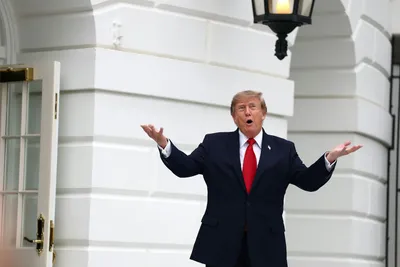 We Now Know the Word That’s Going to Bury Donald Trump This NovemberIt’s been two years since Donald Trump fell in love with the word groceries. He seemed to believe the word alone would convey his compassion for the common man. “The beautiful but simple word ‘groceries,’” he rhapsodized . “I won on that word.” Now we have a word Trump is losing on: diesel. The fuel used in heavy-duty trucks is named for the German engineer Rudolf Diesel. In 1894, Diesel invented a spark plug–free engine that requires a form of crude oil that’s thicker than gasoline. These engines are used in farm machinery, tactical vehicles, container ships, and, above all, heavy-duty trucks. Diesel prices have surged since Trump took office, and especially since February 28, when he started the war in Iran. When Joe Biden left at the start of 2025, diesel cost an average $3.63 per gallon. Just this month, that price blew past an average of $5.85 to a record high of more than $6.50 . Disruptions to oil shipments, notably in the Strait of Hormuz, are pushing up crude oil prices, while reduced diesel supplies have left fuel markets tight all over the world. On Monday, Tom Kloza, the chief oil analyst at Gulf Oil, was not reassuring . “Monday morning price average for US diesel is $6.51/gal,” he posted to X. “Looks like plenty of panic liquidation in futures and spot markets, so these highs may prevail for a while.” Evidently, even Trump woke up long enough to express a hazy interest in diesel, talking up a possible ban on U.S. diesel exports. “Let’s not send out the diesel,” he said Tuesday. “That could have a little bit of an effect on regular automobile gasoline because when you do that, you know, it’s a sort of a flow.” This Hail Mary bafflegab has exactly zero chance of creating policy change before the midterms, much less reducing diesel prices. Inflation on groceries and gas hits everyone. But skyrocketing diesel prices aim a missile squarely at the voters Trump can least afford to alienate. Only a highly specific demographic at the pump, after all, knows its way around the diesel nozzles. Fully 90 percent of diesel truck buyers are men. More than 84 percent identify as white . Most strikingly of all, truckers have a ram-tough party ID. According to one analysis , Republicans purchase eight heavy-duty trucks for every one purchased by a Democrat. And while Trump and his party have entirely failed to calm public fears about gas prices—“I love the inflation!” Trump said in June—they’ve done far, far worse with diesel, where prices are spiking even more steeply . About one in five Trump voters now regrets their 2024 vote, according to one opinion-research organization. No wonder social media is filled with the diesel demographic, onetime Trump voters, raging at the president. “Hey, Donald Trump, man, it just cost me $179 to fill up my diesel!” shouts a shirtless trucker at the top of his lungs. “Six-dollar diesel is killing truck drivers!” shouts another . ( Reports spread of an imminent strike by truck drivers, but this seems so far to be rumor only.) “This is Trump’s fault,” said populist firebrand Marjorie Taylor Greene in a video on X last week. She blamed Trump’s war in Iran and the ensuing global fuel crunch. “It’s $8.49 for diesel in California,” she said. “It’s $6.59 in Georgia. I don’t care if it’s Georgia or California. It’s way too high.” With a new poll showing Trump’s approval rating at an anemic 29 percent, Greene incurs few political costs for lashing out at him. But Greene is also an intuitive grandmaster of the diesel class. She has an especially keen eye for their issues: data centers, the Iran war, the Epstein files, and now diesel fuel. These are the issues Trump is dying on. On diesel, Trump has repeatedly claimed that all fuel inflation is a “ small price to pay ” for thwarting Iran’s nuclear program. When he talks about diesel at all, he deflects to his favorite whipping boy: Ukrainian President Volodymyr Zelenskiy. “Mr. Zelenskiy has to do one thing,” Trump said from the Trump International Golf Links in Ireland this month. “He has to stop knocking out diesel fuel in Russia.” Does he, though? If so, good luck getting Americans to believe it. Blaming the American president for price inflation is a way of life here. Live by it; die by it. Trump did nothing but savage Joe Biden for high prices born of the Covid pandemic. Now he expects a pass for inflation he’s actively helped create. The top three heavy-duty trucks in the U.S. are American: the Ford F-Series Super Duty, the Ram Heavy Duty, and the Chevrolet Silverado 2500HD. These model names lean hard on the word “duty.” Veterans disproportionately buy them. After all, military vehicles also use diesel, including Humvees, five-ton cargo trucks, and tanks. Trump’s dalliance with a shiny red all-electric Tesla last year did not impress this crowd. Others in Trump’s administration have tried to frame big-rig trucking as patriotic in itself. In July, Transportation Secretary Sean Duffy announced the “Freedom Hauler” campaign , which is designed to get veterans to haul freight for a living. “There’s never been a better time for America’s former service members to get behind the wheel of a big rig. Trucking requires the precision, independence, and discipline that they forged in the military—there’s no one better to tackle the challenge.” In Iowa, Democratic Senate candidate Josh Turek is well aware of the diesel class, and the fast-approaching Iowa harvest season, which runs on diesel. In his campaign, he has called for a pause on diesel exports, a suspension of federal gas taxes, and an opening of strategic oil reserves. Recently, none other than the Hawkeye State’s Republican Senate lion Chuck Grassley, 93, who is not up for reelection, seconded Turek’s efforts in what amounted to an ad for the Democrat. Turek’s opponent, Republican Representative Ashley Hinson, was forced to join in but looked like a straggler. By alienating the diesel class, Trump may have bitten the final hand that feeds him. Diesel is certainly the word to watch in these final weeks before the polls. If nothing else, it’s excellent shorthand for the rambunctious MAGA coalition that political scientists have been trying to understand for a decade.The New Republic