Milei orders arbitration proceedings against the UK over the Sea Lion project
Argentine President Javier Milei on Monday instructed the foreign ministry and the government's legal teams to launch international arbitration proceedings against the United Kingdom over the development of the Sea Lion oil project in the basin north of the Falklands, and gave London two weeks to halt the activity before Argentina turns to the International Tribunal for the Law of the Sea.
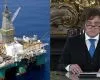
Argentine President Javier Milei on Monday instructed the foreign ministry and the government's legal teams to launch international arbitration proceedings against the United Kingdom over the development of the Sea Lion oil project in the basin north of the Falklands, and gave London two weeks to halt the activity before Argentina turns to the International Tribunal for the Law of the Sea.
I instructed the foreign ministry and our legal teams to begin international arbitration against the United Kingdom for the illegal plundering of our resources through the Sea Lion Project in the North Malvinas Basin. If in 2 weeks the United Kingdom does not stop the illegitimate exploitation, we will go to the International Tribunal for the Law of the Sea, the president wrote on X.
According to the statement from the Office of the President, the procedure is the one provided for in Annex VII of the United Nations Convention on the Law of the Sea, to which both countries are party. Arbitration formally begins with a written notification to the other party setting out the claim and its grounds; there is no record that such notification has been sent. Argentina demanded that the United Kingdom take the necessary measures within that period to prevent the start or continuation of hydrocarbon exploitation and refrain from granting new permits.
If it does not, Argentina will ask the Hamburg-based tribunal for provisional measures, which that body can order while an arbitral tribunal is being constituted if it considers the latter would have jurisdiction on a prima facie basis.
The government bases its position on UN General Assembly resolutions 2065 and 31/49, which recognised the existence of a sovereignty dispute, urged both countries to negotiate and called on them to refrain from unilateral modifications. It argues that exploitation causes irreversible and irreparable harm to Argentine rights. These resolutions have the status of recommendations.
The chosen route faces a foreseeable legal obstacle. In previous cases, tribunals constituted under the Law of the Sea Convention declined to rule on disputes involving territorial sovereignty, as in the arbitration between Mauritius and the United Kingdom over the Chagos Islands in 2015 and in the dispute between Ukraine and Russia over Crimea in 2020.
The statement also includes a categorical rejection of the written statement the United Kingdom entered into the General Assembly record after Milei's speech, and maintains that the British overseas territory designation and the 2013 referendum have no legal validity. London holds that it has no doubt about its sovereignty, that Argentine law does not apply in the archipelago and that hydrocarbon activity is governed by local legislation in accordance with the same Convention.
There was no specific British response to the announcement. The companies behind the project, Israel's Navitas and Britain's Rockhopper, have said they expect no change to their timetable, which sets first production for the first half of 2028.
The government also said it had detected operations by Thales UK Limited between the archipelago and Punta Arenas, in Chile, using a UK-registered aircraft without Argentine authorisation, and ordered sanction proceedings and criminal complaints. Argentina has 60 administrative proceedings open with no penalty applied and three criminal complaints against ten companies. None of the allegations has been proven.
Please log in or register (it’s free!) to comment.
Login with Facebook