
Why Quebec separatism is back in focus after PQ election win, and what it means for Mark Carney
Canada’s Quebec separatism is back in focus as the Parti Québécois eyes a return to power and another independence referendum. The issue could test PM Mark Carney, especially as Alberta debates separation and Donald Trump continues his “51st state” rhetoric.
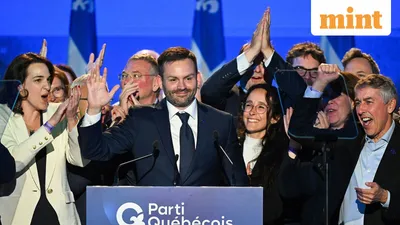
Canada’s long-running Quebec problem is back in focus as separatist politics regain momentum in the French-speaking province, raising fresh questions over the future of the Canadian federation and Prime Minister Mark Carney’s ability to manage competing demands for greater provincial autonomy. The Parti Québécois (PQ), which advocates Quebec sovereignty, is seeking a return to power after more than a decade. A PQ victory could push the question of independence back to the centre of Canadian politics, particularly if party leader Paul St-Pierre Plamondon follows through on his pledge to hold another referendum on Quebec’s future. The issue comes at a particularly sensitive time for Canada.
Alberta has also been debating the possibility of a referendum on separation, potentially leaving Ottawa facing competing challenges to national unity from opposite ends of the country. The debate is further complicated by US President Donald Trump’s repeated remarks about making Canada the “51st state” of the United States, adding external pressure. Why does Quebec want to separate from Canada? Quebec occupies a unique position within Canada.
It is the country’s only majority French-speaking province and has a distinct political, cultural and historical identity rooted in its French heritage. The province was part of New France before Britain took control of the territory in 1763. Over centuries, Quebec developed its own institutions, traditions and language protections, setting it apart from predominantly English-speaking Canada. For Quebec nationalists, this distinct identity is central to the argument for greater political autonomy. The sovereignty movement argues that Quebec should have complete control over areas such as its laws, economy, immigration and international relations rather than sharing constitutional authority with Ottawa. The Parti Québécois has historically been the main political vehicle for this movement. Quebec has already voted on independence twiceQuebec has held two referendums on sovereignty. The first, in 1980, resulted in a decisive rejection of independence. The second, in 1995, was dramatically closer.
The “No” side won with just 50.58% of the vote, while 49.42% backed sovereignty. The razor-thin result remains one of the defining moments in modern Canadian political history. Why is separatism back in focus now? The Parti Québécois’ resurgence has brought the independence question back into mainstream political debate. Plamondon has pledged to hold another referendum on Quebec sovereignty if his party returns to power, as per BBC.However, he has said the vote would take place only after Trump leaves office. But a PQ victory would not automatically mean Quebec was on the verge of leaving Canada. Polling suggests support for independence remains a minority position, at around 30%, according to CNN.What does this mean for Mark Carney?
A renewed push for Quebec independence could pose a major challenge for Prime Minister Mark Carney. Plamondon has made clear that he is prepared to challenge the federal government on issues he considers to fall within provincial jurisdiction, including immigration. That could mean repeated clashes with Ottawa over the division of powers, even before the question of sovereignty formally reaches a referendum. Does a referendum mean Quebec would leave Canada?
Even if Quebec eventually holds another referendum and the independence side wins, that would not automatically result in Quebec becoming an independent country. A vote would be the beginning of a much larger constitutional and political process involving negotiations between Quebec and the federal government, including questions over borders, assets, debt, citizenship, Indigenous rights and the division of powers. The 1995 referendum showed just how close the question could become.
However, three decades later, the political landscape is different.