Abu Dhabi Declaration: What 119 countries agreed on AI, cybercrime and trafficking
On the opening day of the 15th United Nations Congress on Crime Prevention and Criminal Justice, representatives from 119 countries, including more than 40 ministers of justice, gathered in Abu Dhabi and agreed by acclamation on a global roadmap for fighting crime over the next five years.
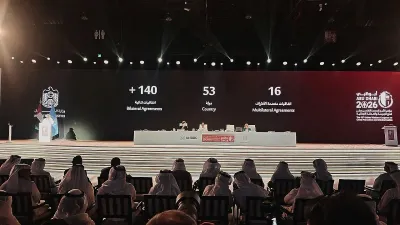
On the opening day of the 15th United Nations Congress on Crime Prevention and Criminal Justice, representatives from 119 countries, including more than 40 ministers of justice, gathered in Abu Dhabi and agreed by acclamation on a global roadmap for fighting crime over the next five years.
The result is the Abu Dhabi Declaration, a wide-ranging framework that addresses some of the biggest challenges facing criminal justice today — from the use of artificial intelligence in courts to the dismantling of scam centres where trafficked workers are forced to carry out online fraud.
The declaration builds on the Kyoto Declaration adopted in 2021 and sets out one of the most comprehensive international approaches to crime prevention and criminal justice in recent years.
Stay up to date with the latest news. Follow KT on WhatsApp Channels.
Here is what was agreed and what it means.
What is the Abu Dhabi Declaration?
It is a global roadmap adopted by acclamation at the 15th United Nations Congress on Crime Prevention and Criminal Justice, being held in Abu Dhabi from September 26 to October 1, 2026. The congress is held every five years and is the world's largest gathering of policymakers in the field of crime prevention and criminal justice.
What does the Abu Dhabi Declaration entail?
The declaration is built around four pillars: prevention and resilience, justice and the rule of law, countering evolving crime threats, and international cooperation and innovation.
Under these pillars, member states committed to developing evidence-based crime prevention strategies, strengthening juvenile justice systems, expanding access to legal aid, digitalising criminal justice processes, and intensifying cross-border cooperation on money laundering, terrorism financing and asset recovery.
Countries also agreed to address prison overcrowding, protect witnesses and whistleblowers, and support the rehabilitation and reintegration of offenders to reduce reoffending.
What does AI have to do with criminal justice?
One of the most significant commitments in the declaration is the pledge to promote the responsible use of artificial intelligence within criminal justice systems. Member states agreed to harness AI to improve crime prevention and justice responses, while maintaining safeguards including human oversight, transparency, traceability and personal data protection.
The declaration also highlights growing concern over criminals using AI and cyberinfrastructure to carry out complex cross-border operations, including cybercrime, fraud, human trafficking, drug trafficking and terrorism financing.
What are scam centres and why are they mentioned?
The declaration explicitly calls for the dismantling of scam centres — criminal operations that use trafficked workers to run large-scale online fraud schemes. It is one of the most specific operational commitments in the document, reflecting the rapid growth of technology-enabled fraud as a transnational crime.
Countries committed to investigate and prosecute traffickers operating such centres and to protect victims, including by ensuring they are not punished for crimes committed as a direct result of being trafficked.
What is Pledge4Justice?
Alongside the declaration, countries are announcing specific, concrete and time-bound commitments under an initiative called Pledge4Justice. Unlike the declaration itself, which is a collective framework, these pledges are individual national commitments that will be tracked and published on the UNODC website through to 2031.
What about the environment?
In a notable inclusion, the declaration calls on countries to consider treating crimes that harm the environment as serious crimes, opening the door to prosecuting environmental offences under the same frameworks used for transnational organised crime, including as predicate offences for money laundering.
What happens next?
The congress continues until October 1, with sessions covering AI-enabled crime, anti-corruption, wildlife trafficking and cybersecurity. The Commission on Crime Prevention and Criminal Justice will be responsible for tracking progress on the declaration's commitments. The 16th UN Crime Congress will be hosted by Uzbekistan in 2031.
UAE hosts largest ever UN Crime Congress as Abu Dhabi welcomes 110 nations
Abu Dhabi to host UN congress to discuss fighting digital crime, misuse of AI
62 Emiratis, other youths shape the future of crime prevention ahead of UN congress