
India-EU Trade Pact, Strategic Autonomy & Employment Generation in Focus - India Today
A panel discussion addressed the strategic and economic significance of the European Union-India Free Trade Agreement amid global geopolitical shifts and trade weaponisation. Panellists noted that the trade pact aims to cut four billion euros in tariffs, offer the potential to double bilateral trade, and promote economic diversification and cooperation. The discussion examined transatlantic relations, United States trade pressures, subsidies from China, and the growing imperative for Europe to pursue strategic autonomy alongside increased defence spending. The conversation also highlighted the Indo-French strategic partnership between Prime Minister Narendra Modi and President Emmanuel Macron. Addressing negotiations, Indian Finance Minister Nirmala Sitharaman observed that India's procurement of Russian oil did not derail trade talks, noting the absence of legislative hurdles comparable to the US Lindsey Graham bill. She highlighted that the agreement will directly benefit India's labour-intensive export sectors—including textiles, footwear, toys, and small and medium enterprises—thereby boosting employment and expanding market access for women and Indian workers.

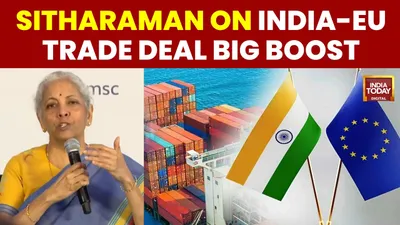
Speaking on trade negotiations and agreements, Union Minister Nirmala Sitharaman highlighted India's strategic approach to bilateral trade pacts while navigating global trade pressures. Addressing discussions surrounding the proposed India-EU trade pact, termed the mother of all deals, Sitharaman noted that the agreement covers two billion people and a quarter of global GDP, with both sides opening more than 90% of tariff lines and value while safeguarding sensitive agricultural sectors.
Remarking on broader global tensions, she stated that 'tariff has become weaponised' instead of serving merely as an instrument of negotiation within established frameworks. Regarding ongoing talks with the United States, Sitharaman pointed out that negotiations remain rigorous, with both sides navigating an existing trade balance that is in India's favour. She also highlighted the exponentially growing trade imbalance with China since 2014, emphasising that despite severe discrepancies, resolving trade imbalances ultimately requires structured negotiation and mutual give-and-take rather than unilateral weaponisation of tariffs.