
Doctors can't work under violent threat: SC cancels Shiv Sena corporator's bail
Doctors can't work under violent threat: SC cancels Shiv Sena corporator's bail
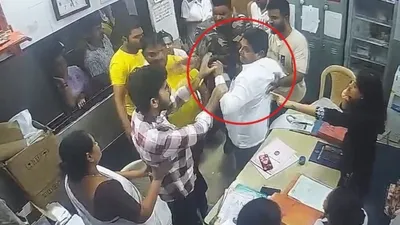
The Supreme Court has cancelled the bail of Shiv Sena corporator Ramesh Mhatre and three others accused of assaulting and verbally abusing doctors at a municipal hospital in Maharashtra's Thane district, saying medical professionals cannot be expected to work independently under the fear of violence or intimidation.Setting aside a Bombay High Court order in a detailed ruling dated September 28, a bench of Justices Vikram Nath and Sandeep Mehta directed Mhatre and his associates to surrender before the trial court by October 5.
The court also said the trial court must ensure protection for doctors and hospital staff who are expected to testify in the case.The case relates to an incident on July 6 at the Shastri Nagar Municipal Hospital in Dombivli, where four accused are alleged to have assaulted and verbally abused three doctors, including a woman doctor, on duty in the labour ward. Along with Mhatre, the other accused are Ramesh Laxman Pawar, Pramod alias Prakash Uddhav Nikam and Akshay Sharad Karande.The bench said, “A doctor cannot reasonably be expected to exercise sound and independent judgment while labouring under the apprehension of physical violence, intimidation or coercion.”
It added that the safety and dignity of medical professionals are not matters of personal privilege, but safeguards that serve the wider public interest by ensuring that medical care is delivered with the concentration, composure and judgment the profession requires.The court said violence, intimidation or coercion cannot be used to express dissatisfaction with medical treatment, secure compliance with a demand or raise a grievance over an adverse medical outcome.
It also said an elected representative is expected to serve the public and strengthen institutions through which grievances are addressed and justice is administered.“ Heshe cannot supplant those institutions by assuming the role of the police, the administrator or the court,” the bench said, adding that using personal influence to force compliance through fear can damage public confidence in the rule of law.Since the prosecution case depends on the testimony of doctors and hospital staff, the bench said the trial court must ensure all material witnesses are given adequate protection throughout the trial under the Maharashtra Witness Protection and Security Act, 2017.
It asked the trial court to remain alert to any threat, intimidation or coercion and, where required, direct the district administration or the superintendent of police to provide protective measures so witnesses can depose freely and without fear.The bench clarified that if there is any material change in circumstances, the accused may renew their plea for bail before an appropriate forum. At the same time, it said courts below had failed to properly consider the criminal history of Mhatre, against whom 18 cases are stated to have been registered, including serious offences punishable under Sections 302 and 307 of the Indian Penal Code.“
Such antecedents were a material circumstance bearing upon the exercise of discretion in the matter of bail and could not have been brushed aside without due consideration,” it said.The Supreme Court also questioned Mhatre’s continued stay in the prison ward of the district civil hospital in Thane during his police custody from July 10 to July 13 and later during judicial custody, saying this had substantially helped him avoid confinement in prison.“
Significantly, immediately upon issuance of the release memo pursuant to the order granting bail on July 15, 2026, he sought discharge from the hospital,” the court said, adding that this raised serious concerns over whether the influence of his position was used to bypass the normal custodial process.The bench said the High Court, while restoring the order granting bail, did not give due weight to the wider impact of the accused’s conduct on the medical fraternity.
It noted that the material on record showed the incident had created such fear among the victim doctors that they were compelled to submit their resignations. According to the court, this was directly relevant to the apprehension of intimidation and to the ability of doctors to perform their duties without fear or insecurity.The Supreme Court said the effect of the accused’s conduct on the functioning of the healthcare institution and the confidence of medical professionals required careful consideration while deciding bail.
It also directed the Maharashtra government to examine whether preventive-detention laws are attracted against Mhatre and his associates in order to instil a sense of security and confidence among medical professionals.The Bombay High Court had granted bail to Mhatre on August 7 and directed that the trial be fast-tracked and completed in a time-bound manner.- Ends