
Cornell University rape investigation: Key allegations and new evidence as probe reopens
Nearly two years after a Cornell University student reported being sexually assaulted at a fraternity house in Ithaca, New York, her case is back before prosecutors. A civil lawsuit, police transcripts and private messages now give sharply different accounts of what happened that night. The Tompkins County District Attorney's Office has reopened its criminal investigation and plans to put the matter before a grand jury.
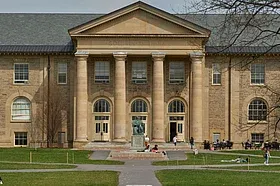
Nearly two years after a Cornell University student reported being sexually assaulted at a fraternity house in Ithaca, New York, her case is back before prosecutors. A civil lawsuit, police transcripts and private messages now give sharply different accounts of what happened that night.
The Tompkins County District Attorney's Office has reopened its criminal investigation and plans to put the matter before a grand jury. The move follows a 101-page lawsuit filed on 16 September by the woman, a former Cornell undergraduate identified in court documents as Jane Doe, against the university, the Chi Phi fraternity and seven men she says assaulted her in October 2024.
The allegations
According to the lawsuit, as quoted by the BBC, Doe, then 20, had been drinking with her sorority sisters on the night of 19 October 2024 when she left to visit a male friend at the Chi Phi house.
She alleges that seven men sexually assaulted her there over several hours while she was too intoxicated to consent. The lawsuit says she had been drinking and had been drugged with ketamine. It brings claims of sexual assault and battery, negligence, breach of contract and violations of New York's Human Rights Law. It also accuses Cornell of failing to protect her and of failing to adequately discipline the students involved.
The lawsuit points to a fraternity group chat in which, Doe alleges, members discussed the possibility of a sexual encounter with her. The men have since been referred to as the "Cornell Seven".
Why prosecutors passed, and why they are looking again
Doe reported the incident to Cornell University Police in November 2024. District Attorney Matthew Van Houten said his office concluded at the time that the evidence did not meet the legal threshold for criminal charges.
That conclusion is now being revisited. Van Houten, according to the BBC, said he had contacted Doe and her lawyers as he prepared to take the case to a grand jury, which will decide whether charges should proceed. He told the New York Times he wanted to speak with her about "new evidence that exists".
He has, however, drawn attention to what he describes as a gap between Doe's original account and her lawsuit.
"Jane Doe's sworn statement in November of 2024 did not allege that she was drugged against her will or gang raped," he said in a statement on Monday. "On the contrary, Jane Doe's statement described her participation in drug use and sexual conduct as voluntary, conscious, and consensual."
Van Houten said he did not believe the lawsuit's allegations, on their own, currently met the threshold for criminal charges. He also acknowledged the importance of investigating them.
What she told the police
Transcripts and police documents obtained by US media suggest that Doe's account to investigators was more complicated than either the lawsuit or the prosecutor's summary alone conveys.
During an interview that began on 14 November 2024, CBS News New York reported, Doe said she had been comfortable with an initial sexual encounter: "I was pretty OK with all of this." She described what followed very differently: "I can say with 100% confidence I was raped."
A police report dated 15 November, cited by ABC News, records her describing a later encounter in which she felt unable to make decisions because of how intoxicated she was.
"To me, that felt like coercion," she said. "Also I felt like due to my intoxication, they should have known how intoxicated I was based on how I was slurring my words."
Van Houten told CBS News he had not previously seen the campus police interview transcript.
The messages
Among the evidence Cornell University Police passed to prosecutors was an image of a Snapchat group called Chi Phi Actives, the university said, as quoted by the BBC. The messages, sent shortly before 02:00 on 20 October 2024, identify members of the group and make crude references to a potential sexual encounter with Doe.
Other messages, reported by CBS News New York, appear to have been exchanged between Doe and one of the defendants two days later. In them, the man appeared to apologise for "how things went down". He said his memory was "kinda fuzzy" and that he and another man regretted being too intoxicated to "shut it down and kick people out before it got way out of hand".
Doe replied that her own memory was "super clouded too" and that they had all been intoxicated. She wrote that "non(e) of the sexual stuff was illegal" and that she had enjoyed being with him and another man. She later suggested they smoke together again, without "the extra five billion men and ketamine".
Those messages, alongside the police accounts, are now part of the evidence prosecutors are reassessing.
Cornell's response
Cornell rejects the claim that it failed to investigate or punish those involved.
The university says that after Doe's report it suspended the Chi Phi chapter and a number of students, imposed "temporary suspensions and other restrictive measures", and opened an internal investigation and a Title IX inquiry. A panel of trained faculty and staff later imposed sanctions including expulsions and suspensions.
Cornell did not dispute that writing an essay formed part of the disciplinary process for some students. But it denied that this was the only consequence for anyone: "None of the individuals charged were offered the opportunity to write essays as a sole consequence of their involvement."
"The events that took place on our campus in 2024 were appalling then and remain so now," the university said. "We are doing all we can to foster a culture where sexual misconduct is never tolerated."
After discussions with New York Governor Kathy Hochul, Cornell has agreed to an independent outside investigation into its handling of the case, which it confirmed to the BBC. It has also said it supports taking the criminal case to a grand jury.
The fraternity
Chi Phi has likewise denied that it failed to act. Trey Robb, the fraternity's interim executive director, as noted by the BBC, said its records showed that the Cornell chapter voted to remove the accused students three days after Doe went to the police.
"Our records confirm that just three days after 'Jane Doe' filed a police report, the Xi chapter voted unanimously to remove the accused members from its rolls," Robb said. "The chapter also recommended that our national fraternity permanently expel them, and our Grand Council did so at a subsequent meeting."
The Xi chapter was closed in 2024 and remains barred from campus. Chi Phi said it would not comment further on matters before the courts or under investigation.
What happens next
The two proceedings ask different questions. Doe's civil case asks whether Cornell and others failed to protect her and mishandled what followed. The criminal inquiry asks whether the evidence supports charges against any of the men.
Van Houten has said his office will proceed "in the most objective and impartial means possible", leaving the evidence to a grand jury.
No criminal charges have been announced.