
From tigers to turtles: The conservation success stories that prove there’s still hope for wildlife
“Biodiversity continues to be degraded at an alarming pace, yet amid these steep declines there are grounds for hope.”
 Nobody$NOBODY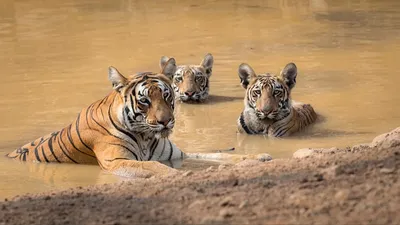
Biodiversity continues to be degraded at an “alarming pace” – but experts insist there are still grounds for hope. New research from the WWF and the Zoological Society of London (ZSL) warns that there has been an average 73 per cent drop in the size of monitored wildlife populations over a 52-year period. The Living Planet Index (LPI) tracks how species populations are faring around the world and is based on almost 35,803 population trends and 5,790 species of vertebrates (amphibians, birds, fish, mammals and reptiles).
Its latest findings, published in WWF’s Living Planet Report (LPR) 2026, show an average decline of monitored wildlife populations of 2.5 per cent between 1970 and 2022. The LPI uses changes in population sizes to establish whether, on average, the relative abundance of monitored vertebrate species has increased, decreased or stayed the same. It does not mean that there are 73 per cent fewer wild animals in total today than in 1970.
What is causing wildlife population declines? The new research warns that habitat loss and degradation are the most frequently reported threats affecting monitored wildlife populations, followed by overexploitation, climate change, pollution, invasive species and disease.“ These threats are, in turn, driven by broader systemic failures across the food, energy and finance systems,” the report states. The steepest declines are seen in Latin America and the Caribbean, Africa and Asia and the Pacific.
In both Europe and North America, large-scale impacts on nature had already taken place and biodiversity was in a poorer state by the baseline year of 1970, which explains why there is less of a negative trend in these regions.‘ Progress is already underway’Despite the stark findings, the report highlights the effectiveness of conservation efforts – arguing that there is still time to buck the trend. Tigers are one of the clearest examples.
In 2010, only around 3,200 wild tigers remained and the species seemed to be heading rapidly towards extinction. But by last year, the population had grown to roughly 5,700 – marking a 70 per cent increase. Atlantic bluefin tuna were also destined for a similar fate, with numbers collapsing from decades of overfishing. Now, populations have recovered to the point where neither is considered threatened. Over in South Africa, elephants are stable or growing in many of the places where local communities lead the management of the land they share with them.
And last year, the green sea turtle became the first marine turtle ever to be downlisted from Endangered to Least Concern, following decades of conservation efforts.“ Biodiversity continues to be degraded at an alarming pace, yet amid these steep declines there are grounds for hope,” says Dr Kirsten Schuijt, director general of WWF International. “The report highlights evidence that many species populations are stable or recovering, alongside inspiring stories that show nature can rebound and change is possible.”
Dr Schuijt credits years of “sustained collective conservation” for recoveries in populations of tigers, tigers, bluefin tuna and green turtles. She adds: “To continue and expand these conservation successes, the industries and systems that drive nature loss need to be transformed. “Progress is already underway. Not everywhere, and not yet at the scale required, but enough to demonstrate that change is possible. It's time to accelerate the scale of those systemic changes already underway and work together in harmony with nature to build a more sustainable, equitable and resilient world.”
The three systems driving biodiversity lossWhile the report acknowledges the importance of these recoveries, it argues that they sit inside a “much larger set of forces” driving biodiversity loss in the opposite direction. The first: the way the world produces and uses energy.“ Burning coal, oil, and gas to power homes, transport and industry generates roughly three-quarters of the greenhouse gas emissions driving climate change, which has now become a driver of biodiversity loss across every ecosystem on Earth,” the report says. The second is the way the world produces and consumes food.
Agriculture is the single largest cause of habitat loss and degradation and the leading driver of biodiversity decline.“ The third is the financial system,” the report explains. “Capital allocation – the decisions about which industries receive investment and which do not – determines which activities grow and which shrink.” In 2023, around $7.3 trillion (€6.5t) flowed into activities that harm nature, while just $220 billion (€197b) went towards activities that protect or restore it.
“Until that ratio shifts, the underlying drivers of biodiversity loss will continue to be funded,” the report says. Positive tipping pointsExperts say that transforming these systems, even if it feels “impossible”, can trigger positive tipping points. This occurs when a threshold is crossed and change accelerates. The clean energy transition is a clear example of this. Decades ago, a technology like solar power was used in pocket calculators and satellites. Now, it is the cheapest source of new electricity generation in most countries – one that is cushioning Europe’s energy price shock from the war on Iran. Last year, solar generated 13.1 per cent of EU electricity, outpacing coal and coming close to competing with gas.
Together with wind, solar generated more EU electricity than fossil fuels for the first time in 2025.“ Every phase of the transition has produced resistance from industries and political interests whose dominance is threatened by it,” the report says. “In recent years, that resistance has intensified in some parts of the world. The pushback is part of how transformations work, and it indicates that the change has become disruptive enough to matter.
Moving through this phase takes resilience, a willingness to adjust and the determination to keep going.”