
Expert: Russia attacking civilian infrastructure as it has made no front line gains
Russia's escalating attacks on Ukraine and threats against the West are signs of its failure to achieve a breakthrough on the battlefield, former ambassador to NATO Jüri Luik tells ERR in an interview.
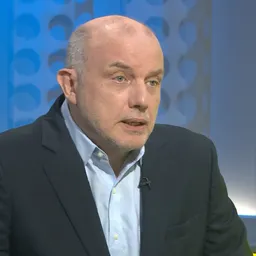
Russia's escalating attacks on Ukraine and threats against the West are signs of its failure to achieve a breakthrough on the battlefield, former ambassador to NATO Jüri Luik tells ERR in an interview.
What do you make of Russia's so-called new approach, with its emphasis on long-range strikes and unrestricted attacks on civilian infrastructure?
First, of course, it shows that Russia has been unable to break through the front line and the Ukrainians are now actually managing to retake territory. So the Russians really have only one option left and that is long-range bombardment. They have also begun bombing civilian targets, which is a war crime.
They are clearly testing whether they can reach a point where the Ukrainians simply surrender because their cities are no longer habitable: bridges are destroyed, reservoirs are destroyed, power plants are destroyed. But it is hard to imagine that actually happening. The bombing will certainly continue, but it will not break the Ukrainians' resolve.
In addition to terrorizing Ukrainian cities, Russia is also trying to exert greater pressure on the West. As part of these attacks on cities, embassies have been warned to leave because it is going to become very dangerous. Then there is all the rhetoric about having arms factories that produce weapons for Ukraine in their sights and using nuclear weapons if necessary. The hybrid attacks being carried out in the West have also become more dangerous. What should we make of all this?
As for the Russians' demand that embassies leave Kyiv, they have actually done this several times already and it is clear that no embassy is going to leave Kyiv because of it. It is a form of propaganda pressure.
If anything, the opposite is true. Chancellor Merz was in Ukraine just yesterday and demonstrated very clearly what he actually thinks of the Russians' threats, particularly given that he also brought an economic delegation and businesspeople with him. It was all a signal to the Russians that we do not take their warnings seriously.
To what extent could this intimidation nevertheless have an effect, for example, on societies in Western or Southern Europe? We have a somewhat different attitude here because we have been hearing threats like these all along, but there have been quite a few alarming articles in the international media in recent months. Could that eventually have an impact? Russia does not even have to do very much itself if we are already frightening ourselves.
There are a great many analyses in the international media that are often completely baseless and interpret one Russian move or another as a threat indicating that some kind of attack on NATO countries is being planned. There is actually no such information. It is simply a case of fear making things seem worse than they are.
Of course, we all have to remain vigilant. And there is no doubt that these articles can influence public opinion. But it seems to me that solidarity among European countries in support of Ukraine remains quite strong at present.
Putin's threats are also very specific — the issue of Kaliningrad, for example. I do not think the general public across Europe necessarily knows exactly what Kaliningrad is or what issues are associated with it. So for now, I do not think this will have a significant impact.
This week, Putin spoke at length about his views at the Valdai Forum. He portrayed the current situation as one in which Russia is under attack and has to defend itself and so on, which turns the logic completely on its head. But there was also an interesting moment when he said Russia had gained 1,300 kilometers of territory during September. Analysts at the Institute for the Study of War, for example, went so far as to compare the claim to hallucinations because it differs so greatly from what they are actually seeing on the front line.
What could that tell us? Is Putin simply trying to portray the situation more favorably or could he himself already be receiving distorted information?
He is certainly trying to portray the situation more favorably. When analyzing the Valdai speech, we also have to bear in mind that much of it was intended for his domestic audience, even though it is said to be aimed at an international audience. In reality, of course, it was disseminated primarily in Russia.
If you look at the speech analytically, there was not very much that was new: Russia is not to blame, Russia was forced to start the war because Russia was threatened and so on. He has essentially been saying this all along; the only question is the exact wording.
Perhaps the accusation about a possible blockade of Kaliningrad and the statement that Russia could use nuclear weapons in response added a new dimension, although Putin has threatened the use of nuclear weapons before as well.
How has the West and NATO responded so far to Russia's increasingly brazen approach?
I think NATO Secretary General Mark Rutte's response was very good. First, he said that NATO is a defensive alliance and, of course, no one intends to attack Kaliningrad militarily. That is completely absurd.
The Russians know that very well, too, because they have simply withdrawn all their forces from Kaliningrad. If they genuinely believed someone intended to attack Kaliningrad, they obviously would not do that.
In fact, we now have this paradoxical situation in which Kaliningrad's location among NATO countries — within NATO's perimeter, so to speak — actually protects Kaliningrad. Not a single Ukrainian drone has struck Kaliningrad. So, paradoxically, the situation is precisely the opposite.
The second point, and a very important one, is what Rutte said about NATO defending every inch of its territory. Whenever the Russians make some kind of threat, it never hurts to reiterate that NATO has Article 5 and that we will defend our territory. And that is what Rutte did.
More generally, though, NATO is a rather blunt instrument. It is designed for war and, naturally, when it comes to everything below the threshold of warfare, NATO as an organization has difficulty determining how to respond. Not every action is something to which you can respond by immediately going to war.
So when it comes to provocations that remain below the Article 5 threshold, NATO cannot do very much directly. NATO member states, however, can. And NATO provides the security framework that allows countries to act more boldly. It also enables them to provide assistance to Ukraine because we have to recognize that if countries were entirely on their own, they would be much more cautious about giving their weapons to Ukraine.
There is still a degree of risk involved, but because collective security exists, each individual country is more willing to give its weapons to Ukraine. So NATO plays a very important role here, but it is not a direct striking force.
When we talk about these increasingly dangerous hybrid attacks — here in Estonia, there was also discussion this week about the Milrem case — how could countries respond to Russia in the face of such attacks?
There are several options and I think some of them are probably not public and fall within the realm of other kinds of activities. But there is, of course, political and diplomatic pressure, as Estonia applied by summoning the Russian chargé d'affaires.
Most importantly, however, there should be more and more support for Ukraine. In Estonia's case, military aid may no longer be particularly noteworthy in itself, but everything we do to urge the European Union to impose sanctions more actively and forcefully and everything we do to restrict the entry of combatants into the European Union — these are all countermeasures in response to these provocations.
And I think the most powerful response actually came from [German Chancellor Friedrich] Merz. Clearly also in response to the Leipzig provocation where there was an attempt to attack civilian aircraft with armed drones, Merz went there and put an enormous military aid package on the table. I think that message in itself was quite significant.
Is there any hope of hearing something about peace talks in the near future or is that essentially a dead issue for the time being?
I think it is essentially a dead issue, although that does not mean there will be no meetings or news about it.
On the one hand, Putin harshly criticized the Europeans, but when it came to the United States, he was much more nuanced and stressed that Russia is interested in negotiations. He also raised one specific issue — the question of Ukrainian neutrality.
That, of course, demonstrates what we have always known: For Putin, the issue is not only Ukraine as a territory, but also what Europe's postwar security system will look like. And we can see that he is already trying to shape it through his statements. This is part of his negotiating tactics, which we naturally have to watch very closely. None of this is in our interests.
Follow ERR News on Facebook and X and never miss an update!
Editor:
Marcus Turovski, Aleksander Krjukov