Egypt Denies Backing Rebel Forces After Ethiopian General’s Allegation
Egypt’s Foreign Ministry rejected on Tuesday, 29 September, any suggestion that it was supporting armed groups fighting Ethiopia’s federal government, after the head of Ethiopia’s military implied that Cairo was among the outside powers aiding the offensive in the country’s north. Foreign Ministry spokesman Nader Zaki did not name Ethiopia directly or address the specific
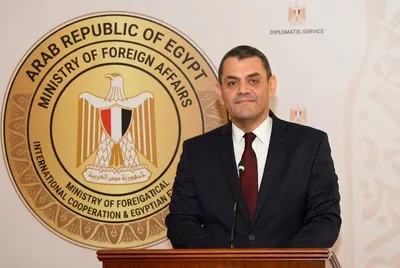
Egypt’s Foreign Ministry rejected on Tuesday , 29 September, any suggestion that it was supporting armed groups fighting Ethiopia’s federal government, after the head of Ethiopia’s military implied that Cairo was among the outside powers aiding the offensive in the country’s north.
Foreign Ministry spokesman Nader Zaki did not name Ethiopia directly or address the specific accusation in his statement, instead reasserting the principles underpinning Egyptian foreign policy. He said Egypt’s approach rests on respect for the sovereignty, unity and territorial integrity of other states, along with a commitment to staying out of their internal affairs. Any claims that questioned Egypt’s adherence to those principles, he added, had no basis in fact.
The statement came in response to remarks by Field Marshal Birhanu Jula, Ethiopia’s army chief, who was quoted in comments distributed by the country’s military as saying that the Tigray People’s Liberation Front and allied Eritrean forces would need outside support and supplies from Egypt, Sudan and other foreign powers to sustain their campaign. Jula offered no evidence for the claim, and Sudan’s military separately dismissed the allegation as unfounded.
The dispute comes as fighting in northern Ethiopia worsens , spreading into the Afar and Amhara regions and raising fears of a wider war and more displacement. Ethiopian Airlines suspended flights to Tigray’s Mekelle, Axum and Shire last week after Tigrayan forces seized the airport in Mekelle, the regional capital. The violence has put the 2022 Pretoria peace deal, which ended two years of war between Addis Ababa and Tigray forces, at risk.
Egypt has long urged that sovereignty and territorial integrity in the Horn of Africa be respected, a message Foreign Minister Badr Abdelatty repeated in talks with his Eritrean counterpart last week. Cairo’s relationship with Addis Ababa remains strained over the Grand Ethiopian Renaissance Dam, with Egypt continuing to insist that any dam operation be governed by a binding agreement involving both downstream nations, Egypt and Sudan.
The dam has been a source of friction since Ethiopia began construction in 2011 on the Blue Nile, the source of most of the water that reaches Egypt. Cairo, which relies on the Nile for the overwhelming majority of its fresh water, has long feared that the dam’s filling and operation could sharply reduce its water supply, particularly during periods of drought. Addis Ababa has countered that the project is essential to its own development, arguing it needs the dam to expand electricity access domestically and export power across the region.
Years of on-and-off negotiations among Egypt, Sudan, and Ethiopia have failed to produce a binding agreement on how the dam should be filled and operated, and Ethiopia has continued to move forward with the project largely on its own timeline, most recently declaring the dam’s completion earlier this year, a move Cairo has said does nothing to resolve its core concerns.
You must be logged in to post a comment.
Hossam Hassan Raises Palestinian Flag as Egyptian Team Returns to Hero’s Welcome
Egyptian Teacher Honored After Paying for School Needs Out of Pocket
Egypt’s Amina Orfi Becomes Youngest Female World No.1 in Squash History