'Very very stressful situation': EAM Jaishankar warns of major food crisis in coming months
New York: External Affairs Minister S Jaishankar has warned of a “major food crisis” in the coming months, in addition to the already significant fertiliser shortages the world is witnessing due to the Ukraine and Iran conflicts, saying the situation is “very very stressful” for Global South economies.
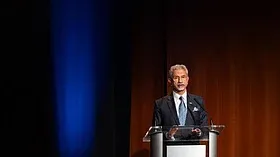
New York: External Affairs Minister S Jaishankar has warned of a “major food crisis” in the coming months, in addition to the already significant fertiliser shortages the world is witnessing due to the Ukraine and Iran conflicts, saying the situation is “very very stressful” for Global South economies.
“… this is a big concern for us, which is, if you look at these two conflicts, the Ukraine and now the Iran-Gulf conflict, they've actually had a devastating impact on Global South economies,” Jaishankar said during a conversation hosted at Asia Society here on Monday.
India-China ties 'better' today as compared to couple of years ago: EAM Jaishankar
He said there is particular concern about the energy situation as the "market is very tight” and on top of that, if “people play politics with it, that adds to the complications in the market,” as that will drive up prices at a time when people should actually be stabilising prices.
“So part of it is actually the security of oil supplies, and part of it is the politics of oil supplies, and they are feeding into each other, and they are creating a double crisis or an aggravated crisis,” he said.
On the concerning food situation amid the raging global conflicts, Jaishankar said, "We are today looking at a situation where some of the major grain exporters will not be able to send out their shipments, particularly out to the Black Sea."
Trade agreement can contribute to ‘better’ India-US ties: EAM Jaishankar
He said that the world is looking at significant fertiliser shortages because the key producers are in West Asia and Russia, and their fertiliser production has been impacted.
Combined with impacts of climate patterns like a super El Nino, Jaishankar said, “there is going to be a major food crisis probably in the coming months. So if you have energy as a big crunch, and then food and fertilisers on top of it, and finance because every time there's a conflict, money moves towards safe harbours and away from the Global South, the net result of it has been really very very stressful.”
He said policymakers can't say that such a situation was not intended.
“Countries should not be so self-centred that you're in your own world and take your decision and say, ‘Well, it was not my intention to make your life difficult’.”
Jaishankar said that “sound common sense” should ensure that the basic needs of a whole lot of countries should not be so neglected that they are put in distress situations. “And that is a concern that we have.”
Jaishankar said the energy crisis is creating instability.
“We have already seen it after the Ukraine war. We saw in our neighbourhood the direct result of that in political instability, and my fear is what is happening in Iran and the Gulf is going to feed, is going to aggravate,” he said.
On countries coming under pressure, he said there would be countries who would obviously maintain their independence and their autonomy.
“Some others would find it harder to do so. So those of us who are autonomous, we'd like to see more of us who are autonomous. But it’s not a black and white scenario. It would depend on the issue and the stakes involved. There'll be cases where countries would make adjustments. There'll be cases where they would fight back,” he said.