Suo motu selective, PIL choked, constitutional remedies pushed towards ICU
Suo motu means ‘on its own motion’. It refers to a court's power to take up an issue without waiting for a conventional petition seeking judicial intervention. The Supreme Court can act on its own when it chooses. But who decides which public wrongs deserve that urgency?
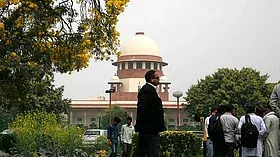
Suo motu means ‘on its own motion’. It refers to a court's power to take up an issue without waiting for a conventional petition seeking judicial intervention. The Supreme Court can act on its own when it chooses.
But who decides which public wrongs deserve that urgency?
The question has acquired fresh significance after The Indian Express reported that election commissioners Sukhbir Singh Sandhu and Vivek Joshi had recorded objections at least 14 times over 10 months to decisions concerning the Special Intensive Revision (SIR) of electoral rolls. The objections reportedly concerned decisions taken without their knowledge, changes relating to voter registration and deletions, and the management of electoral-roll data.
The disclosures have triggered demands for judicial intervention . The Supreme Court is already seized of several SIR-related issues, but so far, it has not taken suo motu cognisance of this controversy. A PIL has now been filed seeking action over the alleged unilateral decisions.
That raises a larger question: what is the threshold for the Supreme Court to intervene on its own motion?
The NEET examination controversy provides one illustration. Allegations surrounding the paper leak and irregularities in the examination reached the Supreme Court through petitions, leading to a detailed judicial examination of the controversy and directions concerning the examination process. The controversial examination also saw several students die by suicide . The apex court did not initiate the proceedings suo motu .
The Jantar Mantar protests provide another example. Allegations of State-sponsored violence through excessive police force against protesters eventually led the Supreme Court to constitute a five-member committee to investigate the incidents. But here too, the court’s intervention followed petitions seeking its intervention.
The same broader question has arisen in controversies such as the Hathras and Unnao rape cases, the Ankita Bhandari case, and Pegasus, where the court dealt with the issues through litigation rather than initiating a fresh suo motu proceeding.
The political context is significant. Hathras and Unnao occurred under BJP governments in Uttar Pradesh, while Ankita Bhandari’s case arose in BJP-governed Uttarakhand and likewise reached the Supreme Court through petitioners rather than suo motu cognisance. By contrast, in the R G Kar rape and murder, involving a non-BJP government in West Bengal, the Supreme Court initiated proceedings and assumed an extensive supervisory role.
Yet the court has also acted on its own motion in other matters of varying importance.
In July 2025, it initiated suo motu proceedings over the problem of stray dogs and subsequently issued directions concerning public safety, sterilisation, and shelters.
In February, the court acted on its own motion after a news report about an NCERT Class 8 textbook containing a section on ‘corruption in the judiciary’ . It ordered withdrawal of the book and issued notices to those responsible.
The issue, therefore, is not whether the court has the power to act on its own. It plainly does. It is whether there is any discernible consistency in deciding when the court initiates action.
That question becomes more important because Public Interest Litigation (PIL) is itself becoming more tightly filtered.
During the Sabarimala proceedings in April, Solicitor General Tushar Mehta argued that the time had come to remove PIL as a concept and restore traditional locus standi . Chief Justice Surya Kant responded that the courts were already cautious in entertaining PILs.
The PIL was created precisely because conventional standing could prevent serious public wrongs from reaching the constitutional courts. Today, however, even a genuine public-interest petitioner must pass through procedural scrutiny and, before the Supreme Court, the Advocate-on-Record system.
There is another institutional filter. The Chief Justice of India is the ‘Master of the Roster’ , with the authority to constitute Benches and allocate cases. Thus, access to PIL is not only about getting through the filing process; it also depends on how the matter is allocated within the court. The Supreme Court has repeatedly affirmed this principle.
When the PIL is choked with filters and the court’s own route depends on discretion, constitutional remedies are being pushed towards the ICU.
Jitendra Mohananey is a practising advocate.