
RBI hikes policy rates by 25 bps to 5.5%; growth, inflation projections revised up
New Delhi: The Reserve Bank of India (RBI) on Wednesday hiked key policy interest rates by 25 basis points, the first increase in nearly four years, amid rising inflation risks due to higher crude price and weaker agricultural output. Repo rate, the interest at which the central bank lends short-term funds to commercial banks, has been hiked to 5.5% from 5.25%. Consequently, the standing deposit facility (SDF) rate now stands adjusted at 5.
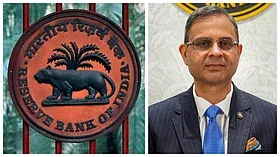
New Delhi: The Reserve Bank of India (RBI) on Wednesday hiked key policy interest rates by 25 basis points, the first increase in nearly four years, amid rising inflation risks due to higher crude price and weaker agricultural output.
Repo rate, the interest at which the central bank lends short-term funds to commercial banks, has been hiked to 5.5% from 5.25%. Consequently, the standing deposit facility (SDF) rate now stands adjusted at 5.25% and the marginal standing facility (MSF) rate and the bank rate at 5.75%.
This is the first increase in policy interest rates since February 2023, when the repo rate was raised by 25 bps to 6.5%. The repo rate was lowered cumulatively by 125 basis points (1.25 percentage point) in 2025.
The central bank’s rate setting panel, Monetary Policy Committee (MPC), also decided to change the policy stance to “calibrated tightening”. This indicates that rate cuts are off the table in the near-term. The future policy action would either be a rate hike or a pause, depending on evolving economic conditions and the outlook.
Repo rate hike likely to hit buyer sentiment, cause delay in home buying decisions
The decision to change the policy stance was taken by the MPC by a four-two majority. The six-member panel met from October 5 to 7 in Mumbai to deliberate and decide on the policy rates. The repo rate hike decision was taken unanimously.
Inflation factor
Elaborating on the rationale for the MPC’s decisions, RBI Governor Sanjay Malhotra said recalibrating the policy rate was imperative as inflation and its outlook were no longer as benign as they were last year.
“The near-term outlook on inflation points towards continued pressures from the supply side, on account of the deficient southwest monsoon, El Nino conditions and high volatility in international oil prices," the Governor said.
Price pressures are increasingly becoming visible across a range of commodities within the food component, apart from oil. In addition, early signs of inflation becoming generalised are also evident from the increase in core inflation and higher inflation across a larger segment of the CPI basket, he added.
The Consumer Price Index (CPI)-based retail inflation rose to 4.82% in August, remaining above the RBI’s medium-term target of 4% for the third consecutive month.
Malhotra said the headline CPI inflation is expected to average 5.8% in the next three quarters, while core inflation is projected to rise to 4.4% in the current financial year.
The RBI revised upward its projection on CPI inflation for 2026-27 to 5.2% from earlier forecast of 5%. The retail inflation is projected at 4.9% in Q2, 6.0% in Q3 and 5.7% in Q4 of the current financial year. For the first quarter of 2027-28, the RBI has pegged inflation at 5.6%. Clearly, inflation is unlikely to come within the RBI’s medium-term target until the mid of 2027.
GDP growth
The RBI also revised upward its projection on India’s economic growth for the current financial year by 40 basis points to 7.1%. This is largely due to better-than-expected numbers in the first quarter. In the April-June quarter, India’s gross domestic product (GDP) expanded by 7.8%, which was 80 basis points higher than the RBI’s forecast.
The central bank now projects GDP growth at 7.2% in Q2, 6.9% in Q3 and 6.8% in the fourth quarter of the current financial year. For the first quarter of 2027-28, the GDP growth has been pegged at 7.1%.
Dipti Deshpande, principal economist, Crisil, said the RBI's policy rate action reflects a precautionary response to an increasingly challenging inflation environment.
"Since the last policy review, oil prices have risen by 40%, monsoon-related risks have materialised, domestic growth has surprised on the upside, liquidity conditions have eased significantly, and global monetary tightening has gathered pace," Deshpande said.
"The upward revisions to growth and inflation forecasts, the rate action and change in monetary policy stance help align market expectations with evolving macroeconomic realities," she added.
In spite of the October rate hike, RBI sees CPI inflation going up to 6% in Q3 and 5.7% in Q4 2026-27. “These are the upper limits of the MPC’s tolerance range and one more hike in the policy rate in the December 2026 policy meeting may not be ruled out,” said D K Srivastava, chief policy adviser, EY India.