
Nana Patekar: When the actor’s presence became performance
There is something rather absurd about watching Nana Patekar sell tea. In a tea commercial, a group of swaggering young men encounter an older turbaned man, apparently harmless, sitting with his cup. Then comes the slow sip, the stare, the Nana-like challenge in his deep voice: “Baap ko bhej.” Suddenly, an advertisement for tea acquires the tension of a midwestern. Nothing much had to happen. His presence did all the work. He only had to walk into a frame to make it feel smaller.
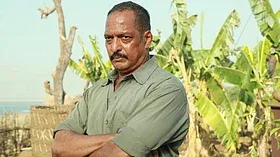
There is something rather absurd about watching Nana Patekar sell tea. In a tea commercial, a group of swaggering young men encounter an older turbaned man, apparently harmless, sitting with his cup. Then comes the slow sip, the stare, the Nana-like challenge in his deep voice: “Baap ko bhej.” Suddenly, an advertisement for tea acquires the tension of a midwestern. Nothing much had to happen. His presence did all the work. He only had to walk into a frame to make it feel smaller.
This was the screen persona built over nearly five decades by Nana Patekar, who died of a cardiac arrest at his home in Dona Paula in Goa yesterday at the age of 75.
'Ek machhar aadmi ko...': How Nana Patekar's explosive monologues captured a nation's frustration
I discovered just how frightening that presence could be years ago, sitting in Kalpana Theatre in Bengaluru in 'Gandhi class' (front row) watching Agni Sakshi (1996). Patekar played Vishwanath, the apparently charming husband whose menace slowly surfaced, and I distinctly remember the peculiar physical sensation of watching him: You felt yourself cowering in fear along with Manisha Koirala's character. It was as though her dread had crossed the screen and entered your soul. Patekar did not need to announce violence. A look, a pause, a chilling dip in his voice were enough.
Indeed, it is tempting to remember him primarily through the lens of his rage, his explosive monologues and the characters he played — often men who were always on the edge. But Patekar, in his finest work, has repeatedly shown that onscreen intensity can come in several shades.
Nana roared, Irrfan whispered: Yet both made life look real on big screen
Take Wajood (1998), N Chandra’s unusual film with Madhuri Dixit. Patekar played Malhar, a misunderstood theatre artiste, and there was something palpably tender in the performance. For an actor so often accused of overpowering the frame and playing himself, here he showcased how he could become a man wounded, eccentric, and vulnerable. That control came from theatre. Patekar began his career on the Marathi stage, working with well-known theatre practitioners, including the legendary Vijaya Mehta. His theatre credits included Mahasagar and Purush , the latter directed by Mehta. Theatre gave him the tools to use voice, silence, gesture and physicality; he did not need close-ups and 'hold expression' instructions. That discipline eventually became his most recognisable acting signature.
There is simply no elegant way to account for all of Patekar’s memorable performances in a short obituary without reducing his career to a checklist. There was the volatile Anna in Parinda (1989), the incendiary Raghunath Namdev Shivalkar in Krantiveer (1994), and Sadhu Agashe, the morally complicated encounter specialist of Ab Tak Chhappan (2004), a performance built on compassion fatigue. His roles in Parinda , Krantiveer , and Agni Sakshi brought him National Awards in the Best Supporting Actor and Best Actor categories.
From 'Ek Machhar' to 'Ab Tak Chhappan': Iconic dialogues that defined Nana Patekar’s on-screen cop legacy
And then there was Joseph in Sanjay Leela Bhansali’s Khamoshi: The Musical (1996). As Manisha Koirala’s deaf-mute father, Patekar had to communicate without his trademark dialogues. It was one of his most moving demonstrations of restraint. He later spoke about his tiffs with Bhansali during the making of the film. The two did not work together again.
Just when he was being typecast as a man only capable of portraying menace and gravitas, he morphed into the memorable Uday Shetty in Welcome (2007). He played it with the seriousness of a gangster who has no idea he is in a farce, achieving a unique comic register where fury became funny. But humour was always part of Patekar’s personality off-screen too. He could be sardonic, irreverent and wickedly self-aware as much as he could be a challenging person to work with on the set.
Late in his career, the landmark Marathi film Natsamrat (2016), directed by Mahesh Manjrekar, got him tremendous acclaim. As Ganpatrao Belwalkar, an ageing theatre giant confronting the loss of family, public relevance and the stage, Patekar played with aplomb a man for whom acting was not merely a profession but an identity.
He also built another life far from the arc lights. In 2015, Patekar and fellow Marathi actor Makarand Anaspure founded NAAM Foundation in response to the drought and farmer distress in Maharashtra. His involvement was not ceremonial. He often spoke about how the work he did in the villages gave him a sense of purpose that the world of films never did.
Perhaps why, even as recently as 2024, in a conversation with Aamir Khan, he expressed a desire to make a film with him and find a role that's exciting enough. In another recent conversation, he spoke about how actors never really find the time to live for themselves. “Humari zindagi udhaar ki hai na,” he said. Our life belongs to others. He described the darkness before an actor on stage and the applause as addiction. Here was a man who had spent a lifetime inhabiting other people's lives and was still looking for one more worth slipping into.