High-stakes Trump-Xi talks steer clear of conflict, short on substance
In the end, it felt like an anticlimax. The summit between the two most powerful men on the planet, US President Donald Trump and Chinese President Xi Jinping, flattered to deceive. Nothing much of substance was accomplished, but crucially, nothing got out of hand. That may have been the summit's most important achievement. First off, the power dynamics between the two men. It was hard not to think of Trump as the suitor and Xi Jinping as the person being wooed.
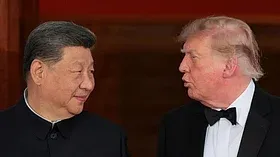
In the end, it felt like an anticlimax. The summit between the two most powerful men on the planet, US President Donald Trump and Chinese President Xi Jinping, flattered to deceive. Nothing much of substance was accomplished, but crucially, nothing got out of hand. That may have been the summit's most important achievement.
First off, the power dynamics between the two men. It was hard not to think of Trump as the suitor and Xi Jinping as the person being wooed. Trump pulled out all the stops, including showing up at Joint Base Andrews to receive Xi Jinping personally. It is true that Trump had done the same thing with Russian President Putin, but the Chinese will perceive this as a non-reciprocal favour since Xi Jinping did not receive Trump at the airport when the latter met him in China in May.
Second, the Chinese will interpret all of the above as the US now treating China as its sovereign equal. This is of enormous interest to Xi Jinping for his domestic audience back home.
China, US should be partners, not rivals, President Xi Jinping says on arrival in Washington
In an extraordinary move, the Chinese Ambassador to the US, Xie Feng, in an op-ed published in the Chinese People's Daily ahead of the Trump-Xi Jinping meeting, stated bluntly that China's sovereignty, security and development interests cannot be compromised. He had specific advice for the American negotiators about four things that were "non-negotiable": the Taiwan question, democracy and human rights, the pathway to development and the fundamental right to development. This was unusual from a diplomatic perspective, especially since it came from a serving Chinese ambassador. This is an indication of how confident the Chinese were going into this meeting. And while details of the closed-door meeting are still trickling out, there is little doubt that the Chinese side will feel satisfied that their red lines, specified above, have been met in substantial measure.
If trade was expected to occupy centre stage, the results were meagre. The existing tariff truce was merely extended by two months, thereby indicating that talks were either incomplete or infructuous. The Chinese may have committed to buying more soybeans (a promise made at the last summit meeting in May), but they are reportedly dragging their feet on the purchase of other agricultural products from the US. AI figured in the talks as expected, but fundamental differences remained in the way the two countries approached the issue. Xi Jinping stated that AI must eventually be controlled by humans, but this may also be a tactical move to slow down American advancement in this area. After all, China wants to catch up in this important tech battle. A dialogue appears to have been agreed upon, with early warning systems to be put in place to avoid catastrophic miscalculations.
Trump says he does not want to 'integrate' with China on AI
The Chinese have made it clear that Taiwan is at the core of their interests. Xi urged prudence on the part of the US, even while warning of the "Thucydides trap". One litmus test will be whether or not Trump goes ahead with the $14 billion arms transfer to Taiwan, which will certainly draw a strong negative reaction from the Chinese. Indeed, Xi Jinping's attendance at the G20 summit meeting in Miami in December will partly hinge on this matter. Trump is under pressure from the Senate Democrats caucus, which called after the summit meeting for the arms package to be delivered to Taiwan as approved by Congress. Trump may also use this arms package as leverage to get China to put pressure on Iran for a deal.
The Chinese readout attempted to define what it meant by "constructive strategic stability". There is mention of three tracks, as it were: the cooperation track, which includes trade; the healthy competition track, which includes things like AI; and the track comprising red lines, such as Taiwan — all of them finally leading to possible peace between the two countries. Easier said than done!
Xi says US-China relationship will be one of strategic stability
One can be sure that the entire world was watching this summit meeting to draw appropriate conclusions about how to deal with the US and China. Europe, Japan and South Korea can be forgiven for thinking that the thing that matters most in dealing with the US is whether or not one has leverage. China has successfully demonstrated this by using its enormous advantage with regard to rare earths. It remains to be seen whether there was any deal in this regard. One thing seems clear: transatlantic allies must now cope with an aggressive China without the guarantee of the US necessarily rushing to their side. Europe will feel the heat much more than others.
What then are the strategic implications for India? On the one hand, a long-term and permanent rapprochement between the US and China, something that looks improbable at this point, will diminish the strategic space available for India, at least vis-à-vis the US. On the other hand, it will equally enhance the strategic options that India may have with regard to Europe and other partners who may find the vital need to diversify their own risks.
The Trump-Xi Jinping summit demonstrates a few home truths. There are two great powers with rough strategic parity in the global order, and then there are others. China is absolutely convinced that the US seeks to thwart what it considers its legitimate place in the comity of nations. China sees its own rise as unstoppable in this regard and is warning of a Thucydides trap if its core interests are threatened. That said, China knows it needs time to catch up and emerge as the pre-eminent power in the world, and wishes to avoid confrontation at this stage, a point reiterated by Xi Jinping to Trump. The trouble is that the US knows this as much as anyone else and is seeking to restrain China without provoking a conflict with it, not least because it is already stretched from a military perspective. The summit meeting portends the fact that this is a long game, and both sides will play it for the foreseeable future.
(The writer is a former Indian Ambassador to France and currently Dean/ Professor at OP Jindal Global University)
(Disclaimer: The views expressed above are the author's own. They do not necessarily reflect the views of DH.)