
Umar Khalid, Sharjeel Imam move Supreme Court for bail in Delhi riots conspiracy case
New Delhi: Former JNU students Umar Khalid and Sharjeel Imam have approached the Supreme Court seeking bail in the 2020 Delhi riots larger conspiracy case after the Delhi High Court recently rejected their plea. They cited the impending expiry of a one-year embargo and prolonged incarceration without trial progress.
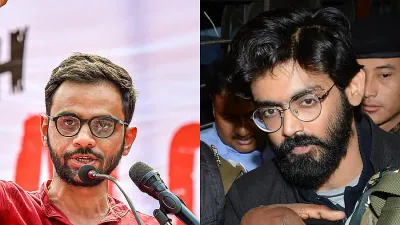
New Delhi: Former JNU students Umar Khalid and Sharjeel Imam have approached the Supreme Court seeking bail in the 2020 Delhi riots larger conspiracy case after the Delhi High Court recently rejected their plea.
They cited the impending expiry of a one-year embargo and prolonged incarceration without trial progress.
Bound by SC order, can't grant bail to Umar Khalid, Sharjeel Imam in 2020 riots case: Delhi High Court
A Supreme Court bench of Justices Aravind Kumar and N V Anjaria had on January 5, 2026 dismissed their bail plea, describing them as “ideological drivers” of the larger conspiracy while granting bail to five co-accused, including Gulfisha Fatima.
The court had then imposed a one-year embargo, allowing them to approach it upon completion of examination of protected witnesses or after one year from the order, “whichever is earlier.”
On September 30, a Delhi High Court bench of Justices Prathiba M Singh and Dinesh Bhatt refused bail, holding that it could not modify the apex court’s directions.
In his fresh plea, Khalid submitted that the one-year embargo was due to expire soon and that the examination of protected witnesses could not possibly be completed by January 5, 2027.
With charges yet to be framed and the prosecution having failed to examine witnesses, he urged that prolonged incarceration warranted bail.
Imam contended that despite spending six years and nine months as an undertrial, the prosecution had not examined even one of the more than 900 cited witnesses, including 47 protected ones.
The chargesheet was filed on September 25, 2020. Arguments on charge concluded on July 13, but the special court deferred its order after being informed of a Supreme Court stay on an order permitting co-accused Devangana Kalita to inspect unrelied documents.
Imam's plea for bail was rejected by the trial court on July 4 on the ground that it could not violate the Supreme Court’s conditions.
Both accused relied on a May 22 order by Justice Aravind Kumar’s bench, which referred to a larger bench a “perceived conflict” in the interpretation of the K A Najeeb judgment on long incarceration under the Unlawful Activities (Prevention) Act. That bench granted interim bail for six months to co-accused Tasleem Ahmed and Khalid Saifi, noting their substantial incarceration, the unlikelihood of the trial concluding soon, and that they could not be made to suffer continued detention merely because an important question of law required settlement.
2020 Delhi riots case: Sharjeel Imam gets interim bail for seven days
Khalid and Imam argued that these findings on prolonged incarceration and the impossibility of an early trial conclusion made their cases fit for bail on grounds of violation of the right to speedy trial.
The 2020 Delhi riots conspiracy case was investigated by the Delhi Police Special Cell under provisions of the Indian Penal Code and the UAPA. The riots claimed lives of 53 people and left over 700 injured.