Rabi season challenging for rainfed areas amid El Nino, says Agriculture Secretary
New Delhi: Union Agriculture Secretary Atish Chandra said on Monday said the upcoming rabi season is likely to prove challenging for rainfed areas due to the El Nino weather pattern, with foodgrain production expected to be affected. Addressing a two-day national conference on rabi preparedness, Chandra noted that the preceding kharif season had also been difficult, especially in rainfed regions where several states struggled first to achieve crop coverage and then to keep crops alive.
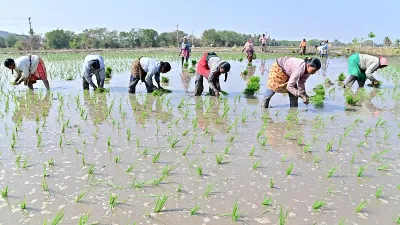
New Delhi: Union Agriculture Secretary Atish Chandra said on Monday said the upcoming rabi season is likely to prove challenging for rainfed areas due to the El Nino weather pattern, with foodgrain production expected to be affected.
Addressing a two-day national conference on rabi preparedness, Chandra noted that the preceding kharif season had also been difficult, especially in rainfed regions where several states struggled first to achieve crop coverage and then to keep crops alive. Sowing of key rabi crops such as wheat and mustard typically begins in October.
Hailstorms, untimely rain damage rabi crops; Centre orders immediate survey
“We are seeing that in the coming season, production is likely to be affected to a large extent. And the rabi season will also be challenging for the rainfed areas,” he said.
Some states may face excess soil moisture while others with deficient rainfall could experience prolonged stress, requiring calibrated strategies.
Calling climate change a present reality rather than a future concern, Chandra observed that even irrigated areas have suffered from untimely and heavy rains. “We used to think that we will face the challenges of climate change later. But now we see the changes happening, and they are happening at a fast pace,” he added.
India remains self-reliant in cereals but continues to import pulses, oilseeds and certain fruits. Rabi crops are normally sown across about 638 lakh hectares, including over 300 lakh hectares under wheat, 140 lakh under pulses, 87 lakh under oilseeds and 55 lakh under coarse cereals.
Chandra urged crop diversification to achieve self-sufficiency while advancing sustainable practices such as Per Drop More Crop and soil health programmes, which must be assessed by on-ground outcomes rather than subsidy disbursal alone.
Digital agriculture, he said, is the top priority. Accurate data and farmer IDs are essential to end asymmetry and rebuild last-mile connectivity by linking cultivators to land records.