
Cabinet clears Rs 1.86 lakh crore green energy corridor phase-III to accelerate renewable push
New Delhi: The Union Cabinet, chaired by Prime Minister Narendra Modi, on Tuesday approved the Green Energy Corridor Phase-III (GEC-III) scheme with a total project outlay of Rs 1,86,405 crore. The initiative seeks to significantly strengthen India’s Intra-State Transmission System (InSTS) and support the deployment of 50 GWh of Battery Energy Storage Systems (BESS), enabling the smooth evacuation of up to 135 GW of renewable energy across states and Union Territories.
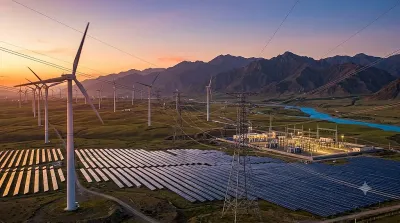
New Delhi: The Union Cabinet, chaired by Prime Minister Narendra Modi, on Tuesday approved the Green Energy Corridor Phase-III (GEC-III) scheme with a total project outlay of Rs 1,86,405 crore.
The initiative seeks to significantly strengthen India’s Intra-State Transmission System (InSTS) and support the deployment of 50 GWh of Battery Energy Storage Systems (BESS), enabling the smooth evacuation of up to 135 GW of renewable energy across states and Union Territories.
Cabinet raises wheat MSP by Rs 25 to Rs 2,610 per quintal for 2027-28
The scheme is targeted to be set up by FY 2032-33 with total project outlay of Rs.1,86,405 crore, comprising Rs.1,36,378 crore for the development of Intra-State Transmission Systems (InSTS) under GEC-III, Rs.50,000 crore for 50 GWh of Battery Energy Storage Systems (BESS), the statement said.
The scheme carries total Central Financial Support of Rs 54,082 crore, a statement said.
Officials said the Central Financial Assistance is expected to offset intra-state transmission charges, thereby helping keep the cost of renewable power affordable for end consumers.
The BESS will be installed either at the renewable energy developer or generator end, or at other strategically important locations. This is intended to enhance grid flexibility by addressing intermittency of renewable sources, reducing congestion and peak-hour curtailment, and meeting demand during non-solar hours. The scheme will facilitate better grid integration and power evacuation within states and Union Territories, the statement said.
All greenfield projects under the InSTS component will be implemented through the Tariff-Based Competitive Bidding (TBCB) route on a Build-Own-Operate-Maintain (BOOM) model.
Brownfield upgradation and network strengthening works will be executed on a Cost-Plus Basis. State Transmission Utilities will act as the overall implementing agencies, with Transmission Service Providers participating under the TBCB framework.
Targeted for completion by financial year 2032-33, the scheme is aligned with India’s ambitious goals of achieving 500 GW of renewable energy capacity by 2030 and 900 GW of installed non-fossil fuel capacity by 2035.