Bureaucrats opposed J&K statehood debate; now passed resolution reaches Chief Secretary for action
Srinagar: The Jammu and Kashmir administration is facing a fresh question over the Assembly’s statehood resolution after the same top officials who had opposed taking it up on grounds that the matter was sub judice are now required to process the resolution passed by the House. The Assembly Secretariat has forwarded the resolution to Chief Secretary Atal Dulloo for “kind information and necessary action”.
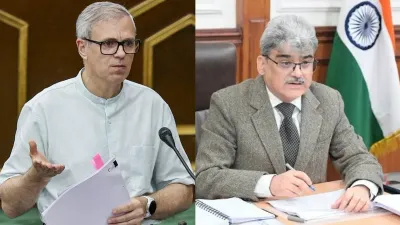
Srinagar: The Jammu and Kashmir administration is facing a fresh question over the Assembly’s statehood resolution after the same top officials who had opposed taking it up on grounds that the matter was sub judice are now required to process the resolution passed by the House.
The Assembly Secretariat has forwarded the resolution to Chief Secretary Atal Dulloo for “kind information and necessary action”.
The communication, however, does not specifically say that it should be forwarded to the Government of India.
That assumes significance because the resolution passed by the Assembly on Monday specifically says that it should be forwarded to the Centre.
The resolution, moved by Chief Minister Omar Abdullah, calls upon the Government of India for the “immediate and urgent restoration of full statehood” to Jammu and Kashmir. It was passed by voice vote after BJP members, who had opposed it during the debate, walked out.
The controversy surrounding the resolution began before it was put to vote.
Don't trust verbal assurances from Centre: Jammu & Kashmir CM Omar Abdullah to Ladakh's leadership
Chief Secretary Duloo and Law Secretary Achal Sethi had sent separate communications to the Assembly Secretariat asking that the resolution not be taken up, citing the fact that the issue was sub judice.
Speaker Abdul Rahim Rather subsequently questioned the intervention, while Omar said he had not been informed about the Law Secretary’s opinion despite being the minister in charge of the Law Department.
The Assembly nevertheless proceeded with the debate and passed the resolution.
The latest correspondence has therefore shifted the issue from whether the House could discuss the demand to what administrative action will follow its passage.
The controversy lies in Jammu and Kashmir’s present constitutional position. The former state was reorganised in 2019 into the Union Territories of Jammu and Kashmir and Ladakh.
J&K subsequently got an elected legislature, but it remains a Union Territory. The Union government, through the Ministry of Home Affairs, continues to deal with matters concerning the Union Territory under the Jammu and Kashmir Reorganisation Act, 2019.
The Assembly cannot restore statehood by passing a resolution. Any change in J&K’s status requires action at the Union level. Article 3 of the Constitution gives Parliament the power to form new States and alter the areas, boundaries or names of existing States and Union Territories.
The demand also has a Supreme Court backdrop. In its December 2023 judgment on the constitutional changes relating to J&K, the court directed that statehood be restored “at the earliest and as soon as possible”, while upholding the reorganisation that created the Union Territory of Jammu and Kashmir.
The Assembly’s resolution is therefore a formal political demand to the authority that can act on statehood; it does not itself change J&K’s status.
The immediate issue is now procedural: whether the resolution will be forwarded to the Government of India and, if so, through what administrative process.
The answer could also determine whether the controversy over the bureaucrats’ earlier objections ends with the passage of the resolution or develops into a further dispute between the elected government and the Union Territory administration.