
Vacant seat in Iraq: Sovereignty declared, not yet rebuilt
Iraq's government is marking a four-day public holiday this week, celebrating what it has termed "Sovereignty Day." The withdrawal of the Global Coalition on Sept. 30 is what gives...
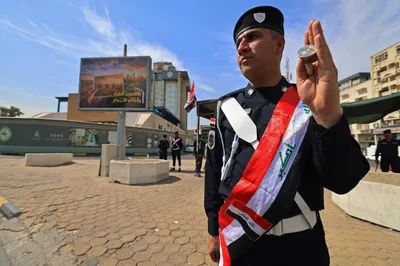
Iraq's government is marking a four-day public holiday this week, celebrating what it has termed "Sovereignty Day." The withdrawal of the Global Coalition on Sept. 30 is what gives this day its concrete meaning. Yet the military balance on the ground shows that sovereignty remains fragile. The coalition's departure leaves an empty seat in the security equation, a vacancy that also allows the Iraqi government to reconstitute a sovereignty that is, for now, still fragile.
The Global Coalition has supported the Iraqi government in the fight against Daesh since 2014. Although Baghdad declared military victory over the group in 2017, Daesh continued to carry out attacks, embedded within Iraqi territory. Even so, its territorial control ended, and it ceased to pose a significant strategic threat. Shiite militia groups in particular pressed the government to bring foreign military presence in the country to an end.
Under a 2021 agreement, combat troops withdrew from Iraq, leaving the mission's role confined to training and advising. A subsequent agreement between the U.S. and Iraqi governments set Sept. 30, 2026, as the date for ending the Global Coalition's mission and completing the withdrawal of remaining forces. This departure comes roughly nine years after Daesh's military defeat. As of that date, the approximately 2,500 U.S. troops still stationed in Irbil and Baghdad will no longer be in Iraq.
The coalition's withdrawal is triggering related military developments. Roughly 10 days ago, Peshmerga forces in Iraq's Kurdistan Regional Government (KRG) were unified. The Iraqi government, for its part, is taking firmer steps toward militia groups, aiming to bring all weapons fully under state control. With the coalition gone, militias will also lose the rhetorical cover of "foreign forces must leave Iraq" to justify remaining armed.
Yet the deadline set for weapons to pass fully into state hands is June 2027. Only once that process is complete will the sovereignty declared today actually acquire substance. The government may well face new challenges along the way; in the Cabinet formed under Ali al-Zaidi in May 2026, nine ministerial posts remain vacant, a sign of just how carefully it must tread to avoid appearing weak.
Türkiye, meanwhile, stands out as one of the principal allies supporting the consolidation of state authority in Iraq. Under an agreement reached on Sept. 23, the two sides agreed on establishing state authority in Sinjar and on the Turkish Armed Forces handing over the Bashiqa-Zilkan camp to Iraq. Through this arrangement, Iraq stands to both consolidate its authority in Sinjar, which had become the new headquarters of the PKK after Qandil, and take over Bashiqa. For Türkiye, a stronger Iraqi state authority translates into fewer security problems on its border.
On the Iranian front, the picture looks different. Iran already possesses proxy forces it can readily draw on to widen the scope of conflict. Beyond that, it remains an influential actor inside Iraq, with the potential to keep Iraqi sovereignty fragile.
The coalition's withdrawal has the potential to directly affect the U.S.-Iran balance in Iraq. In fact, the first question that comes to mind after this withdrawal is whether the U.S. could reinforce its presence in Iraq through NATO. Yet NATO Mission Iraq (NMI) had already pulled its physical presence out of the country in March 2026, as a precautionary measure following joint U.S.-Israeli airstrikes on Iran. Since the mission itself has not been terminated, a U.S. presence in Iraq channeled through NMI could well resurface as an option down the road.
Daesh's potential resurgence in Iraq is the first concern that comes to mind. Yet that likelihood remains fairly low, and Iraqi security forces' capacity now stands well above where it was in 2014. Iraq has even begun accepting Daesh prisoners from Syria for prosecution, and has made progress on receiving and rehabilitating Iraqi nationals held in the al-Hol and Roj camps. So while sovereignty remains fragile, it is hard to see a threat as deeply taboo for Iraq as Daesh escalating beyond a chronic, low-level security problem.
Clashes between security forces and Daesh members even in the very week of the coalition's withdrawal suggest the threat will persist along that low-intensity line.
The Global Coalition's withdrawal is opening up defense gaps that go beyond the Daesh threat, since air defense systems are being withdrawn along with the coalition forces. While this has stirred concern in Irbil, a frequent target of drone attacks, it has also pushed the KRG to tie its security more closely to the federal government. Iraq will accordingly move toward new defense partnerships. Already in talks over air defense systems, Iraq will focus on developing its air force.
Indeed, the commander of the Iraqi Air Force has said that the Global Coalition conducted no operations in Iraqi airspace this year, that operations have been carried out independently by Iraq and that the country is preparing to take on full responsibility for safeguarding its airspace.
The U.S. is continuing its defense and security engagements with Iraq. Although the coalition's withdrawal is being presented as the end of foreign military presence in Iraq, some 6,000 contractors under contract with the U.S. are believed to remain on the job. The bilateral defense framework between Washington and Baghdad continues to carry out critical functions such as training, intelligence, cyber defense and equipment maintenance through private contractors.
In other words, the U.S. is sustaining its international engagements through the private sector, maintaining its presence under an invisible identity.
The Ministry of Peshmerga Affairs, for its part, hopes for a more comprehensive arrangement even as coalition funding comes to an end, meaning bilateral cooperation could well return to the agenda down the line. The coalition's withdrawal will also push Irbil closer to the government in Baghdad.
The coalition's withdrawal has the potential to leave Iraqi airspace more exposed. At the same time, the absence of coalition forces will act as a natural barrier against retaliatory attacks targeting the U.S. in Iraq – a meaningful buffer given the broader state of conflict across the Middle East. Yet the possibility that the U.S. or its allies might target Shiite militia groups in Iraq has not disappeared either. This means Baghdad's efforts to bring militias under control will directly shape the country's security dynamics going forward.
The militia question in Iraq is not merely a domestic security issue; it is one front of Iran's broader proxy architecture. Tehran aims to preserve its strategic depth through the militias it backs in Iraq. Baghdad establishing full control over these groups could therefore work against Tehran's security calculus – and the process is likely to be tested by growing resistance from Iran-aligned actors.
Iraqi Prime Minister Ali al-Zaidi has foregrounded a balancing strategy, taking determined steps to keep Iraq out of the conflict during this turbulent period in the Middle East. The nine vacant seats in the Iraqi Cabinet, however, compel the government to proceed cautiously. Al-Zaidi therefore has to turn his standing within the Coordination Framework to his advantage. Although the coalition's withdrawal is being celebrated as Sovereignty Day, the real, tangible outcome will come only with the integration of Shiite militia groups into the state.
Developments centered on Sinjar and Bashiqa will, in that respect, also shape the level of support al-Zaidi is able to command.
Iraq is home to a wide diversity of actors, such as non-state actors, terrorist organizations, political figures and international relationships, that directly shape its military situation. The coalition's withdrawal, then, is no sign that sovereignty is now centralized in the state alone. The coalition vacating its seat in the country's military balance will pose a serious test for the Iraqi government. The nine months ahead will prove decisive not only for the fate of the militias, but also for the rebirth of sovereignty in Iraq itself.