
Subsidies expected to hit €400 million, minister warns of ‘economic catastrophe’ if stopped
Next year the cost for the energy sector is expected to be €500 million, he said The post Subsidies expected to hit €400 million, minister warns of ‘economic catastrophe’ if stopped appeared first on BusinessNow.mt .
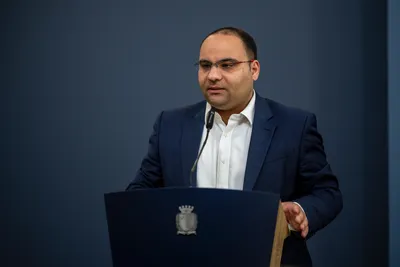
Next year the cost for the energy sector is expected to be €500 million, he said
The energy and fuel subsidies for this year are expected to cost Government €400 million, Finance Minister Clyde Caruana said, adding that next year he expects the cost to remain the same.
When taking both the subsidies and planned investment in energy infrastructure, next year the cost for the sector is expected to be €500 million, he said.
“The numbers already clearly show that they are higher than when Russia invaded the Ukraine, and I expect those numbers to remain at the same level next year. If things worsen – If it takes longer for agreement on the Strait of Hormuz to be found, if there is a ban on diesel exportations, if it is a cold winter – that bill will continue to rise,” the minister said.
He said that gas prices exploded when Russia invaded the Ukraine between 2022 and 2023, which since dropped, but events happening now are resulting in the price rising again. He explained that the scenario in terms of the provision and price of gas is one that could see challenges rise in the coming months.
But he stressed that he met with Prime Minister Robert Abela about the Budget and they both agreed that “what we have been doing over the past five years, we will continue to do. I want to give everyone peace of mind, we will continue doing what we have been doing.”
The minister gave a warning to those advocating that the subsidies should stop, describing that stopping doing what it has been doing would be nearly equivalent to an “economic catastrophe”.
He gave an example of what a family spending €20 on diesel per week would be spending without the subsidy – €33.06. Over the period of a year, from €1,040 one spends for diesel, it would rise to €1,719, he said. Turning to energy, he said that for every €50 per month a household pays with the subsidy, without it, the household would pay €85. Over the period of a year, that would be €600 with the subsidy compared to €1,020 without it.
He said that what he is going to say will not happen, “but I’m saying this so that everyone understands and nobody minimises what would happen if we are not prudent in what we do.”
He said that removing the subsidies would mean that within three years, the country’s GDP would drop by around €630 million from current levels. Consumption would drop by €312 million, he said, adding that investment within 3 years would drop by around €90 million.
Regarding the job market, he said that if the subsidies were removed, within 3 years, around 3,000 people would lose their jobs.
For employers, he said the COLA they would need to pay if subsidies are removed would be €18.05 per week. “That would be the impact on the cost of living that employers would need to pay for the cost of living increase if subsidies were removed,” he said.
He spoke of the importance of continuing the economic rhythm, and comparing the situation to a marathon, said the country has not lost its breath.
He later said that “what there is in the energy sector, come what may, will remain,” saying he wanted to provide peace of mind.
Regarding the country’s deficit, he said that it will be around 2.8 per cent for this year, a bit higher than predicted, but less than 3 per cent threshold. “We will do all that is possible to never jump that 3 per cent. I will not give EU an excuse to come and force Malta to remove the subsidies. I will not be the person that kills our country’s economy. The economy is and will remain strong, the finances are strong and will remain strong. Otherwise we would not be doing what we are doing.”
A chance to help shape the future of financial services regulation
Latest NSO statistic shows that unemployment among people aged 15 to 24 remains significantly higher than among older workers
Merħba! allows students to gain awareness of potential tourism career paths