Kurdistan says it will have no air defense after coalition withdrawal
Iraq’s Kurdistan Region will be left without its own air defense system after the withdrawal of US-led coalition forces on September 30, the Ministry of Peshmerga Affairs warned, saying the federal government in Baghdad bears primary responsibility for protecting the Region’s airspace.
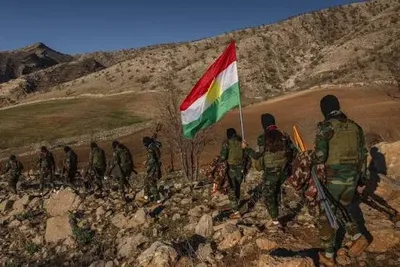
Iraq’s Kurdistan Region will be left without its own air defense
system following the withdrawal of US-led coalition forces on
September 30, the Ministry of Peshmerga Affairs has warned, saying
responsibility for protecting the Region’s airspace rests primarily
with the federal government in Baghdad.
“The withdrawal of US and coalition forces from Iraq comes at a
sensitive time, particularly as the security situation in Iraq and
the Middle East remains unstable and requires vigilance and sound
political decision-making,” the ministry said.
It noted that the withdrawal was taking place under an agreement
reached between Baghdad, Washington and other members of the
coalition.
According to the ministry, the Kurdistan Region has faced more
than 1,000 drone and ballistic missile attacks during fighting
involving the United States and Iran in recent months. Some of the
attacks struck civilian areas, causing deaths and injuries.
Against this backdrop, leaving the Region “without providing any
defense system is a cause for concern,” the ministry said.
The ministry stressed that the Kurdistan Region’s airspace forms
part of Iraq’s federal airspace and that responsibility for its
defense therefore lies primarily with the federal government. It
added that Peshmerga forces would continue coordinating with the
Iraqi army on security matters.
The Kurdistan Regional Government has previously attempted to
acquire its own defensive capabilities.
In November 2025, a British anti-drone system delivered to the
Khor Mor gas field could not be activated because the United
Kingdom would not accept end-user certificates issued by the KRG
and Baghdad declined to provide the necessary documentation,
according to Aziz Ahmad, deputy chief of staff to Kurdistan Region
Prime Minister Masrour Barzani.
Barzani has also raised concerns about the consequences of the
coalition withdrawal.
His office said on Sunday that a recent Financial Times article
had not conveyed his remarks accurately or objectively and had
incorporated the author’s own interpretations.
According to Barzani’s office, the prime minister told the
newspaper that the withdrawal was occurring at a “very sensitive”
time and highlighted the more than 1,000 rocket and drone attacks
that the Region had faced.
He described the prospect of leaving the Kurdistan Region
without defensive capabilities as a concern, while emphasizing that
the Region values its alliance with the United States and seeks
balanced relations with neighboring countries, including Iran.
Barzani also stressed that the Kurdistan Region does not want to
become a party to regional conflicts or serve as a launchpad for
threats against neighboring states.
The security concerns were highlighted earlier this month when
coalition aircraft shot down 10 bomb-laden drones over Erbil
governorate on September 2.
Iraqi authorities have said the country expects to receive air
defense systems from South Korea, Türkiye and the United States,
although no specific delivery dates have been announced.
The coalition has meanwhile been handing over its bases and
headquarters as the September 30 deadline approaches. Iraqi
officials say no coalition combat or training forces will remain in
the country after that date.
Coalition financial support for the Peshmerga also ended last
week, shortly after the Kurdistan Region announced that the process
of unifying its Peshmerga forces had been completed.
Here we are to serve you with news right now. It does not cost much, but worth your attention.
Choose to support open, independent, quality journalism and subscribe on a monthly basis.
By subscribing to our online newspaper, you can have full digital access to all news, analysis, and much more.
You can also follow AzerNEWS on Twitter @AzerNewsAz or Facebook @AzerNewsNewspaper