
FBI announces 130+ detained in Ghana over scams targeting Americans; $10m in losses, 300 devices seized
FBI's Kash Patel says 130+ were arrested or detained in Ghana over scams targeting Americans, with $10m in losses and 300 devices seized. Ghanaian agencies have not commented.
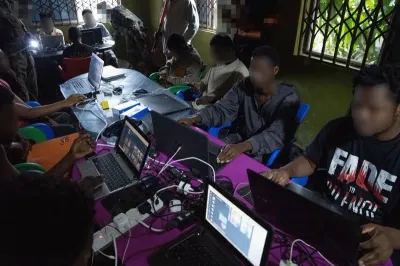
The FBI says more than 130 people have been arrested or detained in Ghana in a raid on a scam operation that targeted Americans, in an announcement its director made on social media rather than through either government.
Kash Patel, the FBI director, posted the figures on X on Thursday morning: nearly US$10 million in identified losses so far, 89 victims identified, more than 130 individuals arrested or detained, and more than 300 devices seized. He said the investigation is continuing and described the raid as the latest stage of Operation Blackout, the bureau's campaign against scam compounds. "These scam compounds target American citizens and destroy lives," he wrote, adding that there was "more to come."
What the post did not say is where in Ghana the operation took place, which Ghanaian agency or agencies took part, the nationalities of those held, or whether anyone will be prosecuted here or sought for extradition. The Ghana Police Service, the Economic and Organised Crime Office, the Cyber Security Authority and the National Intelligence Bureau had all made no public statement on the operation by the time of filing.
One line in the post deserves more attention than the headline number. Patel wrote that the 130-plus figure includes "victims who will be repatriated to home country", which means an unknown share of the people counted as arrested or detained are people the FBI considers to have been trafficked into the operation rather than running it. Ghana has seen that pattern before. When EOCO moved on the QNET network in Kumasi last November, it took 320 people into custody and the outcome was reported as a rescue of trafficking victims rather than a mass arrest of suspects.
Police had detained 487 people over the same scheme in Kumasi in 2024, and National Security picked up 45 foreign nationals in Tamale in January over QNET recruitment and trafficking. Until the breakdown is published, "130 arrested" and "130 suspects" are not the same statement.
Operation Blackout's running totals, as Patel gave them, are roughly US$17 billion seized, hundreds of alleged scammers arrested, thousands of trafficked workers freed, more than 10,000 Americans warned before losing money, and US$670 million in estimated losses prevented. Those figures come from the bureau's own announcements and have not been independently audited. Reporting on an earlier US$15 billion version of the total found that most of it traced to a single civil forfeiture action over about 127,271 bitcoin linked to the Prince Group in Cambodia, valued at roughly US$15 billion in an October 2025 court filing and still subject to litigation, rather than to cash recovered from the compounds.
The US$15 billion and US$17 billion figures have not been reconciled publicly, and the loss-prevention totals have been given variously as US$500 million, US$660 million and US$670 million across different announcements.
The Ghana raid fits a pattern that has been moving towards Africa for a year. In September, American investigators spent about two weeks supporting Malagasy officials in an operation that dismantled 13 scam centres tied to Chinese criminal syndicates and processed more than 3,200 electronic devices. US prosecutors have described a footprint running from Southeast Asia into the Middle East, Africa and Central America, with workers trafficked from at least 60 countries, typically recruited through fake job advertisements and then held with their documents confiscated.
Ghanaian officials have been saying for weeks that the country's own capacity is the weak link. The Cyber Security Authority's chief executive has put online fraud at 47 per cent of all cyber incidents recorded in Ghana , EOCO called on 1 October for stronger institutional collaboration against cybercrime, and the Deputy Interior Minister called three days ago for stronger joint action by the security agencies .
How American agents operate on Ghanaian soil has itself been contested. In May, the FBI was accused of bypassing diplomatic channels in the arrest of the Asante Akyem North MP, with critics saying the approach spoke of mischief , and in October last year the Inspector-General of Police, Christian Tetteh Yohuno, led a delegation to the FBI's New York field office to deepen cooperation between the two services.
The FBI maintains a legal attaché office in Accra. In an unrelated extradition in July, the US Justice Department credited that office alongside Ghana's Attorney-General's Office, EOCO, the Ghana Police Service, the Cyber Security Authority and the National Intelligence Bureau.